Weapons, Uniforms, and Artifacts
Opening: $200
Estimate: $1,000 - $1,500
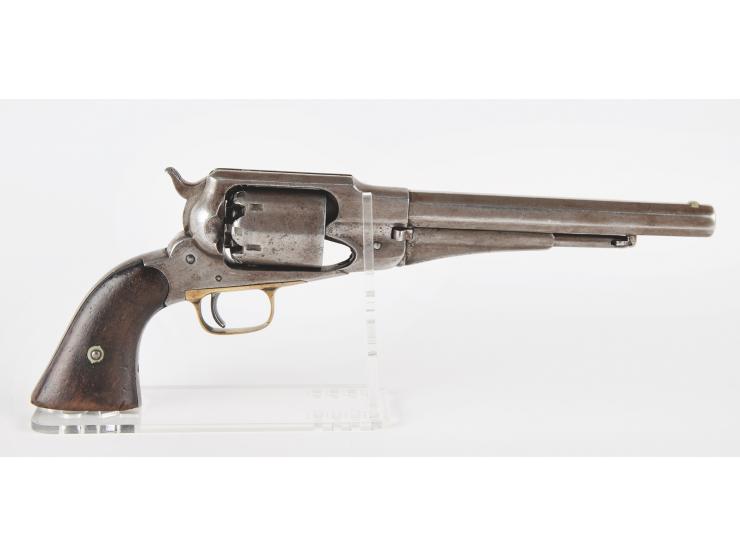
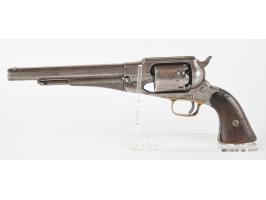
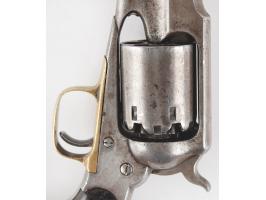
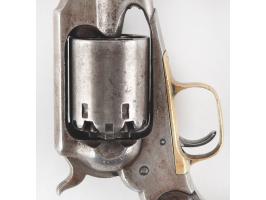
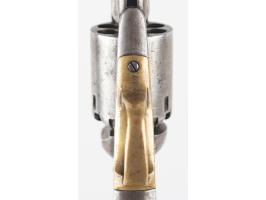
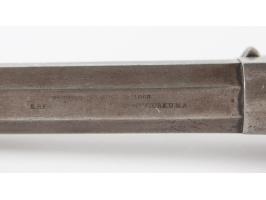
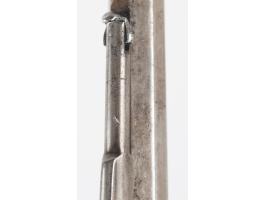
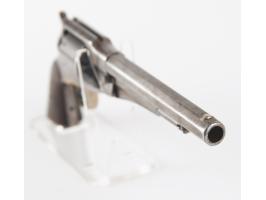
Civil War Remington New Model Army Revolver purported to have been found at a battlefield near Kennesaw Mountain, Georgia, serial #23894, .44 caliber, 8" octagon barrel with a fair bore that has light-moderate pitting within the grooves. This is a good looking revolver that was made ca. 1863, and has an overall dull pewter gray patina with spots of darker plum-brown freckling and small areas of pinprick pitting scattered throughout. Surface scratches are present on the cylinder, with a mild yellow-ochre patina on the trigger guard, and a heavily worn down front sight. The walnut grips are in fair shape with numerous handling marks present on both panels, as well as a large chip missing from the toe of the butt on the left side. There are no US inspector cartouches visible. The lock-up is solid, and the action functions well. A small modern display plaque accompanies the revolver that states that the revolver was, "Found in the Battle Fields around Kennesaw Mountain, GA." This is a good to very good example of a desirable Civil War revolver. Antique.
Civil War
Opening: $200
Estimate: $200 - $400
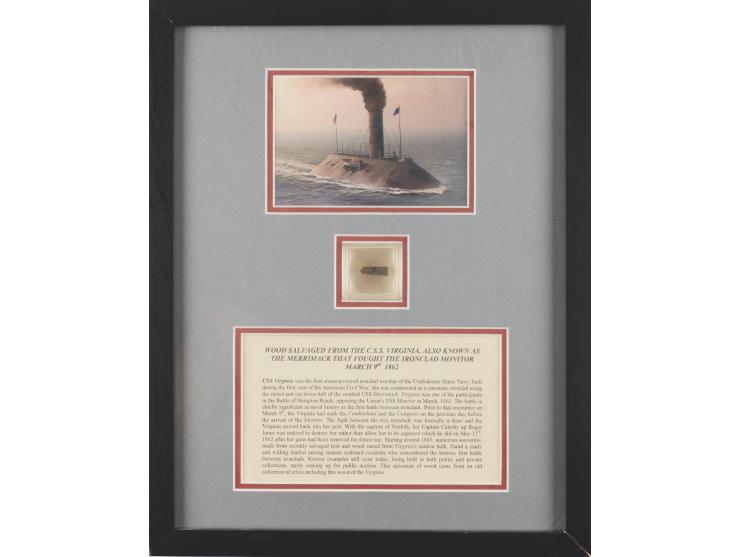
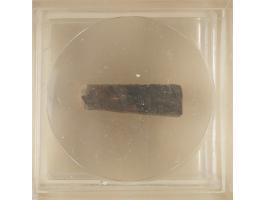
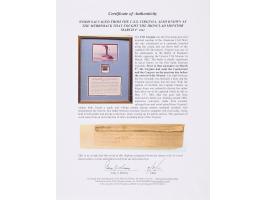
Small .75˝-long wooden relic attributed to the CSS Virginia, which famously opposed the Union's USS Monitor in the Battle of Hampton Roads, the first naval battle between ironclads. The segment is housed in a magnified plastic case, double-matted, and framed with an image and descriptive caption to an overall size of 12 x 15. In fine condition. Accompanied by a certificate of authenticity from Cary J. Delery of the Historical Shop, certifying that the wood in this display came from a larger relic which was part of an old collection.
Weapons, Uniforms, and Artifacts
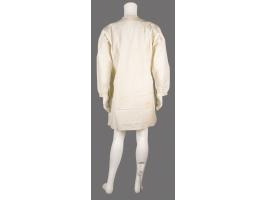
Opening: $200
Estimate: $300 - $500
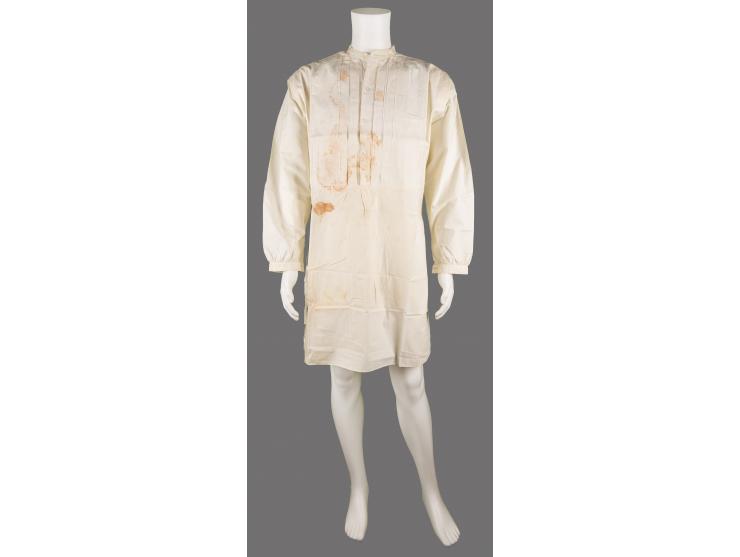
Attractive and little-worn Civil War–era linen shirt that has a pleated front, balloon sleeves, and very short cuffs. The material is fine, with virtually no wear, although there are some dark stains on the front of the shirt and around the neck. All of the buttons are still in place, including the small buttons for attaching a collar at the neck.
Provenance: Collection of noted Civil War collector John Ockerbloom, Amoskeag Auction, August 7, 2004.
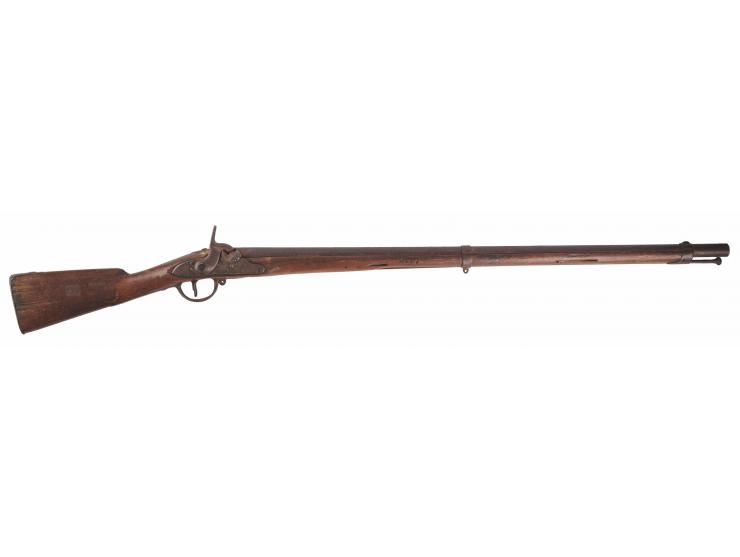
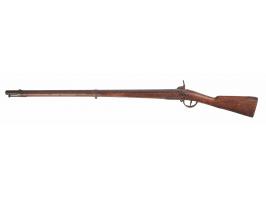
Opening: $200
Estimate: $500 - $700
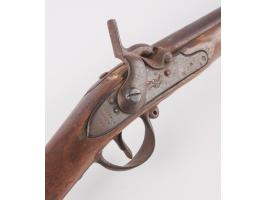
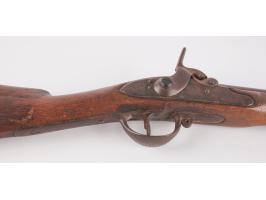
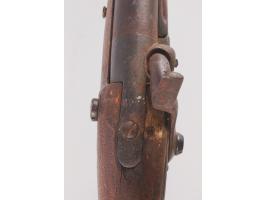
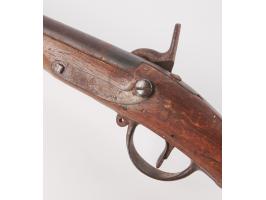
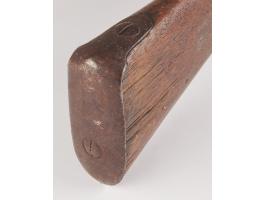
Privately made short percussion musket using a US Model 1795 Harpers Ferry lock, NSN, .71 caliber, 34 1/2" barrel with a dark, pitted bore. This musket was built using an 1814-dated Harper’s Ferry marked lock from a US Model 1795 flintlock musket. The barrel is a smith-made tube without markings, and has a percussion bolster-equipped breech plug mated to a French style percussion hammer. The metal has an overall lightly pitted dark brown patina with some thin surface oxidation present throughout, heaviest near and around the barrel breech. The action and barrel are fitted to a well worn US Model 1795 musket stock, heavily reworked for the new length and equipped with reworked original iron band and shortened nosecap. The wood has numerous small handling marks and blemishes throughout, as well as several breaks and cracks along the ramrod channel. The long rectangular inlets for the no longer present band springs were left unfilled on the right side of the forend. This is an interesting US musket, heavily reworked and converted to percussion.
Opening: $200
Estimate: $500 - $700
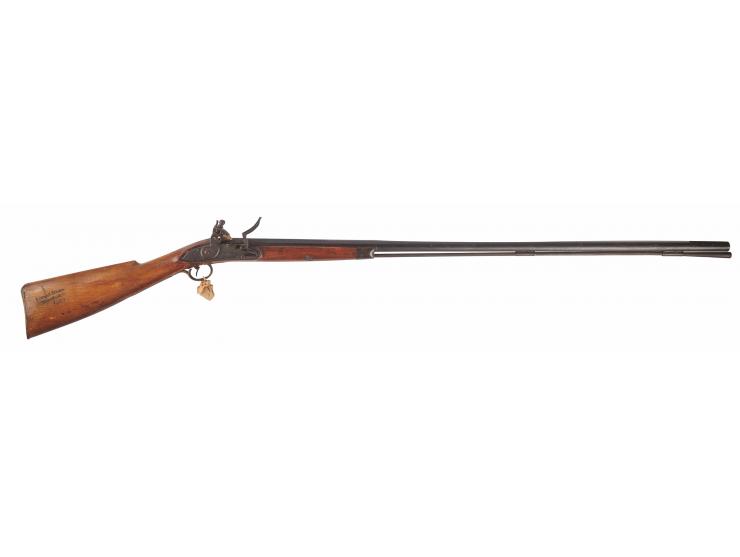
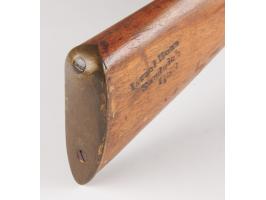
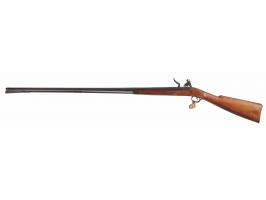
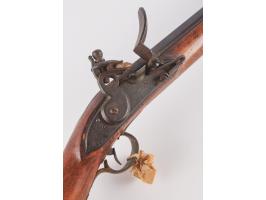
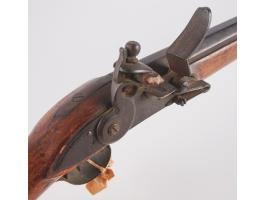
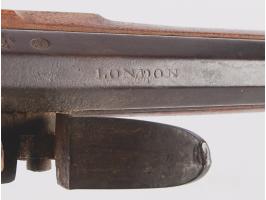
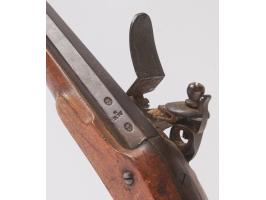
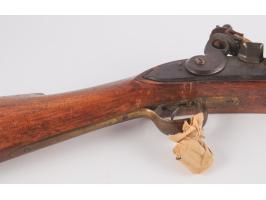
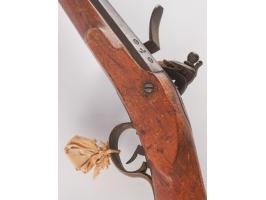
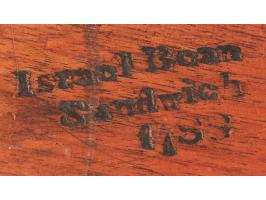
American flintlock fowling gun with French 1763-1766 Pattern musket lock, marked "Israel Bean / Sandwich / 1788" on the stock, NSN, .67 caliber (approx. 16 bore), 39" octagon breech barrel with a dark, pitted bore. This is a well-made and attractive fowler that has a "LONDON" marked barrel with crisp London proofs on the breech, mated to a "Charleville" marked French musket or fusil lock. The metal has an overall dark plum-brown patina throughout, with mild pitting on the barrel breech, and some deeper pinprick pitting on the lock, which is fully functional and catches firmly at both half and full-cock. The half-length sporting style stock has a darkly tarnished brass nosecap, with small handling marks and minor blemishes in the otherwise nice period oil finish. The brass trigger guard and buttplate are in very good shape, and exhibit a dull, yellow-ochre patina throughout. The gun is accompanied by an old trumpet-head musket ramrod.
The right side of the buttstock has "ISRAEL BEAN / SANDWICH / 1788" stamped into the wood near the heel of the butt, and has had black ink added at some point for legibility. This could be a reference to either Sandwich, MA, or Sandwich, NH, both of which had established families named Bean. A search of records yields little information, but there was an Israel Bean who served as a Private in the 2nd Regiment (Holland’s) of the Massachusetts Militia during the War of 1812; and a birth record from Sutton, NH, for a Milton Bean, son of Israel Bean, dated September 11, 1814.
Opening: $200
Estimate: $200 - $300
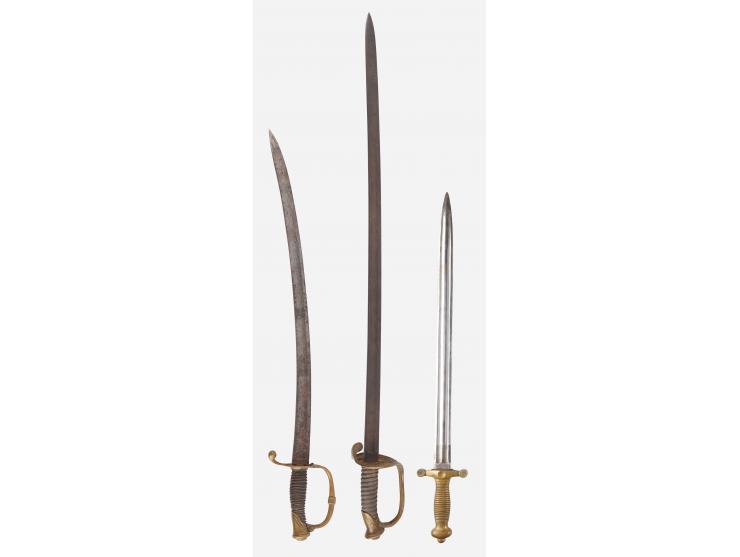
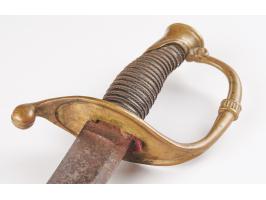
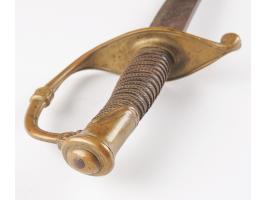
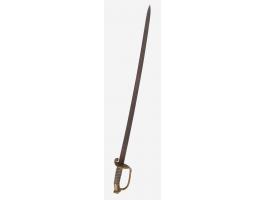
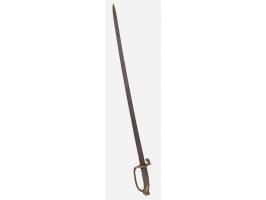
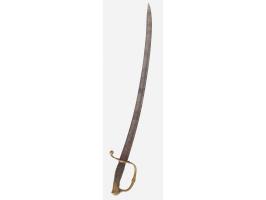
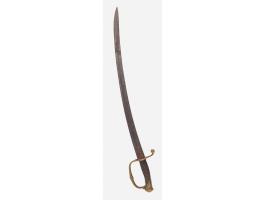
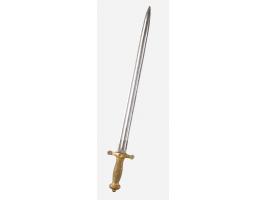
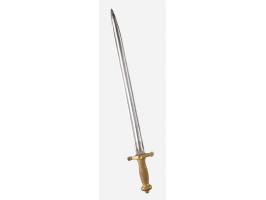
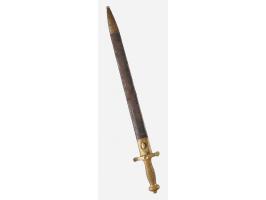
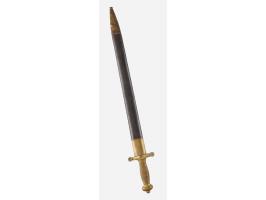
Three 19th-century European and American swords:
- a French Model 1855 Fireman’s Short Sword that measures 25" overall, with a straight, 19 1/2" double-edged blade having wide double fullers. This sword, very similar in design to the French Model 1831 Infantry Hanger, has a narrow straight-sided blade instead of the Model 1831’s wider and double-tapered Roman type blade. The steel retains much of the original factory polish, but does exhibit some dark freckling for about 1 1/2" at the tip. No markings are present on the ricasso, but many of these swords were manufactured at the armory in Klingenthal. The hilt features straight quillons with disk finials, grooved grip, and a rounded pommel with exposed capstan rivet, while the brass has an overall dull yellow-ochre patina throughout. The brass throat and chape of the scabbard have a matching patina, while the leather has moderate surface wear, and a partial break about halfway down on the obverse side. A partially legible marking is visible on the leather on the reverse: "(B or R)U(C)HE(?) & Ce." These swords were worn on ceremonial occasions and this example is in very good condition.
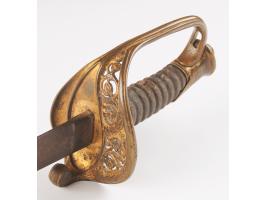
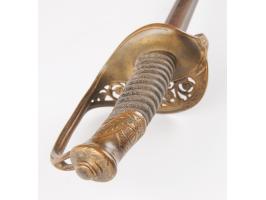
- an unmarked US Model 1850 Foot Officer’s Sword that measures 37 1/4" overall, with a 31 1/2" curved, single-edged blade having wide and narrow fullers. The unbent blade has an overall dark brown patina throughout, with moderate pitting and surface oxidation along the entire length on both sides. The brass hilt features a standard pierced counterguard, single forward-swept quillon, and knucklebow that meets an engraved "Phrygian helmet" pommel. The knucklebow has been bent straight in the middle, and the quillon is bent further forward than originally. The shagreen grip is separating where it meets the counterguard and is missing the braided wire wrap. No scabbard is included.
- a short European Infantry Hanger, or ‘Briquet’ that measures 29 1/2" overall, with a 23 7/8" curved, single-edged blade having single wide fullers. The blade has a mottled patina with some fairly bright gray along the foible, but dark freckling at the tip and mottled brown surface oxidation on the forte. No markings are visible on the ricasso, nor on the back edge. The brass hilt has a narrow counterguard, single forward-swept quillon, and a knucklebow with decorative accents at the midpoint and where it meets the pommel. The brass has an overall dull ochre patina while the leather grip has a loose, but intact braided wire wrap. No scabbard is included.
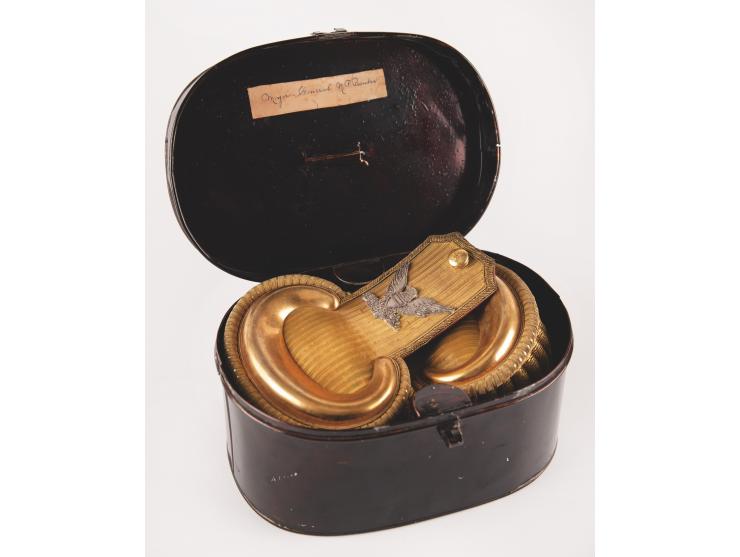
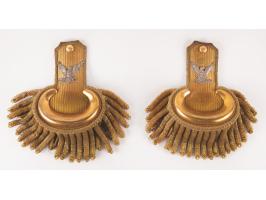
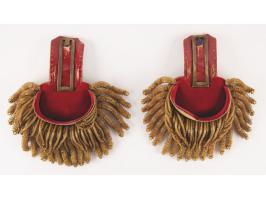
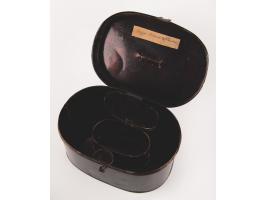
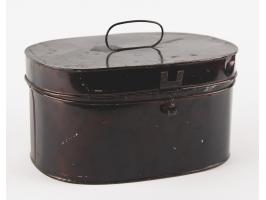
Civil War–Era US Army Artillery Colonel’s Dress Epaulettes with Storage Tin Identified to Maj. Gen. Nathaniel P. Banks
Opening: $200
Estimate: $1,500 - $2,500
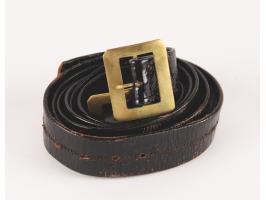
Pair of Civil War–era full dress epaulettes with bullion wire shoulder brooms, gilt Federal Eagle with "A (in shield)" Artillery service branch buttons, and embroidered silver wire full colonel’s eagle insignia. The undersides are marked "RIGHT" and "LEFT" with no retailer’s marking present. The small button clip is missing on the right side epaulette, but the hinged retaining bars are still present on both. The thin red leather backing is worn through in a few spots, but the bright red velvet backing for the shoulder brooms is in excellent, virtually unworn condition. The epaulettes are housed in an oblong japanned tin case that measures 9 7/8" long x 7" wide x 5 7/8" deep. The case retains nearly all of the original japanned lacquer finish, with only some very minor spots of flaking along a few of the exposed edges, and on the remaining portions of the broken cover latch. The interior of the case retains a commensurate amount of japanned finish with a coiled pair of narrow leather straps with brass buckles housed in the central pillar compartment. A small paper label is affixed to the inside of the lid that reads, "Major General Nathaniel P. Banks," in black ink.
Nathaniel Prentiss Banks (1816–1894) was a Massachusetts politician, US Congressman, and Governor of the Commonwealth of Massachusetts prior to the outbreak of the Civil War. Rejected for a Cabinet position in the Lincoln Administration, he was instead one of the first Major Generals of Volunteers appointed by Lincoln in May of 1861. Banks commanded troops in the military districts of Western and Eastern Maryland, and did much to quell the secessionist sentiment in the state which, despite allowing slavery, remained loyal to the Union throughout the war. Banks served as a Corps Commander during the Shenandoah Campaign, Northern Virginia Campaign, was given command of the Army of the Gulf, and later undertook reconstruction efforts in Louisiana. Opinion of his military career is mixed, his command in combat was not very well regarded by some of his subordinates, but he was widely acknowledged as an able administrator who managed to maintain civil order in occupied Confederate territory. He resumed his political career after leaving military service, eventually retired from public life after losing reelection due to failing health, and died on September 1, 1894. Since Banks was appointed directly to a Major Generalship without prior military service, it is difficult to connect these epaulettes to his Civil War service. As the Governor of Massachusetts prior to the war, however, he would have also served as the Commander-in-Chief of the Ancient and Honorable Artillery Company of Massachusetts, and since the epaulettes do have Artillery service branch buttons, they may well have had some connection to that. In any event, this is an extremely well-preserved set of Civil War era epaulettes, and would make a splendid addition to any collection.
Civil War
Opening: $200
Estimate: $200 - $400
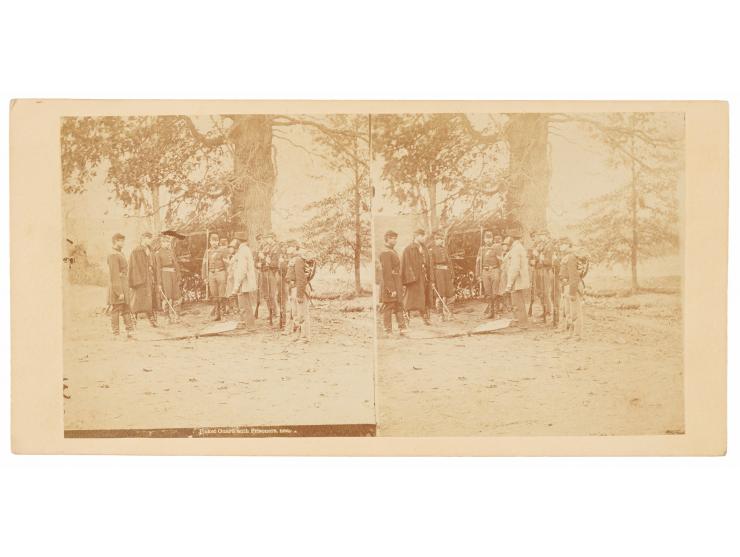
Stereoview photograph after Edward Bierstadt, 7 x 3.5, entitled 'Picket Guard with Prisoners near Lewinsville, Va.,' showing a Union picket guard with Confederate prisoners in 1861. In fine condition.
Edward Bierstadt (1824–1906), brother of the landscape painter Albert Bierstadt, was a photographer and publisher active during the Civil War era who produced stereographic views for the commercial market.
Opening: $200
Estimate: $200 - $300
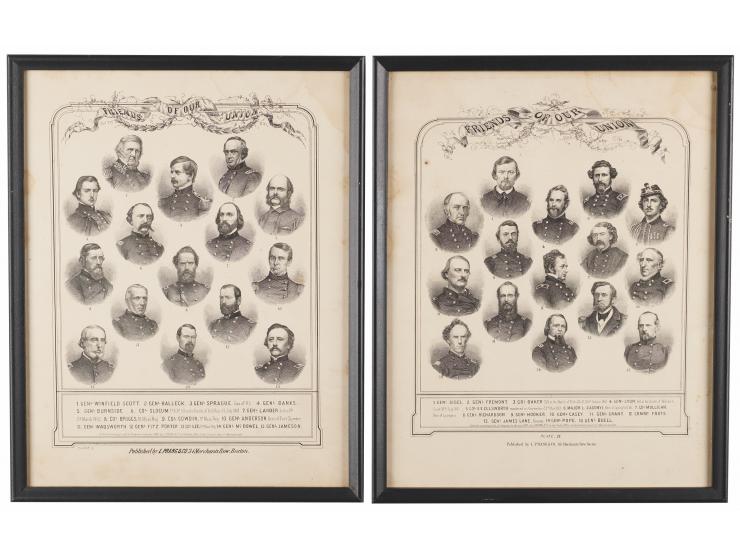
Two original circa 1862 prints featuring portraits of Union generals entitled "Friends of Our Union," each 10.5 x 13.75, published by "L. Prang & Co., 34 Merchants Row, Boston." Plate I depicts fifteen Union Army officers including Winfield Scott, Henry Halleck, Nathaniel P. Banks, Ambrose Burnside, John Stanton Slocum, Robert Anderson, Fitz John Porter, Irvin McDowell, Charles Davis Jameson, and others. Plate II portrays Franz Sigel, John C. Frémont, Elmer E. Ellsworth, Joseph Hooker, Ulysses S. Grant, John Pope, Don Carlos Buell, and others. Each print is framed to an overall size of 11.75 x 14.75. In very good to fine condition, with some scattered dampstaining.
Opening: $200
Estimate: $200 - $300
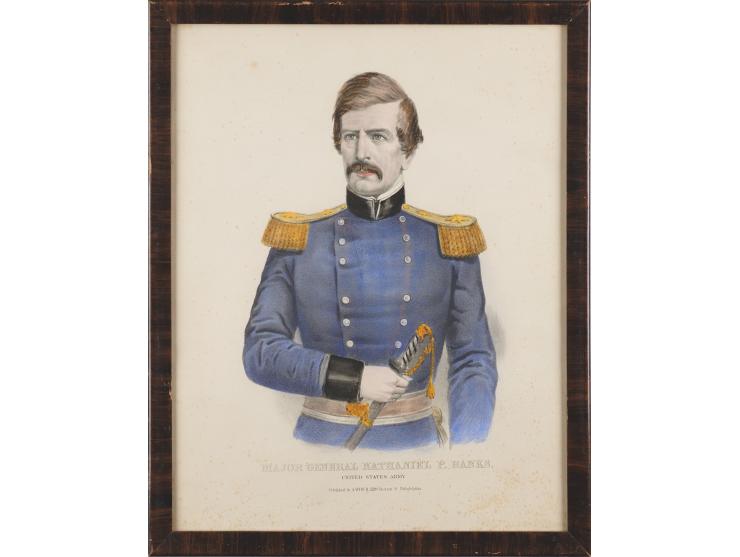
Circa 1861 hand-colored 12.5 x 15.5 lithograph entitled "Major General Nathaniel P. Banks, United States Army," published by Alden Winch of 320 Chestnut St., Philadelphia, showing the Union officer in uniform in a half-length pose. Framed to an overall size of 14 x 17. In very good to fine condition, with scattered foxing.
Weapons, Uniforms, and Artifacts
Opening: $200
Estimate: $200 - $300
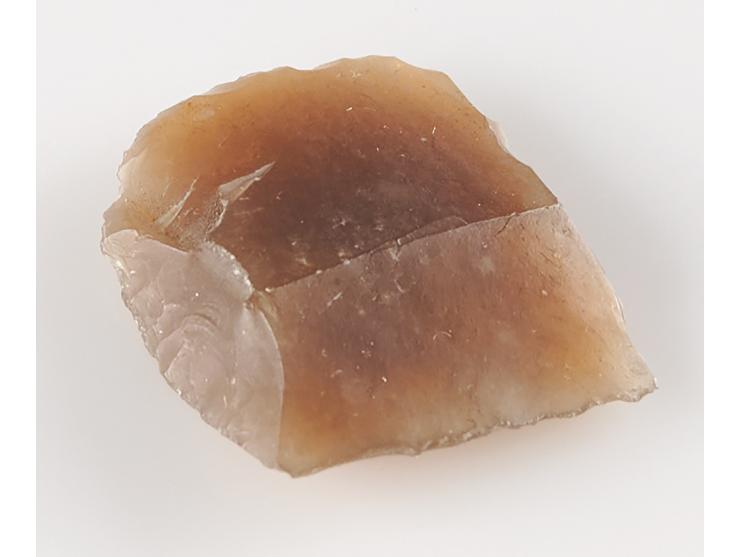
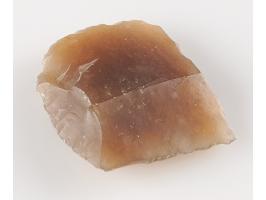
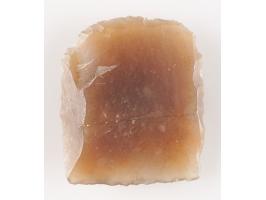
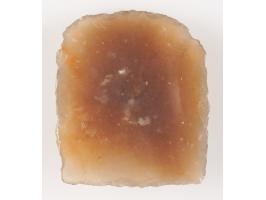
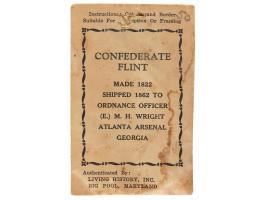
Piece of Confederate flint, measuring approximately 1.25˝ x 1˝, with its envelope from Living History, Inc., imprinted: "Confederate Flint, Made 1822, Shipped 1862 to Ordnance Officer (E.) M. H. Wright, Atlanta Arsenal, Georgia." In fine condition, with wrinkling to the envelope.
Civil War
Opening: $200
Estimate: $400 - $600
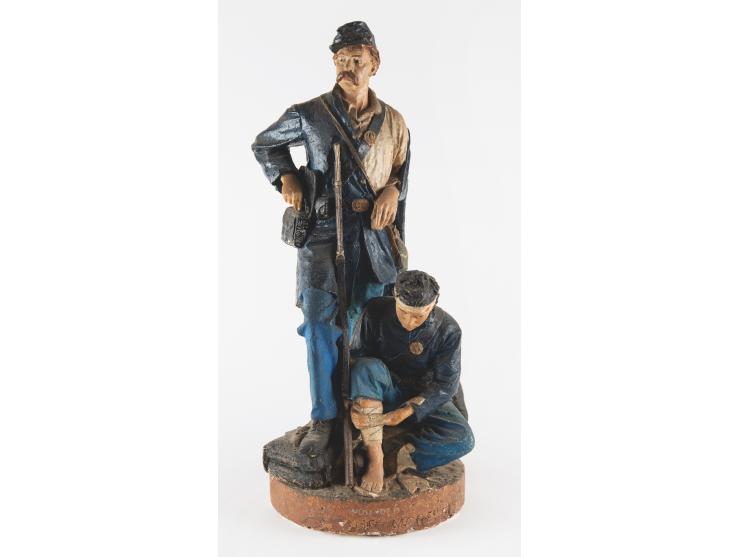
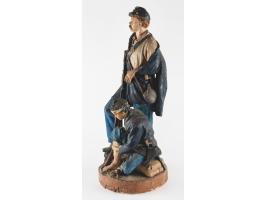
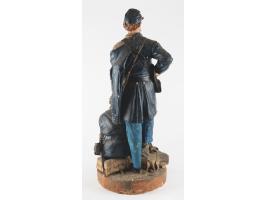
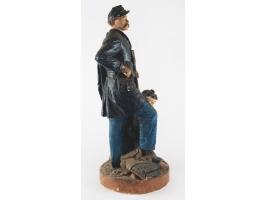
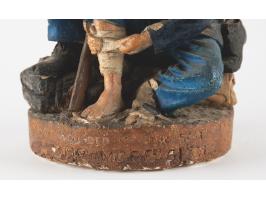
Scarce plaster-cast sculpture entitled "Wounded to the Rear, One More Shot" by American sculptor John Waters, measuring approximately 10˝ x 24.5˝ x 10˝, portraying two injured Civil War soldiers tending to their wounds and preparing to take one more shot. The sculpture's title is inscribed on the base: "Wounded to the Rear, One More Shot." In good to very good condition, with various surface chips, repaired cracks (including one to the standing soldier's neck), and paint applied later.
John Rogers (1829–1904) was a sculptor who beginning in the 1860s produced small plaster groups depicting scenes of American everyday life, the Civil War, and literary subjects, sold by mail order and through retail outlets at prices accessible to middle-class buyers. His 'Rogers Groups' were among the most widely distributed works of American sculpture in the nineteenth century, with some subjects selling in the thousands of copies. "Wounded to the Rear, One More Shot," first issued in 1864, was one of several sculptures that Rogers produced on Civil War subjects and was among his most popular. Rogers maintained a studio and salesroom in New York and shipped his groups throughout the country.
Opening: $200
Estimate: $1,500 - $2,500
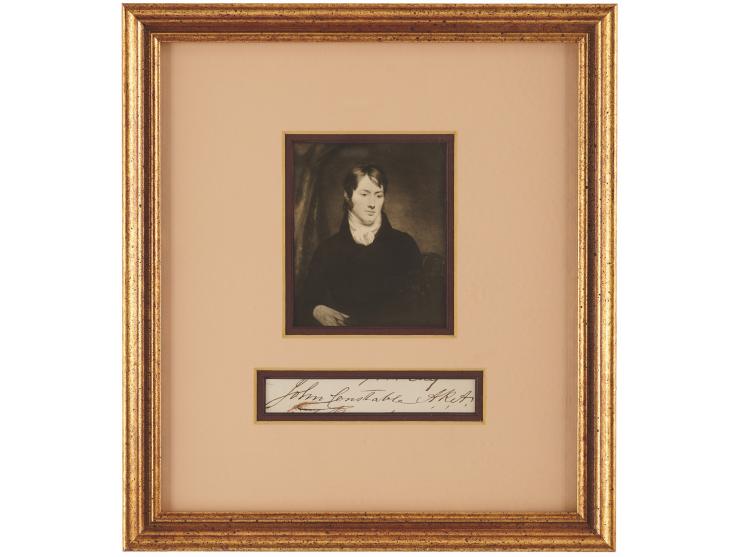
Rare ink signature, "John Constable, A.R.A.,” on an off-white 4.25 x .75 slip, double-matted and framed with a portrait to an overall size of 10 x 11. In fine condition.
Opening: $500
Estimate: $4,000 - $6,000
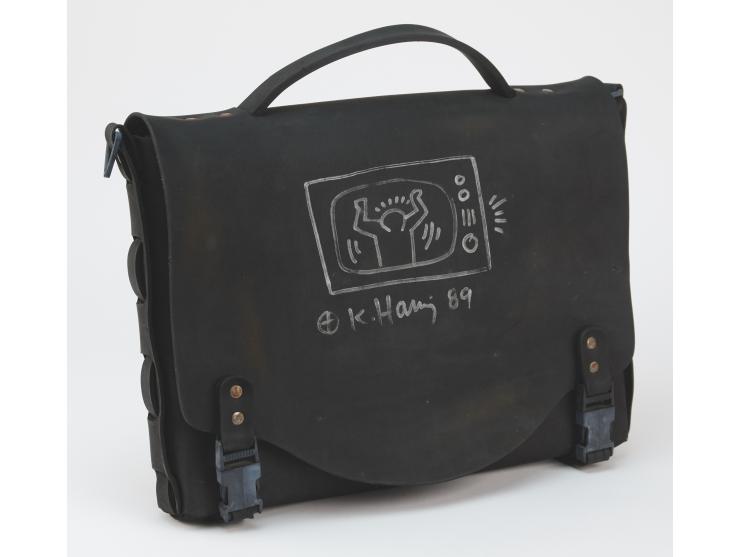
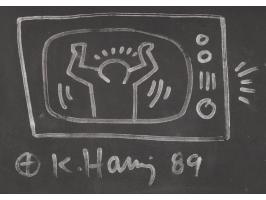
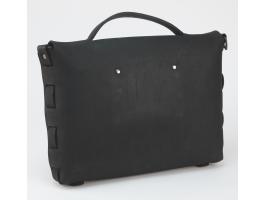
Black messenger bag made of a rubberized TPU fabric, 17˝ x 12˝ x 3.5˝, signed on the front flap in silver ink, “K. Haring, 89,” who adds his circle-cross symbol and a large sketch of a television set that contains a figure with raised arms, possibly a dancer. The inside of the bag bears an ownership notation. In fine condition, with wear from use. Throughout his work, Keith Haring repeatedly employed television imagery as a central motif, using it to critique media saturation, suggest themes of mind control, and highlight the growing influence of technology on modern society.
Per the consignor: ‘I was an art student at Pratt Institute in Brooklyn, NY, in the mid-80s when Keith Haring visited the school and spoke with a small group of students, which included me, in the video art program. During the visit, I was carrying a black messenger-style bag made of a rubber-like material, and I asked Keith to draw on it with an ink marker. Keith drew a TV with a dancing figure on the bag and signed it ‘K. Haring 89,’ preceded by his cross/circle symbol.
During those years, video artist Nam June Paik was a visiting professor at Pratt, and Juan Downey was a visiting lecturer. I was a student of Downey's. Haring and Paik knew each other and had a close relationship. Paik was one of Haring's mentors and a major influence on his work, especially related to video and electronic media. Haring also collaborated with Paik on a number of projects, including the production of a video art program for German television in 1984. The two artists shared an interest in technology and its impact on society, and they often explored these themes in their work.
I used the bag after Keith signed it, and as you can see, it is not in pristine condition, although it feels appropriate for the drawing and fits with the scenario in which it was created.’
Opening: $200
Estimate: $2,000 - $2,500
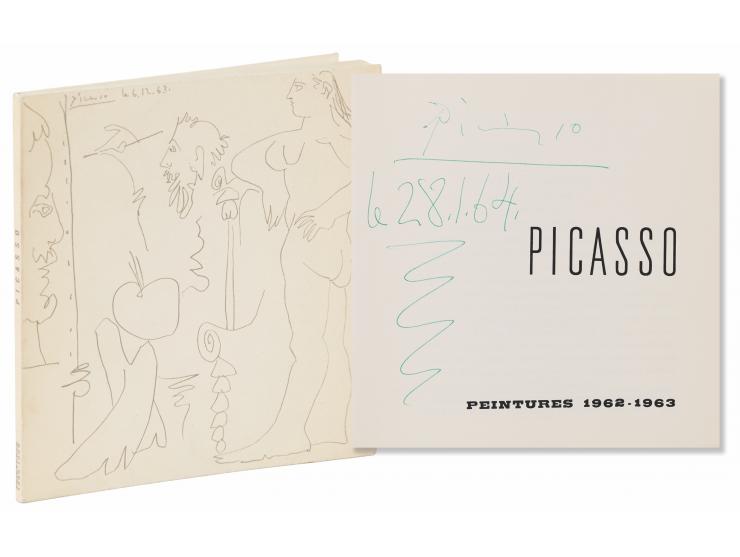
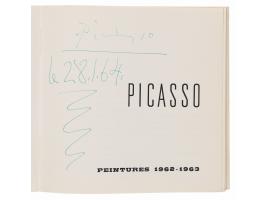
Softcover French-language catalog for an exhibition of Pablo Picasso paintings from 1962-1963, held between January 15 and February 15, 1964, at the Galerie Louise Leiris in Paris, 62 pages, 6.5 x 6.5, signed on the title page in green ballpoint, “Picasso, 28.1.64.” In fine condition.
Opening: $500
Estimate: $4,000 - $6,000
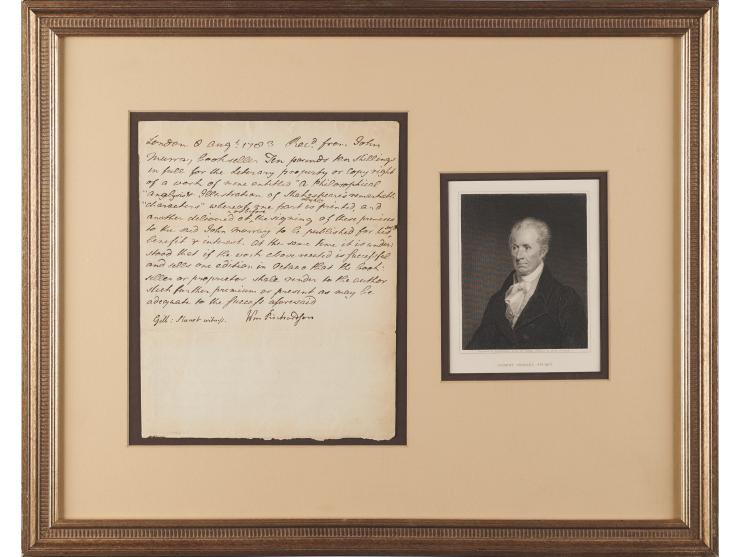
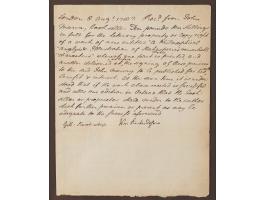
Manuscript DS, signed "Gilb: Stuart, witness,” one page, 7.25 x 9, August 2, 1783. Document concerning the publication rights to a literary work, in part: "Recd. from John Murray, bookseller Ten pounds ten shillings in full for the Literary property or Copy right of a work of mine entitled 'A Philosophical Analysis & Illustration of Shakespeare's remarkable characters' whereof one part is already printed, and another delivered at or before the signing of these premises to the said John Murray to be published for his sole benefit & interest. At the same time it is understood that if the work above…is successful and sells one edition in octavo that the bookseller or proprietor shall render to the author such further premium or present as may be adequate to the success aforesaid." Signed at the conclusion in ink by William Richardson and countersigned by Gilbert Stuart as a witness. Handsomely mounted, matted, and framed with a period engraving to an overall size of 19.75 x 15.75. In fine condition.
In 1775 Stuart went to London and entered the studio of the American artist Benjamin West, with whom he worked for about six years. In 1782 he opened his own London studio and for five years enjoyed great success, but in 1787 he fled to Dublin to escape his creditors.
Opening: $200
Estimate: $200 - $400
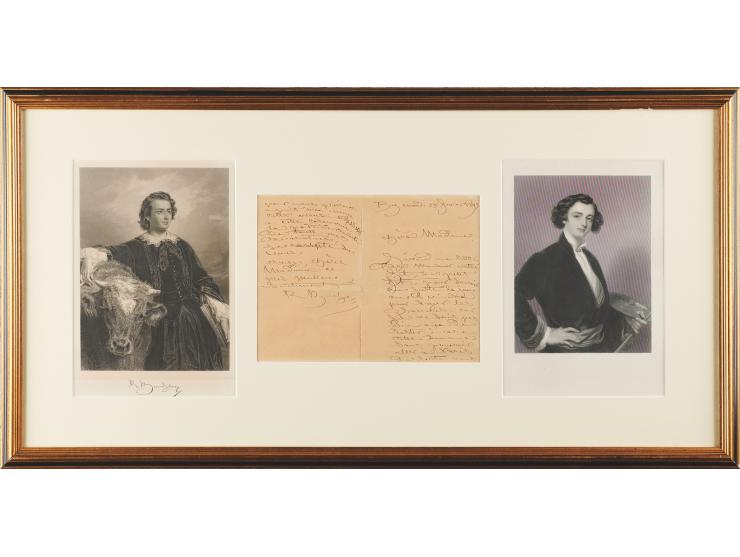
ALS in French, signed “R. Bonheur,” two pages on two adjoining sheets, 4.25 x 6.25, February 28, 1893. Untranslated handwritten letter by the popular French artist. Nicely matted and framed with two engraved portraits (one featuring a facsimile signature) to an overall size of 27 x 14. In fine condition.
Opening: $200
Estimate: $800 - $1,000
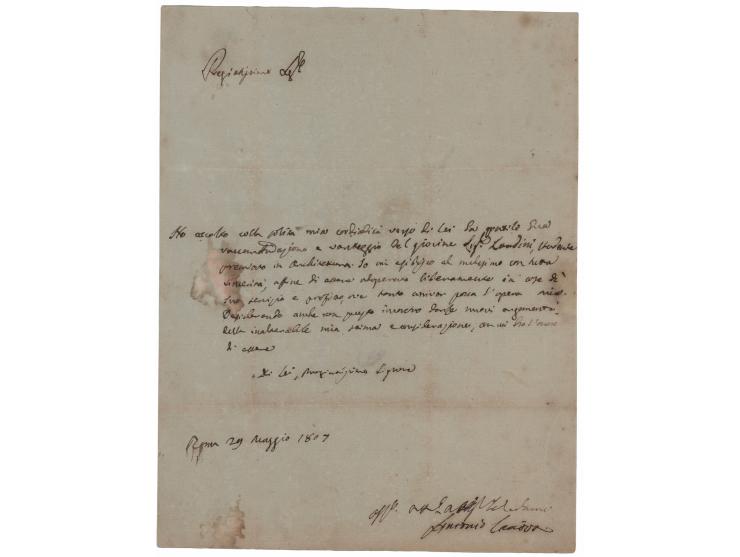
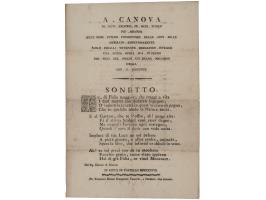
ALS in Italian, one page, 7.5 x 9.75, May 29, 1807. Handwritten letter of recommendation by Antonio Canova, in part (translated): "I received with particular cordiality what I gratefully accepted from you by way of recommendation on behalf of the young Mr. Landini, an award-winning student of Architecture. I shall offer myself to him with true sincerity, so that I may be freely employed in matters of his service and assist him wherever I may judge that my work can be of use." In very good to fine condition, with some light staining. Accompanied by an 1818 broadside printing of a sonnet dedicated to Canova.
Opening: $200
Estimate: $600 - $800
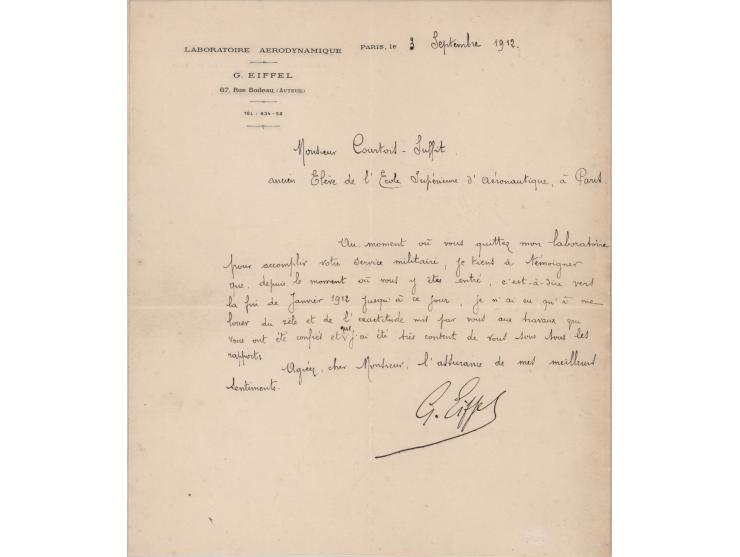
LS in French, signed “G. Eiffel,” one page, 8.25 x 9.75, personal letterhead, September 3, 1912. Letter to Mr. Courtoit-Suffit, a former student of the School of Aeronautics, Paris, in part (translated): "At the moment you are leaving my laboratory to complete your military service, I wish to testify that since the moment you entered…I have only had to praise the zeal and accuracy put by you into the works that have been entrusted to you." In fine condition.
Though best known for his eponymous tower, Eiffel made significant contributions to the scientific study of aerodynamics, and held a strong interest in early aviation. Early on, he conducted 'drop tests' of various objects from the Eiffel tower's 377-foot high second platform, and in 1909 expanded his research by building a wind tunnel at its base, where he used fans driven by electric motors to study air resistance in connection with aviation. Known as the 'Eiffel-type' wind tunnel, the designs he developed are still in use today.
Opening: $200
Estimate: $600 - $800
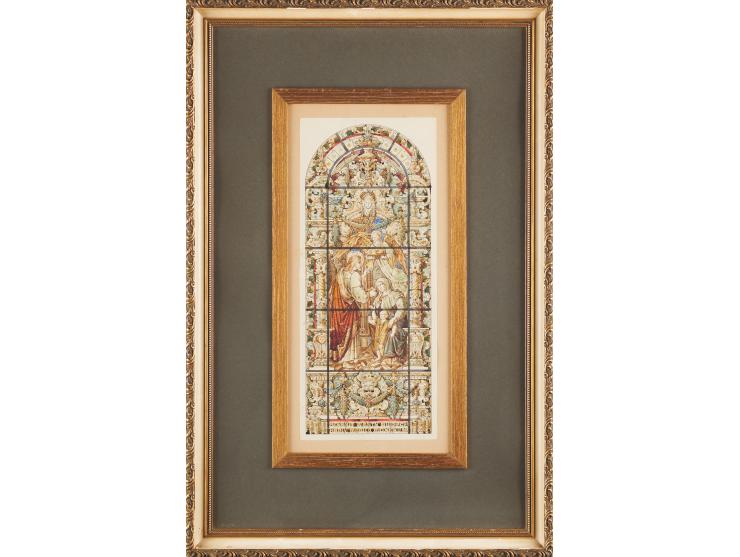
Exquisite preparatory study for a stained glass window design of the Biblical 'Feeding the Multitude' miracles, attributed to John La Farge by Albert Sandecki of Sanski Art Center Studio & Gallery of Haddonfield, New Jersey, where it was once held as part of the gallery's private collection. The stunning artwork is magnificently executed in watercolor on an off-white 5.25 x 12.5 sheet, likely done as a formal proposal for a church or cathedral's stained glass window commission; it does not appear to have been actualized. Mounted, matted, and framed to an overall size of 14 x 22. In fine condition. A masterful, highly detailed original painting, done by a brilliant colorist.
Opening: $200
Estimate: $600 - $800
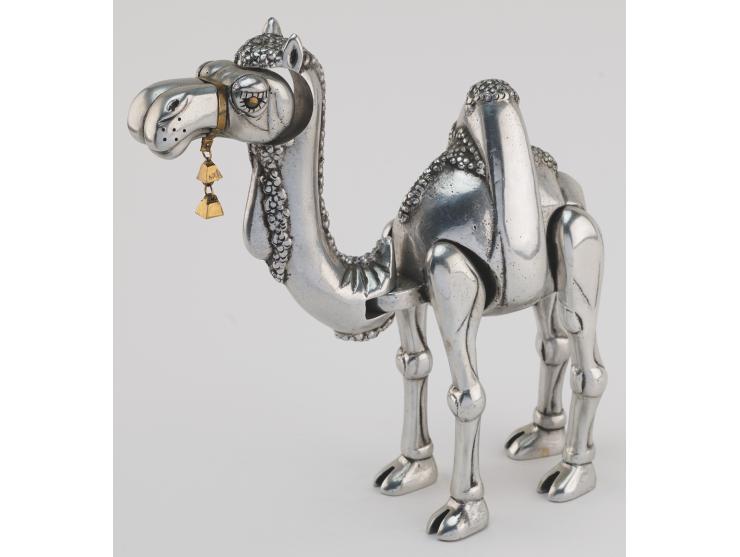
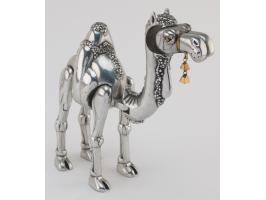
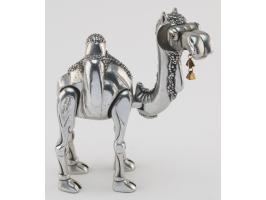
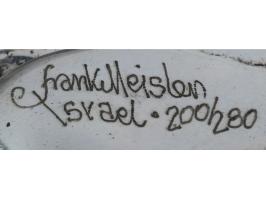
Limited edition metal alloy sculpture by Frank Meisler, measuring approximately 10.5˝ x 11.25˝ x 3.5˝, engraved on one of the hind legs with Meisler's signature and the edition number, "Frank Meisler, Israel, 200/280." The camel's face and neck are articulated, allowing for playful repositioning of the piece. In fine condition.
Opening: $200
Estimate: $400 - $600
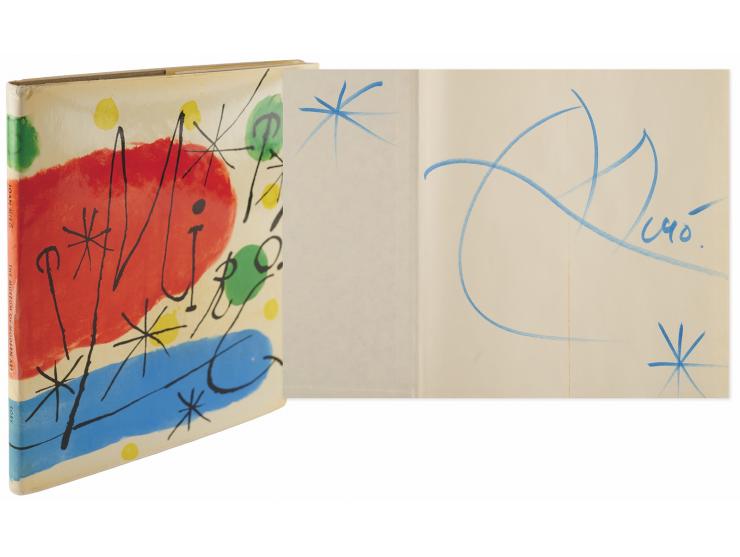
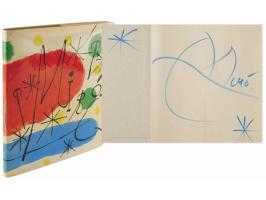
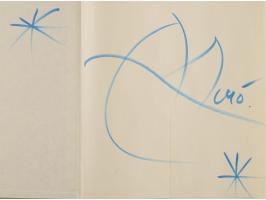
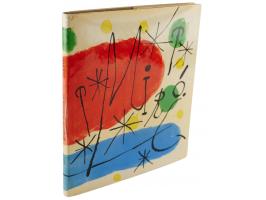
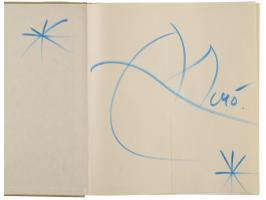
Signed book: Joan Miró by James Thrall Soby. First edition. NY: The Museum of Modern Art (MoMA)/Doubleday & Company, Inc., 1959. Hardcover with dust jacket, 8.75 x 9.5, 164 pages. Prominently signed on the first free end page in blue felt tip by the artist, "Miró," adding two starlike asterisk sketches. In fine condition, with a light strip of toning to the center of the signed page.
Opening: $200
Estimate: $300 - $400
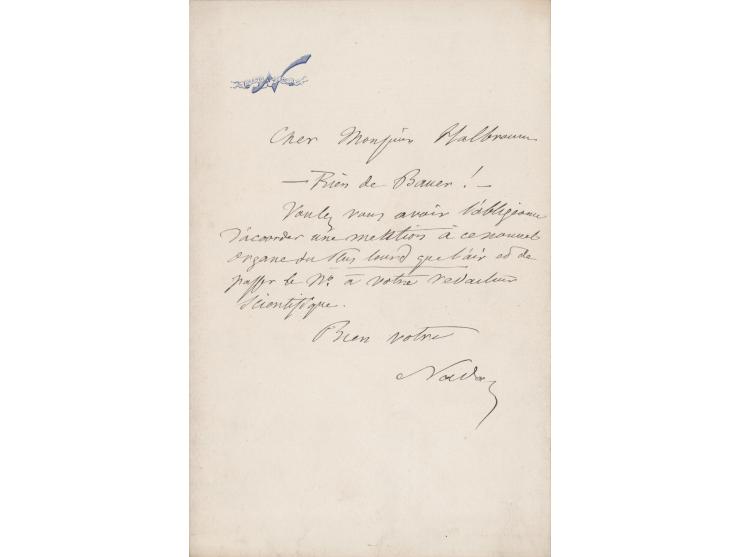
ALS in French, signed “Nadar,” one page, 5.25 x 8.25, personal letterhead, no date. Handwritten letter by the noted photographer, in full (translated): "Would you be so kind as to grant a mention to this new publication concerning heavier-than-air flight and to forward the issue to your scientific editorial staff." In very fine condition. Nadar coined the term "plus lourd que l'air"—heavier than air—in 1863 to designate flying machines or aerodynes as opposed to balloons.
Opening: $200
Estimate: $200 - $400
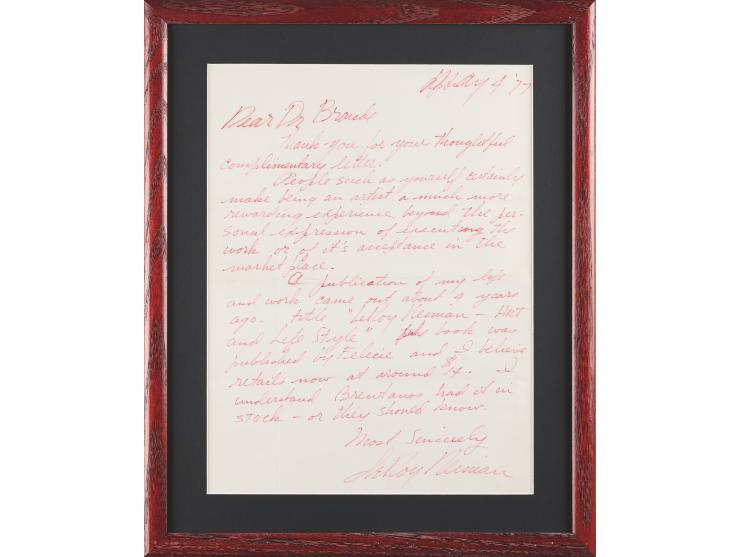
ALS, one page, 10.5 x 13.5, May 4, 1977. Handwritten letter to "Dr. Brand," in part: "Thank you for your thoughtful complimentary letter. People such as yourself certainly make being an artist a much more rewarding experience beyond the personal expression of executing the work or of it's acceptance in the marketplace. A publication of my life and work came out about 4 years ago, title 'LeRoy Neiman—Art and Life Style.'" Matted and framed to an overall size of 14.5 x 17.5. In fine condition.
Opening: $200
Estimate: $300 - $400
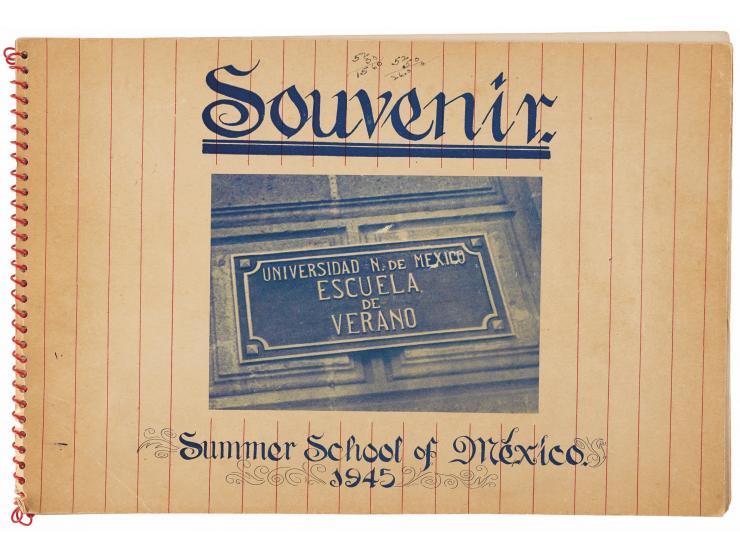
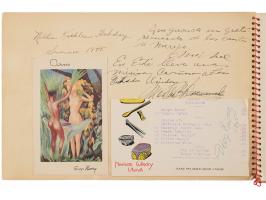
Menu from the Hotel Geneve in Mexico City, one page, 6.25 x 9.5, August 11, 1945, signed at the bottom in fountain pen, "Diego Rivera, 1945." Affixed inside the front cover of a souvenir album from the Summer School of Mexico, alongside a postcard of one of his works featuring a printed signature. In fine condition.