Weapons, Uniforms, and Artifacts
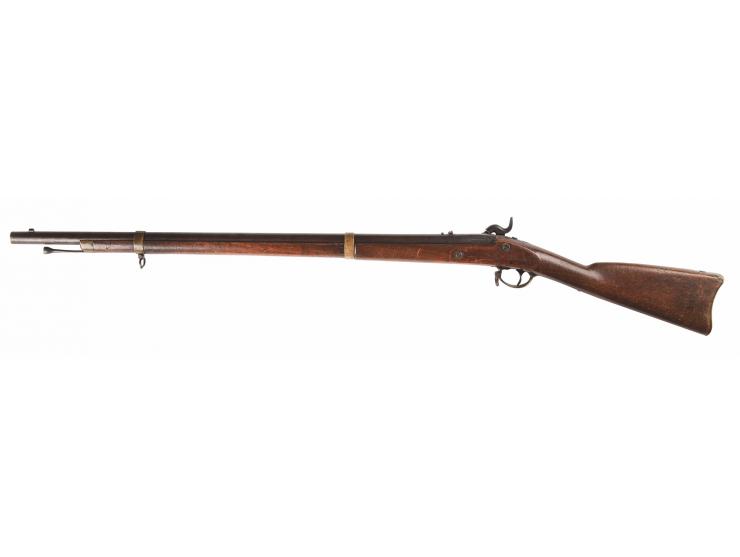
Opening: $500
Estimate: $4,000 - $6,000
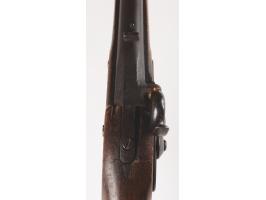
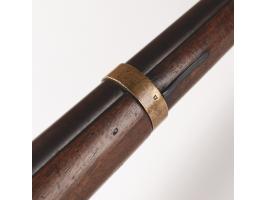
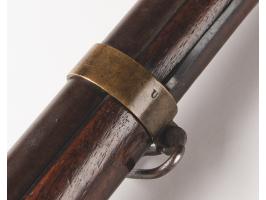
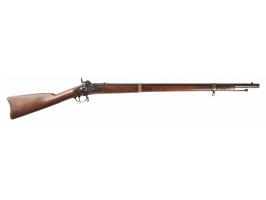
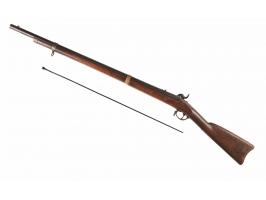
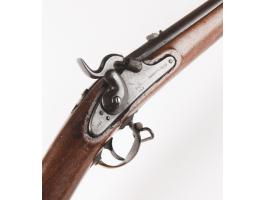
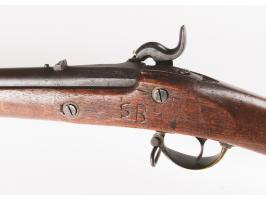
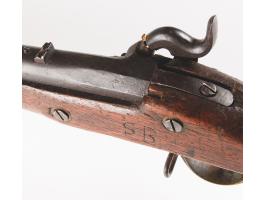
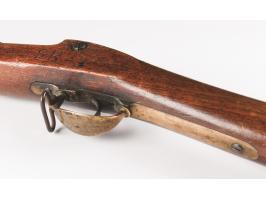
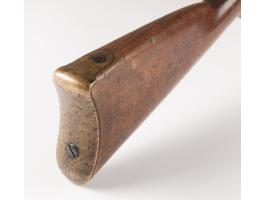
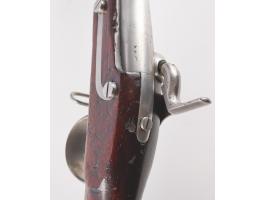
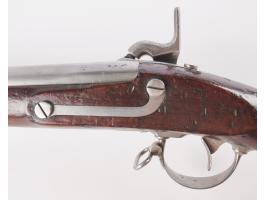
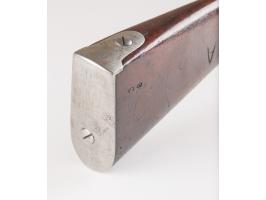
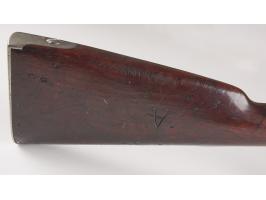
Civil War Confederate Fayetteville Type IV Percussion Rifle, approximately .67 caliber, 33˝ smoothbore barrel with a fine, lightly freckled bore. This is a so-called 'Model 1855' two band rifle that was altered to smoothbore at some point and given an enlarged bore diameter. The metal has an overall dark plum-brown patina with areas of light-moderate pitting, heaviest at the breech-end of the barrel and on the nipple bolster. Some further impact marks and minor scratches are present near the muzzle, as well as some small spots of white paint on the right side, and the rear sight is a single-notch replacement. Additionally, vise marks are present on the left side of the barrel breech. The 1864 dated lockplate matches the patina on the barrel, with the characteristic inverted "S" in the "CSA," and lacks the 'hump' present on the earlier types of Fayetteville arms. The walnut stock is not equipped with a patchbox, and has numerous small handling marks and small surface blemishes scattered throughout, as well as a stable with-the-grain crack running forward from the rear lock screw bolster, and some small chips missing from around the top tang. The wood retains an old varnish finish that thins considerably at the butt, and has a deeply carved set of initials on the left side opposite the lock, "SB." The brass furniture has developed a dark ochre-brown patina, including the "CSA" marked buttplate. The rifle is equipped with an original metal ramrod that is slightly bent near the head and shortened by about 2˝. The lock is mechanically excellent and functions firmly and flawlessly. This is a rare, late-war Confederate rifle in very good condition overall.
As an antique gun this will transfer without any restrictions.
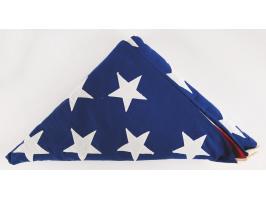
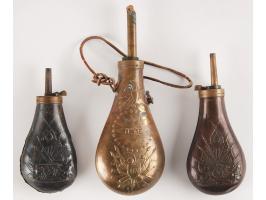
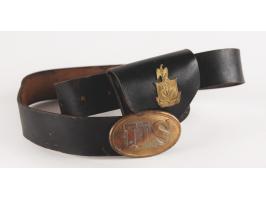
American Flag (50 Star) by Valley Forge Flag Co., with Civil War Belt (Reproduction) and Antique Powder Horns (4)
Opening: $200
Estimate: $200 - $400
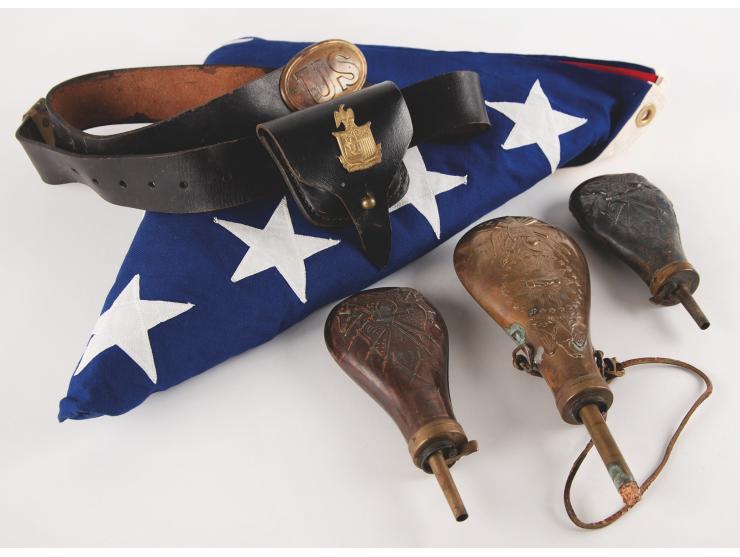
Vintage 50-star United States flag by Valley Forge Flag Co. (post 1959), approximately 115˝ x 56˝, machine-sewn and made of cotton, with 50 double-appliqued cotton stars, and metal grommets on the header, which bears the “Valley Forge Flag Company” manufacturing label. Included with the flag is a reproduction Civil War Union belt and cap box, approximately 45˝ in length, with a reproduction New York Militia cap badge, and a lot of three vintage reproduction metal powder horns from the mid-to-late 20th century. In overall very good condition.
The current flag of the United States, adorned with 50 stars, represents each of the fifty states in the Union. This iconic symbol of American unity and pride underwent several iterations before arriving at its present design. The 50-star flag came into official use on July 4, 1960, following the admission of Hawaii as the 50th state on August 21, 1959. The design was created by Robert G. Heft, a 17-year-old high school student from Ohio, as part of a school project. Heft's design was chosen out of over 1,500 submissions and was officially adopted by President Dwight D. Eisenhower. The flag’s design adheres to a pattern of nine rows of stars staggered horizontally and eleven rows staggered vertically on a blue field, accompanied by thirteen horizontal stripes representing the original thirteen colonies.
The journey to the 50-star flag began with the 13-star version, first adopted on June 14, 1777, by the Second Continental Congress. As the nation expanded, additional stars and stripes were incorporated to represent new states. However, in 1818, Congress passed an act maintaining thirteen stripes to honor the original colonies and adding new stars for each new state. Throughout the centuries, the flag evolved with the nation's growth, reflecting its dynamic history. The transition to the 50-star flag marked a significant milestone, symbolizing not only the geographical expansion but also the unity and diversity of the American people. Today, the flag remains a powerful emblem of national identity, flown proudly across the nation and recognized globally.
Opening: $200
Estimate: $200 - $400
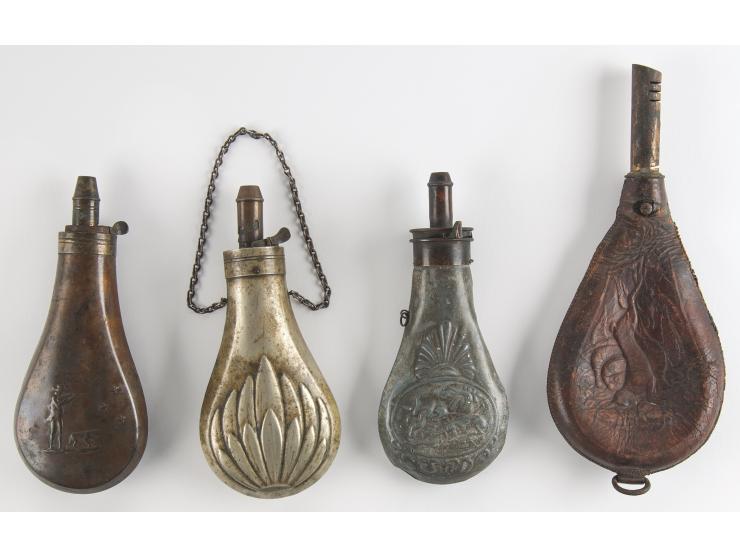
Group of four antique powder horns from the 19th-20th century, metal and leather, ranging in size from 3.25˝ x 7.5˝ to 4.25˝ x 10˝, each with embossed designs to the body. In overall very good to fine condition.
Opening: $200
Estimate: $200 - $400
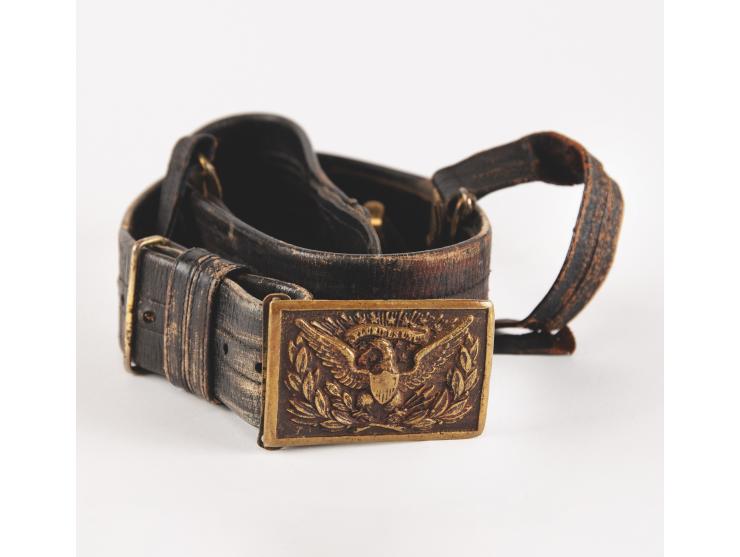
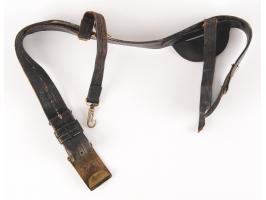
Civil War Union Officer’s leather belt, approximately measuring 34˝ in length, with a brass-tone Union officer’s ‘Eagle’ belt buckle. In very good condition, with various wear to leather.
Opening: $200
Estimate: $1,500 - $2,000
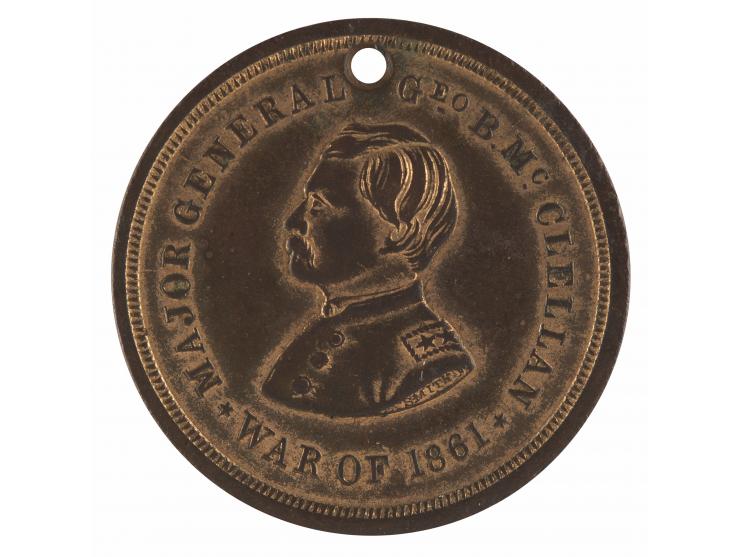
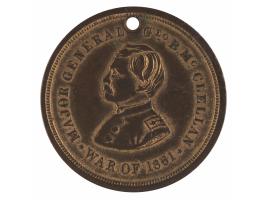
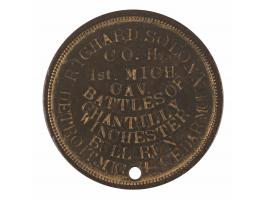
Remarkable original private-purchase identification disc of Private Richard Solon of Company H, 1st Michigan Cavalry, who saw action alongside George A. Custer's cavalry at Gettysburg. The excavated disc measures approximately 1.25˝ in diameter and features the portrait of Major General George B. McClellan on the front, with "War of 1861" below; the reverse is engraved: "Richard Solon, Detroit, Mich. Cedar Moun., Co. H., 1st Mich. Cav., Battles of Chantilly, Winchester, Bull Run." In very good to fine condition.
The First Michigan Cavalry was organized at Detroit and mustered into federal service on September 13, 1861, with an enrollment of 1,144 officers and men. The regiment left for Washington, D.C. on September 29, 1861, and went into camp near Frederick, Maryland, where it remained several months. It was during this time that Richard Solon, then a resident of Frederick, enlisted and was mustered in as a private in Company H. During his service with the regiment Solon was promoted to bugler and would see some of the hardest cavalry righting of the war, to include action with Custer's cavalry at Gettysburg.
Solon was wounded by gunshot on June 11, 1864, at Trivillion Station, and listed as 'missing, known wounded.' He was taken prisoner there and confined in Richmond until his parole on September 1, 1864. The freed cavalryman was admitted to the hospital on September 22, 1864, and on January 7th the long-suffering trooper was subjected to amputation of his left leg. Solon would be discharged for disability at Harper Hospital, Detroit, Michigan, and continued to suffer the effects of his wounds until his death on June 12, 1898.
Notably, this 'best of kind' identification disc is pictured in the book Battlefields of the Civil War by William C. Davis (p. 101).
Opening: $200
Estimate: $800 - $1,200
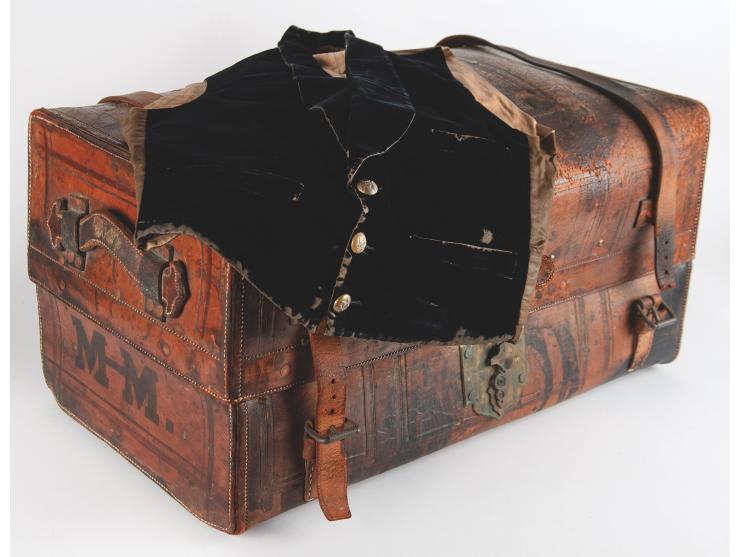
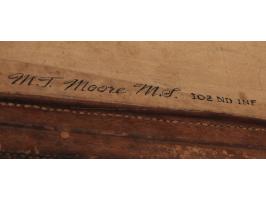
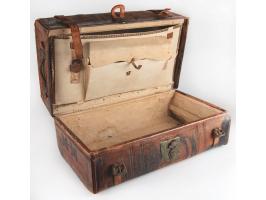
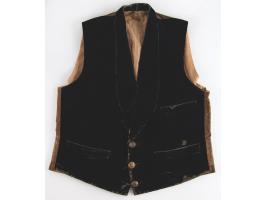
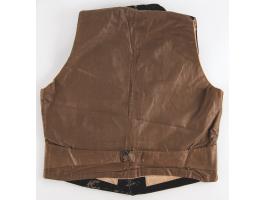
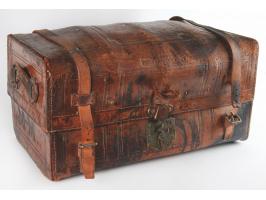
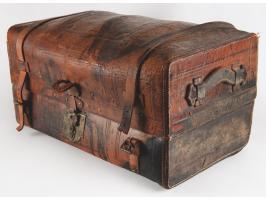
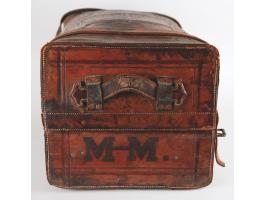
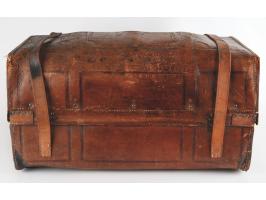
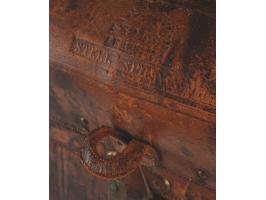
Two items attributed to the Civil War service of Assistant Surgeon Marshall T. Moore of the New York 102nd Infantry Regiment, including: a large leather trunk, measuring approximately 26.5˝ x 13.5˝ x 16˝, with the physician's initials stenciled on the left panel, "M—M.," his name inked inside the lid, "M. T. Moore, M.S., 102nd INF," and the cover blindstamped "Warranted Sole Leather"; and Moore's plush velvet vest, inked on the inside pocket, "M. T. Moore," with three coat-sized eagle buttons on the front. In overall good to very good condition, with heavy wear to the trunk, including splits to the leather straps. Moore enlisted on June 19, 1863, and was present at the Battle of Gettysburg.
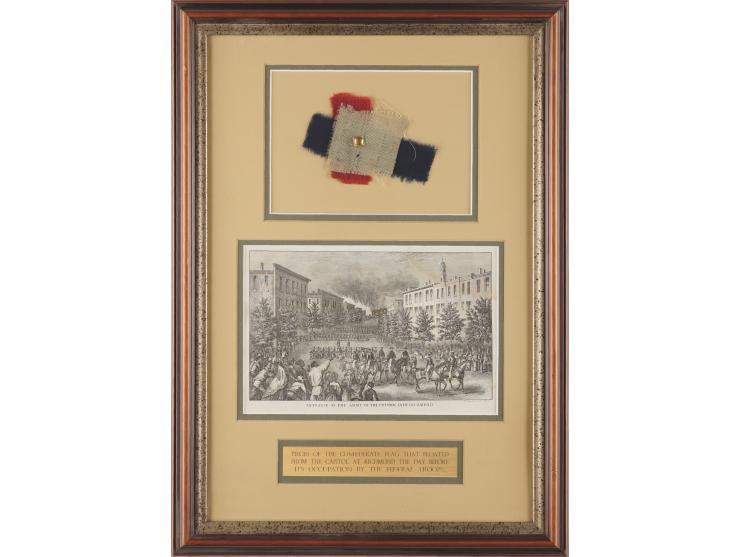
Confederacy: "Relics of the Confederate Flag That Floated From the Capitol at Richmond the Day Before Its Occupation by the Federal Troops"
Opening: $200
Estimate: $400 - $600
Three fragments of attributed to the Confederate flag flown over Richmond on the eve of its occupation by Union forces—one red (3" x 1.5"), one blue (4.5" x 1.25"), and one white (2" x 2.5")—mounted with an original lithograph entitled "Entrance of the Army of the Potomac Into Richmond" and attractively matted and framed to an overall size of 14 x 20. An identification plaque below reads: "Relics of the Confederate Flag That Floated From the Capitol at Richmond the Day Before Its Occupation by the Federal Troops." In fine condition. Accompanied by a 1988 letter from the registrar of the Museum of the Confederacy, responding to an inquiry about the swatches, in part: "We do have several pieces of flag similar to the ones you describe in our collections, so I would have no reason to doubt the authenticity of your piece."
Opening: $200
Estimate: $600 - $800
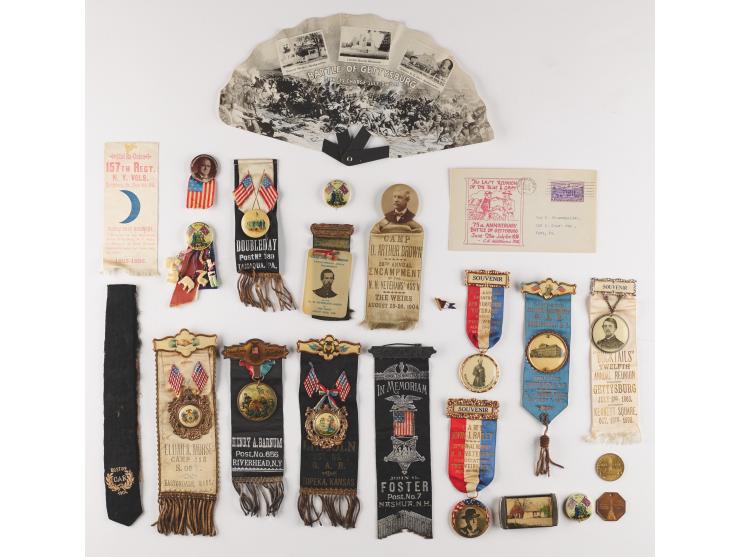
Large grouping of 23 pieces of Grand Army of the Republic (GAR) memorabilia, highlighted by ribbons, badges, and medals. Includes a "Boston GAR 1904" thin necktie; "Lincoln, Post No. 1, Topeka, Kansas" ribbon; "Henry A. Barnum, Post No. 656, Riverhead, N.Y." ribbon; "Elijah A. Morse, Camp 118, S. of V., Eastondale, Mass." ribbon; "John G. Foster, Post No. 7, Nashua, N.H." ribbon; "Doubleday, Post No. 189" ribbon; "Thirty-Sixth National Encampment, G.A.R., Washington, D.C….October 7, 1902" souvenir ribbon; souvenir ribbons from the 24th, 28th, 35th, and 37th annual "N.H. Veterans Association" reunions; a "21st Re-Union, 157th Regt., N.Y. Vols." ribbon; a souvenir ribbon from the "'Bucktails' Twelfth Annual Reunion" at Gettysburg in 1898; three pinback buttons honoring the 50th anniversary of the Battle of Gettysburg; an enameled "Gettysburg" pin; a postal cover honoring the 75th anniversary of Gettysburg; a match safe depicting Lee's headquarters at Gettysburg; a pictorial hand fan with scene of Pickett's Charge; and two commemorative Gettysburg coins.
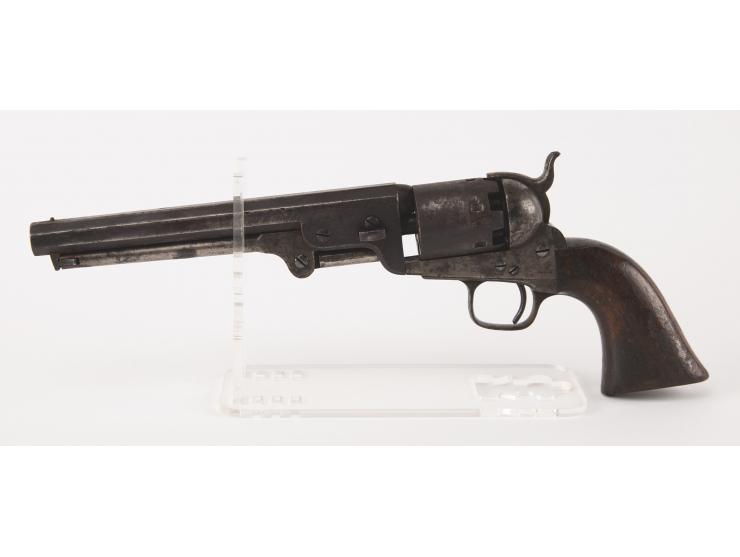
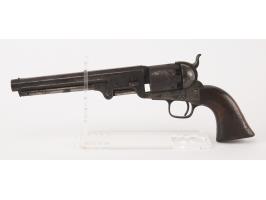
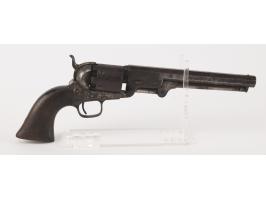
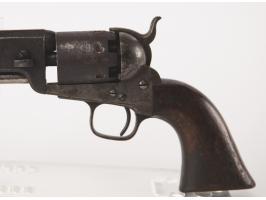
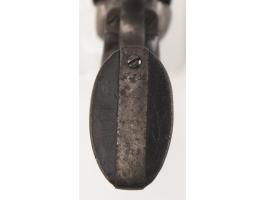
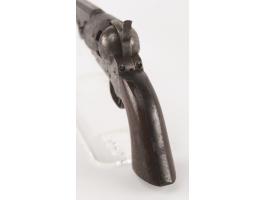
London Model Colt 1851 Navy Revolver, Identified to Lt. Edwin R. Good, 11th New Jersey Volunteer Infantry
Opening: $200
Estimate: $1,500 - $2,000
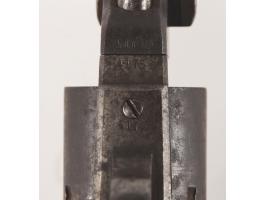
London Model Colt 1851 Navy .36-caliber single-action revolver, serial no. 41766, octagonal 7.5˝-long barrel, identified to Lt. Edwin Good of 'F' Company, 11th Regiment, New Jersey Volunteer Infantry (as attested by descendants in accompanying auction records and a description from The Horse Soldier Fine Military Antiques). Stamped on the barrel, "—Address Col. Colt London—," with matching serial numbers on all components: barrel, frame, triggerguard, loading lever, buttplate, cylinder, and wedge). One of the most sought-after sidearms ever produced, this is a fine, complete specimen with a dark patina.
Edwin Good, a New York City native living in Trenton, was mustered into Federal service as a 2nd Lieutenant in Company F, 11th New Jersey Volunteers on August 13, 1862. He was promoted to 1st Lieutenant in February 1863 and served in the hard-fought 11th NJ Infantry, part of Sickles’ Third Corps. At the Battle of Gettysburg on July 2, 1863, Good was wounded near the Peach Orchard by a rifle shot that shattered his right arm. The injury left his arm paralyzed, and he was honorably discharged on October 7, 1863. Photocopies of his service records are included.
Opening: $200
Estimate: $400 - $600
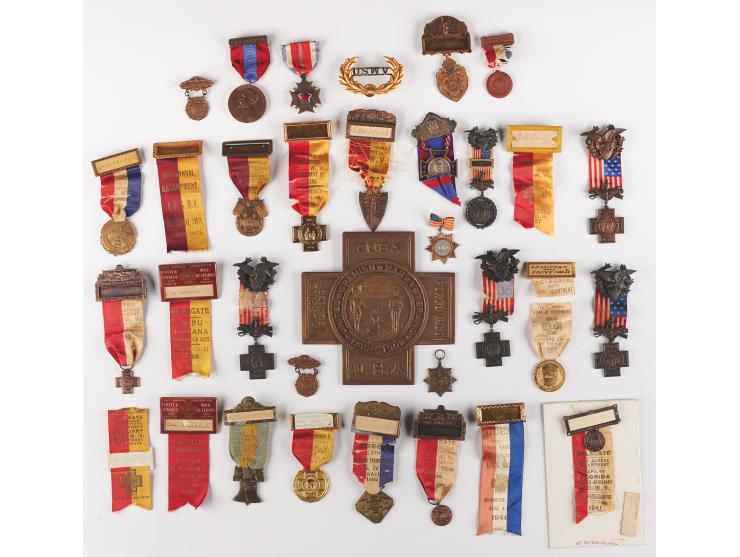
Large group of more than 30 "United Spanish War Veterans" badges, medals, and insignia, including: five member's medals; national encampment medals for New Orleans 1931, Milwaukee 1932, Denver 1929, Philadelphia 1930, Milwaukee 1946; state encampment badges for Indiana, Pennsylvania, New York, and Florida; an unnamed Sampson Medal with a USS Brooklyn bar; a Malate Cross presented by the 10th Pennsylvania Volunteer Infantry for Heroic Services in the Philippine Islands; and several others, most with patriotic or red-and-yellow ribbons. In overall very good to fine condition, with some splitting and fraying to ribbons.
Opening: $200
Estimate: $1,500 - $2,000
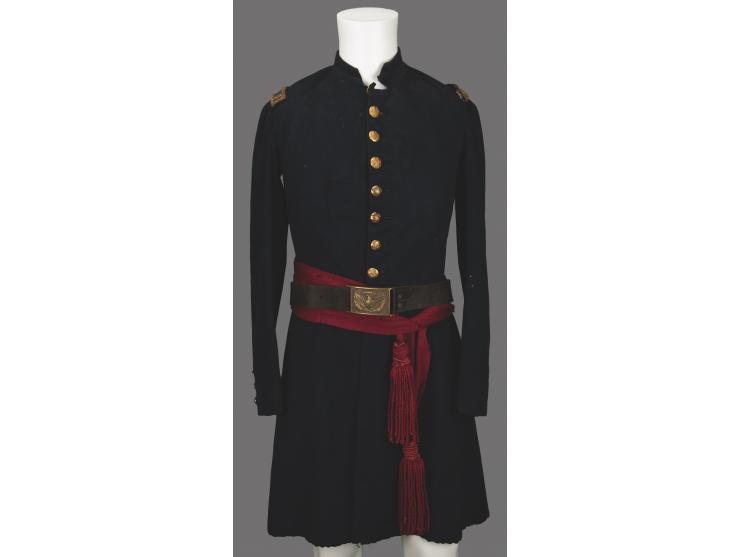
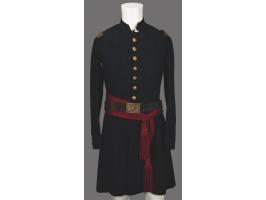
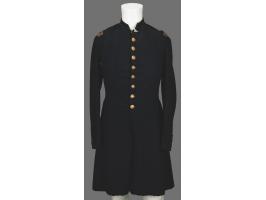
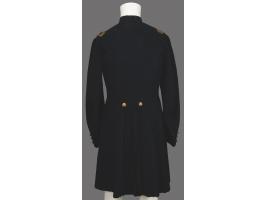
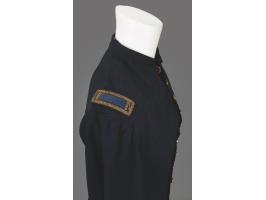
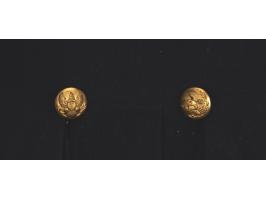
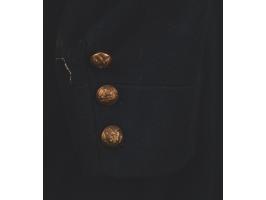
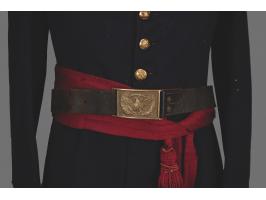
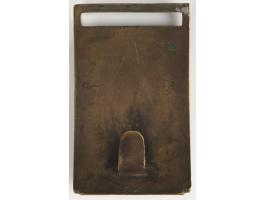
Union Infantry officer's deep blue frock coat with 1st lieutenant shoulder straps, scarlet NCO sash, and officer's belt with buckle. The coat features nine brass-tone post-war buttons, each bearing a spread-wing eagle with the "I" shield on its chest, denoting the infantry branch of service, and the back of each stamped by the Waterbury Button Company, a style that wasn't used until after the Civil War. Each cuff bears three similar buttons, with the reverse of those bearing war-era "Extra Quality” backmarks. The shoulder straps feature gold wire bullion borders and bars with a solid dark blue field. The included NCO sash approximately measures 92˝ in length, and the belt approximately measures 40˝ in length and features a brass-tone Union officer’s belt buckle numbered on the back, “82.” The condition of the coat is fair, with several moth holes and an old 6˝ stitched repair on the front breast; the sash is in very good condition; and the belt and buckle bear slight overall wear.
Opening: $200
Estimate: $300 - $400
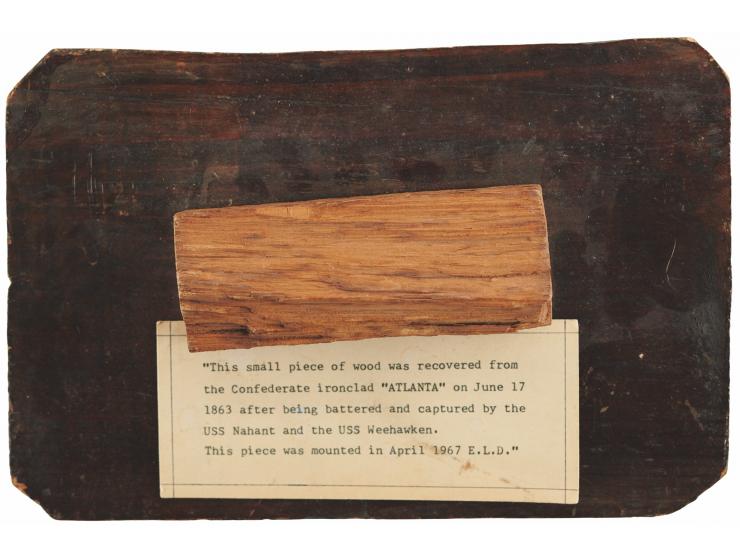
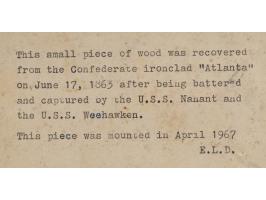
Section of 4.25˝ x 1.75˝ x 1.25˝ wood attributed to the USS Atlanta, an ironclad that served in the Confederate and Union Navies during the Civil War. Affixed to a 8.5˝ x 5.5˝ wooden mount, marked "CSS Atlanta," with attribution label affixed to the reverse: "This small piece of wood was recovered from the Confederate ironclad 'Atlanta' on June 17, 1863 after being battered and captured by the U.S.S. Nahant and the U.S.S. Weehawken. This piece was mounted in April 1967, E.L.D." In fine condition.
Originally built as the British blockade runner Fingal, the ship was converted into the Confederate ironclad CSS Atlanta during the Civil War. In June 1863, she ran aground while attempting to attack Union blockaders in Wassaw Sound, Georgia, and was captured after a short battle with Union monitors Weehawken and Nahant. Repaired and commissioned as USS Atlanta in 1864, she served the Union Navy on the James River for the remainder of the war before being decommissioned in 1865.
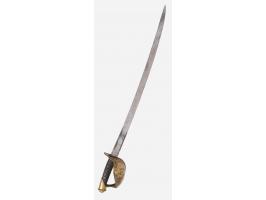
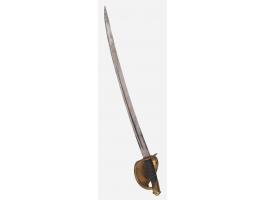
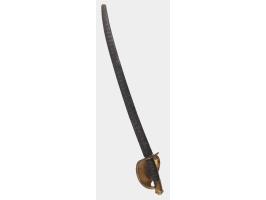
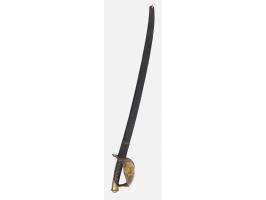
Opening: $200
Estimate: $800 - $1,200
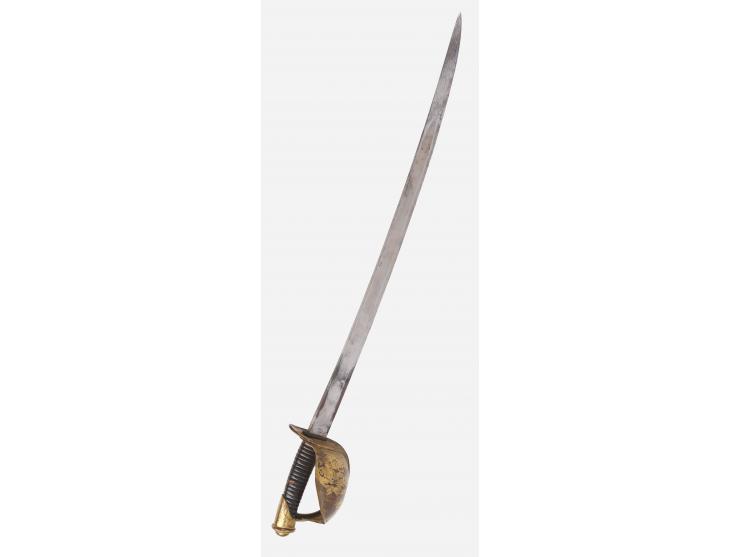
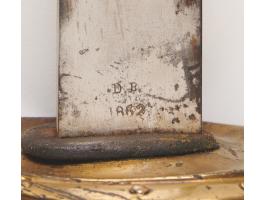
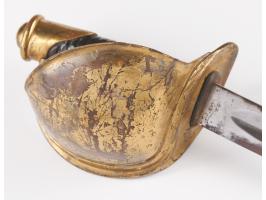
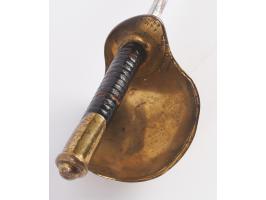
Handsome Civil War-Dated US Model 1860 Naval Cutlass by Ames Mfg. Co., measuring 31 1/2" overall, with a 25 5/8" curved, single-edged blade having wide, single fullers. The steel has much of the original bright finish visible, with the balance freckled plum-brown, heaviest along the back edge and at the tip. The ricasso has the Ames scroll trademark on the reverse, with clear "D.R. / 1862" on the obverse. The brass hilt has an overall yellow-ochre patina with areas of dark ochre tarnish scattered across the exterior, and the ridged leather grip has moderate flaking throughout, and the braided wire wrap is no longer present. The original riveted leather scabbard is included that is intact and fully serviceable, but does exhibit extensive surface flaking throughout, as well as a torn section at the very tip. These scabbards did not survive at the same rate as the cutlasses themselves and this is a very good original example. This is a very attractive Civil War naval cutlass, in very good condition overall.
Opening: $300
Estimate: $2,500 - $3,000
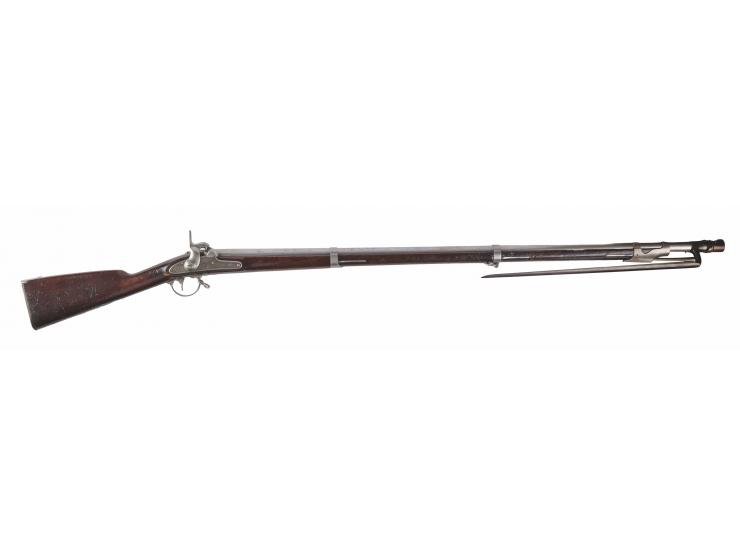
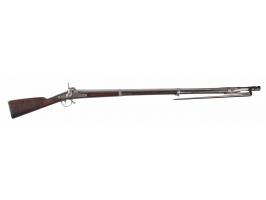
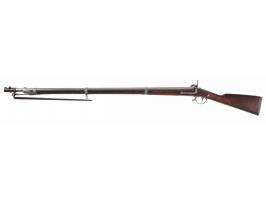
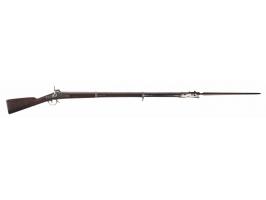
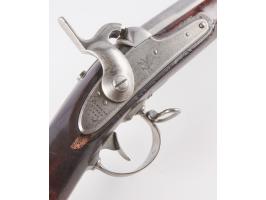
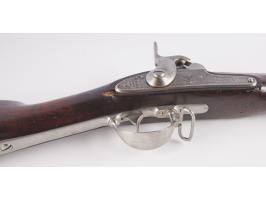
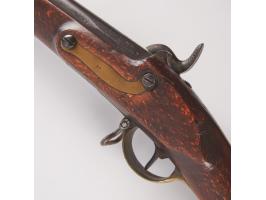
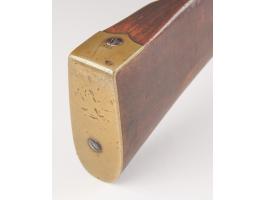
Mexican-American War-era US Model 1842 musket and bayonet, NSN, .69 caliber, 42" barrel with a very good, lightly pitted bore. This musket has an 1847 dated Harpers Ferry lock with matching barrel and full complement of legible proofs at the breech. The metal has been cleaned to an overall pewter gray patina with scattered small spots of darker plum-brown freckling scattered throughout, as well as some remaining traces of mild pitting at the barrel breech and on the nipple bolster. Even freckling is present on the lockplate, but the markings are still crisp and clear, and there are some areas of light pitting present on the hammer.
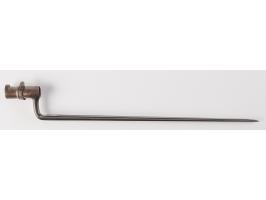
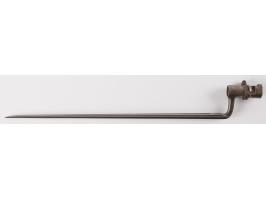
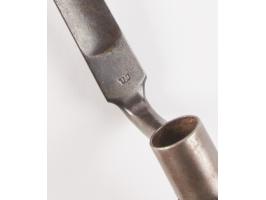
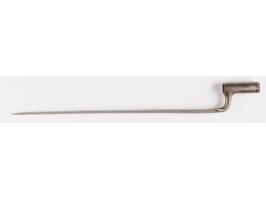
The walnut stock is in good plus condition with numerous handling marks and surface blemishes scattered about the thick, added oil finish. No inspector cartouche is visible, however there is a relatively crisp "4" stamp on the left side of the stock, just behind the sideplate. The action is tight and fully functional, with a correct, trumpet-headed ramrod also included. The musket is accompanied by an original "US" marked socket bayonet that measures 20 1/2" overall, with a 17 1/2" angular blade having a single wide fuller and hollow-ground back flutes. The metal has a mostly plum-brown patina with gray metal present along the raised edges. No scabbard is included. This is a great looking Model 1842 smoothbore musket, made by a desirable federal armory, and is in very good plus condition. Antique.
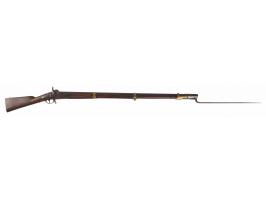
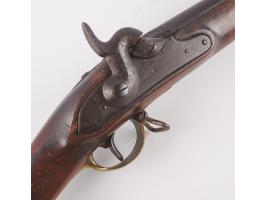
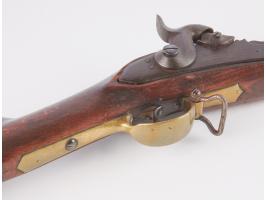
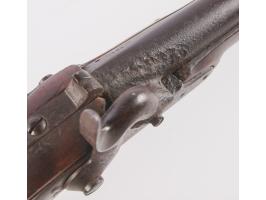
Opening: $200
Estimate: $800 - $1,200
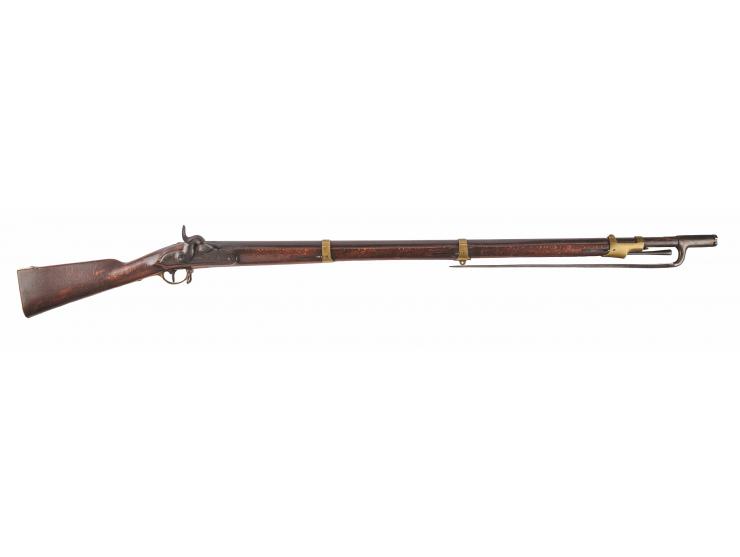
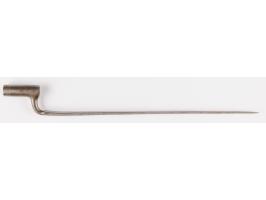
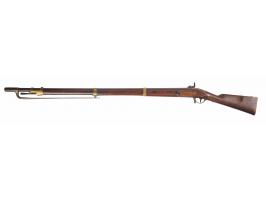
Prussian Model 1809/39 percussion musket with bayonet, NSN, .71 caliber, 41" barrel with a dark, pitted bore. This is a so-called 'Potsdam Musket' with all of the visible metal having a dark, plum-brown patina that has even pinprick pitting throughout that gets quite heavy on and around the nipple bolster. The lockplate is marked "POTSDAM" just ahead of the hammer, while the barrel has some visible proofs, and an "1826" date on the left flat. The brass barrel bands and trigger guard have a frosted yellow-ochre patina throughout. The stock has small handling marks and surface blemishes scattered about the otherwise quite nice old oil finish, with some heavy erosion on the right side of the wrist just behind the nipple bolster. Additionally, there are some initials carved into the buttstock on the left side: "T (or possibly an ‘L’) D." The action does not lock at full-cock, and the sear is worn so that the hammer will drop from half-cock. An original trumpet-headed ramrod is present, as well as an original socket bayonet that measures 22 1/2" overall, with a 19" angular, unfullered blade without back flutes.
These Prussian muskets were stop-gap weapons imported to arm the hastily assembled volunteer regiments mustered into service by both sides at the start of the Civil War. As US arms production ramped-up, these flintlock conversions were relegated to garrison duty or storage. This example is in fair-good condition overall. Antique.
Opening: $200
Estimate: $300 - $400
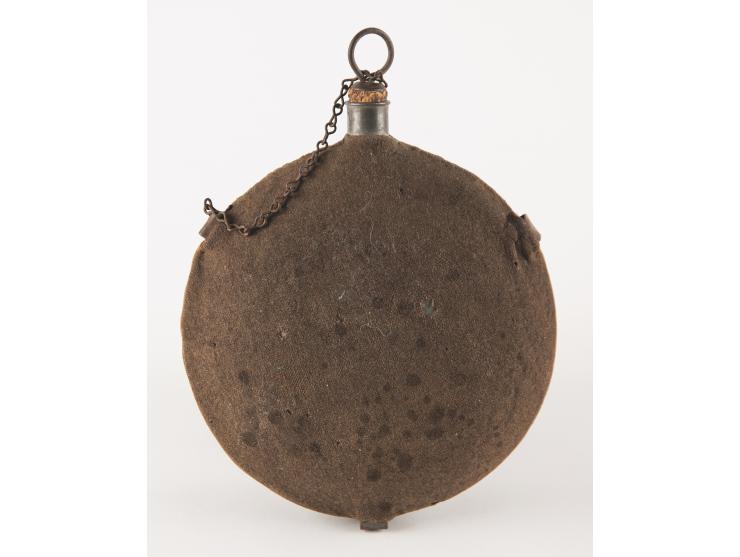
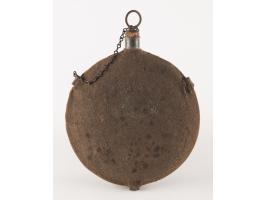
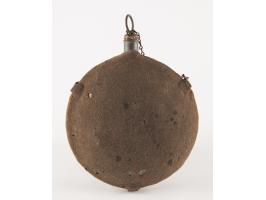
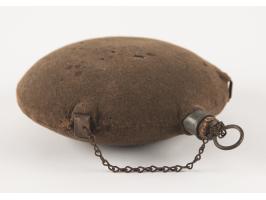
This is the smooth-side variant oblate spheroid canteen with three fixed metal bails for the no longer present cloth strap. The canteen has no visible maker’s markings on the spout, and only has two shallow dents, one on either side. The body of the canteen retains the original gray-brown jean cloth cover, which has intact seams, but also has numerous minor stains, as well as several small spots of insect damage throughout. The original worn, but still serviceable, cork stopper is still attached to one of the bails via the original short metal chain. A fine example of a US Civil War canteen.
Opening: $100
Estimate: $100 - $200
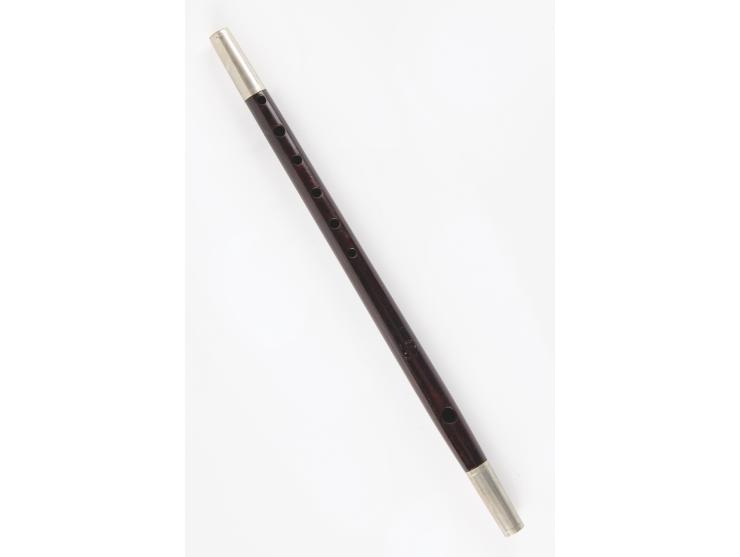
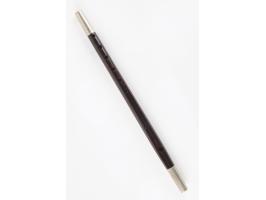
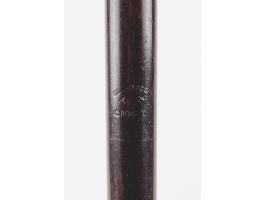
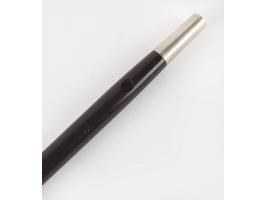
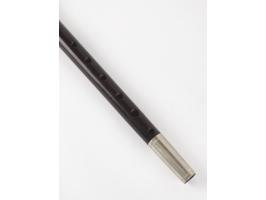
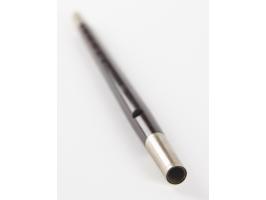
Handsome rosewood fife that measures 15 1/2" in overall length, with tapered 2" nickel steel ferrules at either end. The body measures a little over 3/4" at its widest part (the swell just before the embouchure hole). The fife is stamped with the maker and model names a little further down the tube: "GEO. CLOOS / GC / CROSBY." There are some minor handling marks and scratches present on both the wood body and metal ferrules. These "CROSBY" marked fifes were made in the style of noted Boston instrument maker Walter Crosby and were first made for the Boston market by New York City maker George Cloos sometime around 1884, when the first printed advertisements for this model fife appeared in Boston newspapers. This example is in excellent condition overall.
Opening: $200
Estimate: $200 - $300
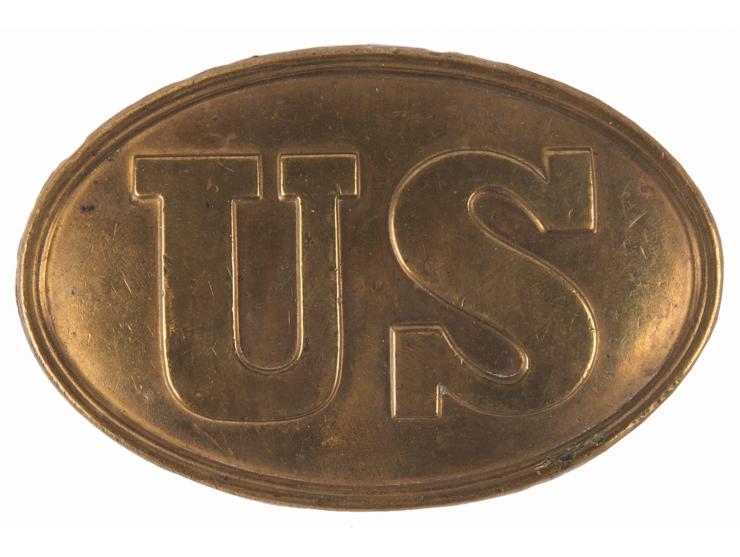
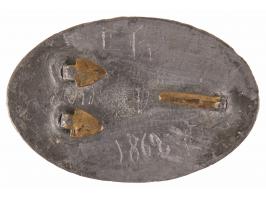
Non-excavated brass, die-struck, lead-filled Civil War US 1839 pattern oval belt plate measuring 3 1/2" across. The brass has an overall dull yellow-ochre patina with some small dents and faint surface scratches scattered across the face, but the "US" and double-beaded border are still clear and well-defined. The reverse has typical Civil War era arrowhead studs, with practically all of the original lead filling still in place. There are illegible scratches present, perhaps a previous owner’s name or unit, but the date "1862" is still legible. The plate is housed in a small Riker box with red cloth backing, and is a very good example of a Civil War era waist belt plate.
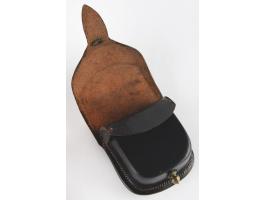
Opening: $200
Estimate: $300 - $500
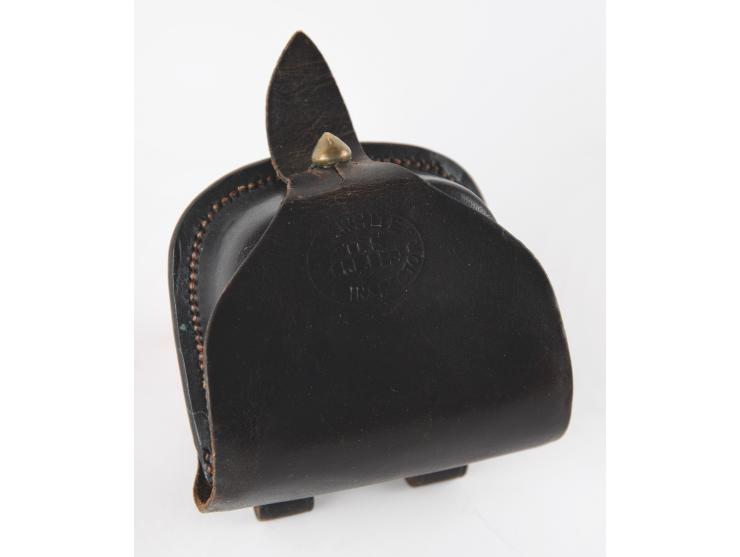
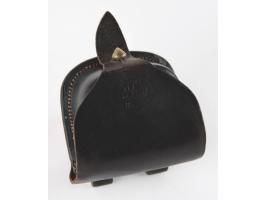
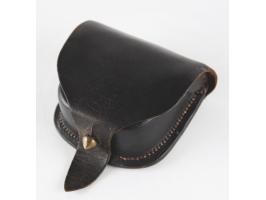
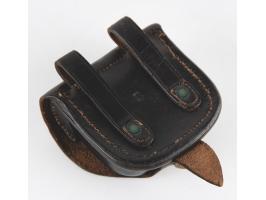
Very handsome US-issue cap pouch that has extremely nice leather, with only some very minor crazing on the flex points of both the outer and inner cover flaps, as well as some slightly heavier crazing on the closure strap. The exterior flap has a soft, but still legible "R. WHITE / US / ORD. DEPT. / SUB INSPECTOR." stamp, while the inner flap has a maker’s stamp: "S.H. YOUNG & CO. / NEWARK / N.J." There is mild verdigris on the closure stud and belt loop rivets, while the original woolen lining is still present. An original wire vent pick is present in its holder along the sidewall as well.
Stephen H. Young & Co. was a Newark, NJ, maker who had a single large 1865 contract for 10,000 infantry accoutrement sets, with this pouch a part of the contract. A very fine example of a Civil War contractor-made US musket cap pouch.
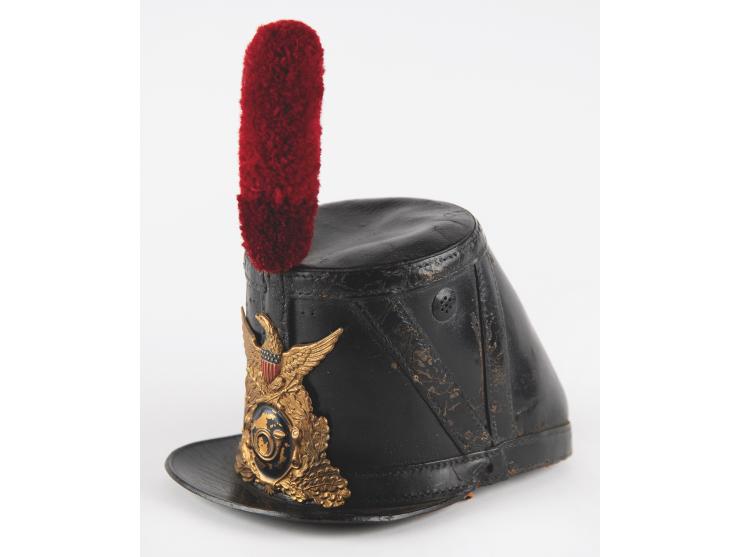
Opening: $200
Estimate: $500 - $700
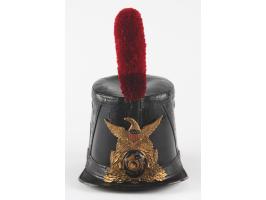
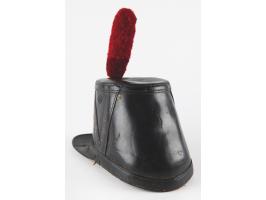
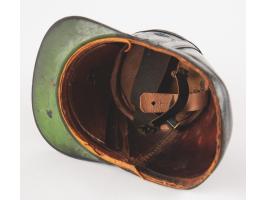
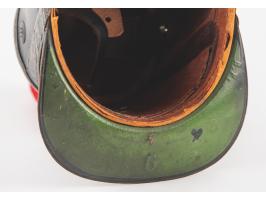
Handsome early Civil War-era Chasseur-style leather shako military cap, identical in pattern to the French Model 1858 Chasseur Shako, and was almost certainly one of the 10,000 sets of Chasseur uniforms imported into the US circa 1860 by the Godillot company of Paris, France. The shako has most of the original tarred finish remaining, with some minor crazing and flaking throughout, heaviest on the squared peak and along the stiffening bands on the sides of the crown. The interior of the shako is missing the original comfort band, but is otherwise in fine shape, and has some portions of the original chinstrap remaining. The underside of the peak retains most of the original green paint finish, with large embossed "G" in the center. All of the stitched seams are still strong and intact. The front of the crown has the original painted sheet brass eagle and infantry horn plate, and a period replacement large maroon parade pompom as well; the pompoms that originally came with these shakos were shorter and had a more tapered "acorn" shape. Originally, there would have been a red, white, and blue metal cockade behind the eagle’s head, but that is no longer present. Additionally, there are two added holes on either side of the shako near the temples where a wearer-added chinstrap was once installed.
These caps were not very popular with the troops as they were uncomfortable and quite hot, despite the ventilation grommets on either side of the crown. Civil War units known to have been issued these shakos at the start of the war include the 18th Massachusetts Infantry, the 62nd Pennsylvania Infantry, and the 83rd Pennsylvania Infantry.
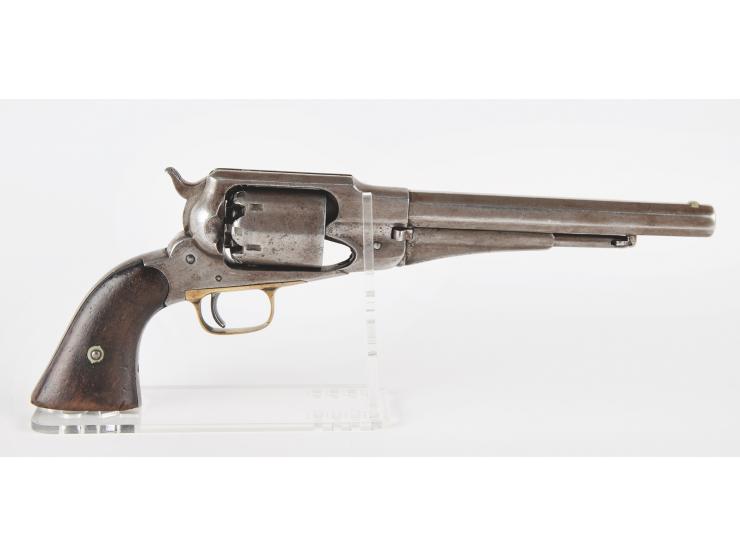
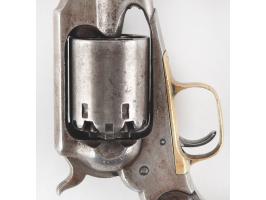
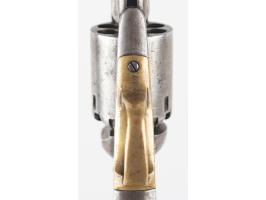
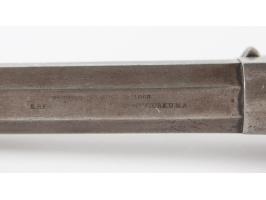
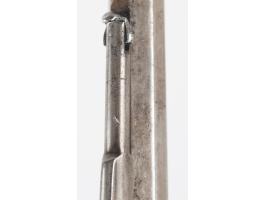
Opening: $200
Estimate: $1,000 - $1,500
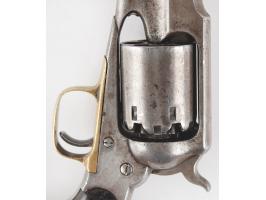
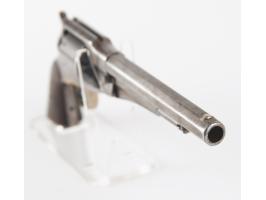
Civil War Remington New Model Army Revolver purported to have been found at a battlefield near Kennesaw Mountain, Georgia, serial #23894, .44 caliber, 8" octagon barrel with a fair bore that has light-moderate pitting within the grooves. This is a good looking revolver that was made ca. 1863, and has an overall dull pewter gray patina with spots of darker plum-brown freckling and small areas of pinprick pitting scattered throughout. Surface scratches are present on the cylinder, with a mild yellow-ochre patina on the trigger guard, and a heavily worn down front sight. The walnut grips are in fair shape with numerous handling marks present on both panels, as well as a large chip missing from the toe of the butt on the left side. There are no US inspector cartouches visible. The lock-up is solid, and the action functions well. A small modern display plaque accompanies the revolver that states that the revolver was, "Found in the Battle Fields around Kennesaw Mountain, GA." This is a good to very good example of a desirable Civil War revolver. Antique.
Opening: $200
Estimate: $300 - $500
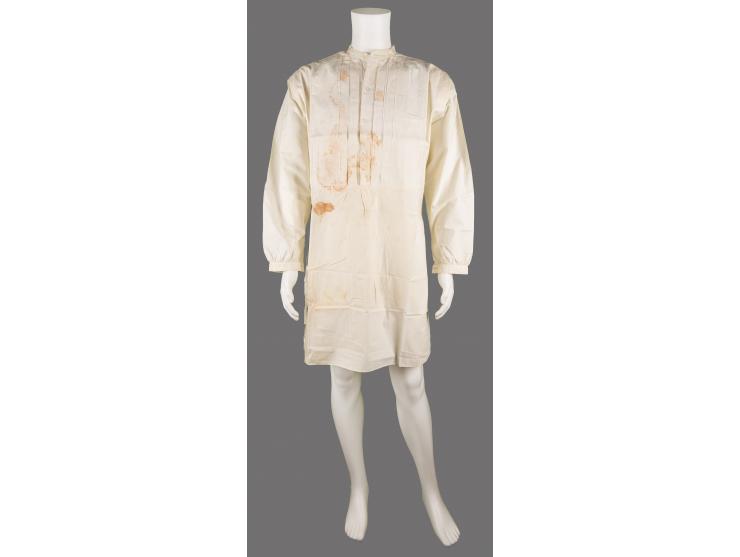
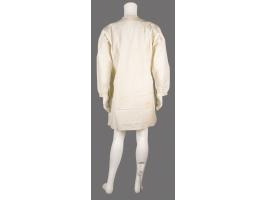
Attractive and little-worn Civil War–era linen shirt that has a pleated front, balloon sleeves, and very short cuffs. The material is fine, with virtually no wear, although there are some dark stains on the front of the shirt and around the neck. All of the buttons are still in place, including the small buttons for attaching a collar at the neck.
Provenance: Collection of noted Civil War collector John Ockerbloom, Amoskeag Auction, August 7, 2004.
Opening: $200
Estimate: $500 - $700
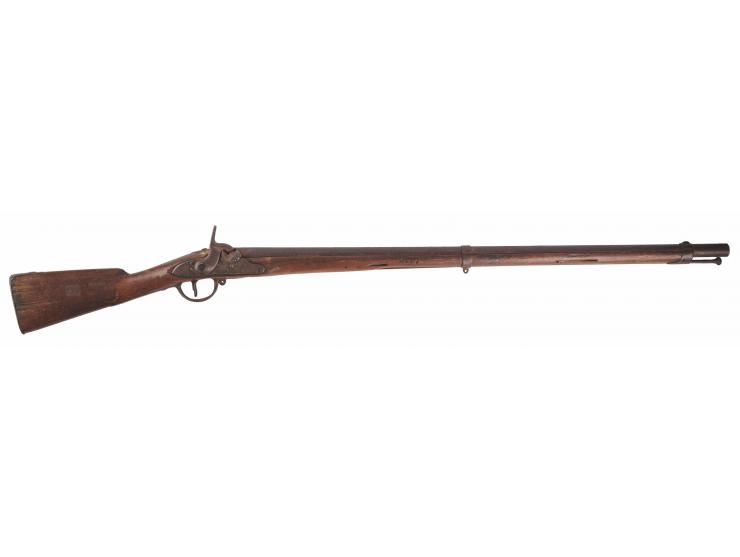
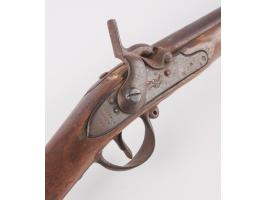
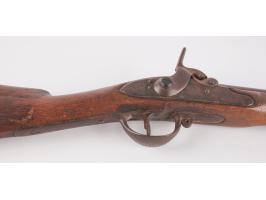
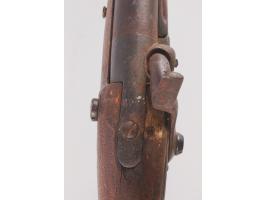
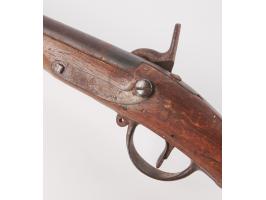
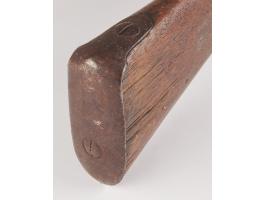
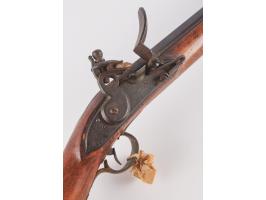
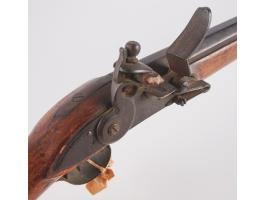
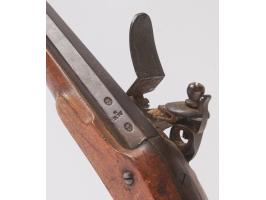
Privately made short percussion musket using a US Model 1795 Harpers Ferry lock, NSN, .71 caliber, 34 1/2" barrel with a dark, pitted bore. This musket was built using an 1814-dated Harper’s Ferry marked lock from a US Model 1795 flintlock musket. The barrel is a smith-made tube without markings, and has a percussion bolster-equipped breech plug mated to a French style percussion hammer. The metal has an overall lightly pitted dark brown patina with some thin surface oxidation present throughout, heaviest near and around the barrel breech. The action and barrel are fitted to a well worn US Model 1795 musket stock, heavily reworked for the new length and equipped with reworked original iron band and shortened nosecap. The wood has numerous small handling marks and blemishes throughout, as well as several breaks and cracks along the ramrod channel. The long rectangular inlets for the no longer present band springs were left unfilled on the right side of the forend. This is an interesting US musket, heavily reworked and converted to percussion.
Opening: $200
Estimate: $500 - $700
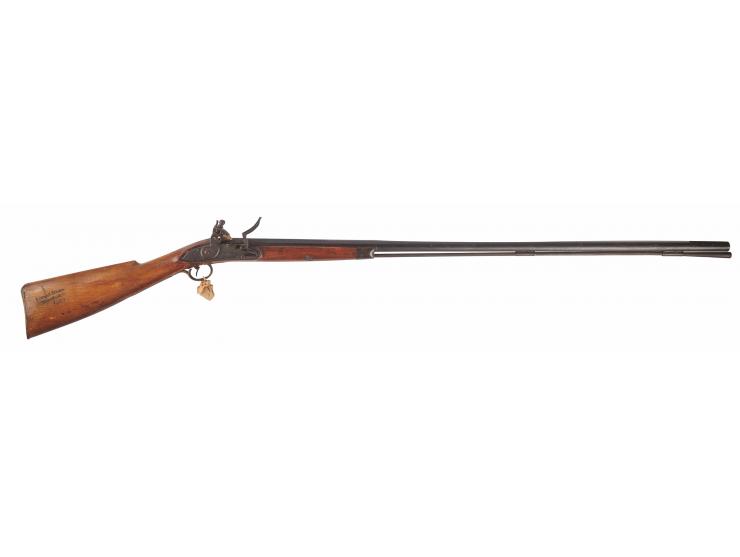
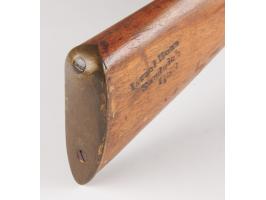
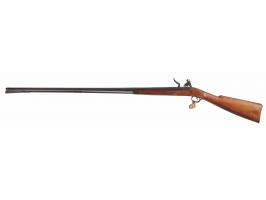
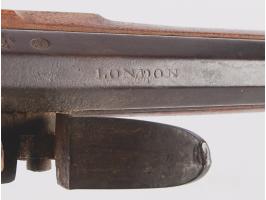
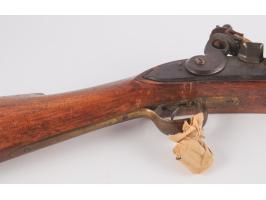
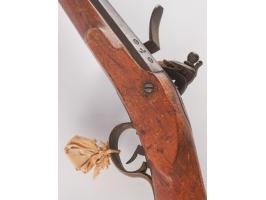
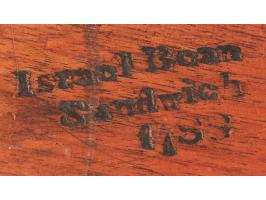
American flintlock fowling gun with French 1763-1766 Pattern musket lock, marked "Israel Bean / Sandwich / 1788" on the stock, NSN, .67 caliber (approx. 16 bore), 39" octagon breech barrel with a dark, pitted bore. This is a well-made and attractive fowler that has a "LONDON" marked barrel with crisp London proofs on the breech, mated to a "Charleville" marked French musket or fusil lock. The metal has an overall dark plum-brown patina throughout, with mild pitting on the barrel breech, and some deeper pinprick pitting on the lock, which is fully functional and catches firmly at both half and full-cock. The half-length sporting style stock has a darkly tarnished brass nosecap, with small handling marks and minor blemishes in the otherwise nice period oil finish. The brass trigger guard and buttplate are in very good shape, and exhibit a dull, yellow-ochre patina throughout. The gun is accompanied by an old trumpet-head musket ramrod.
The right side of the buttstock has "ISRAEL BEAN / SANDWICH / 1788" stamped into the wood near the heel of the butt, and has had black ink added at some point for legibility. This could be a reference to either Sandwich, MA, or Sandwich, NH, both of which had established families named Bean. A search of records yields little information, but there was an Israel Bean who served as a Private in the 2nd Regiment (Holland’s) of the Massachusetts Militia during the War of 1812; and a birth record from Sutton, NH, for a Milton Bean, son of Israel Bean, dated September 11, 1814.
Opening: $200
Estimate: $200 - $300
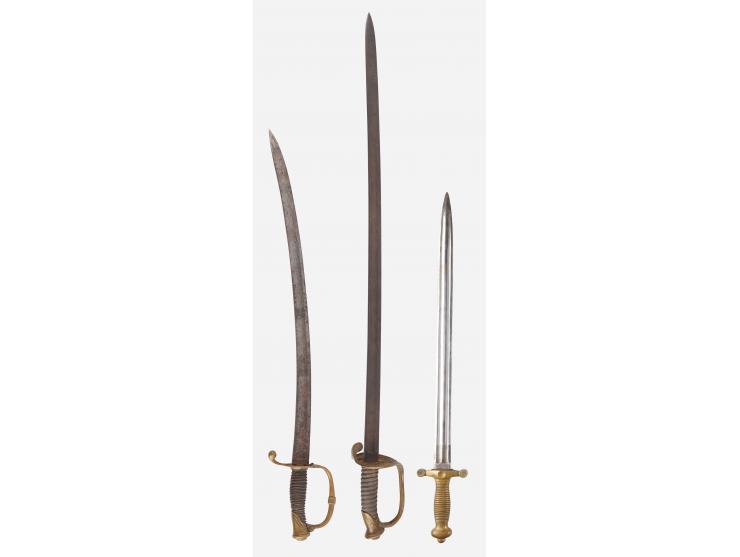
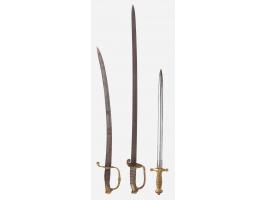
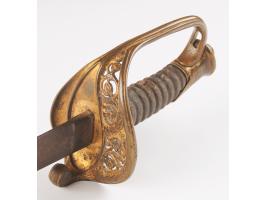
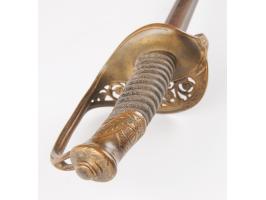
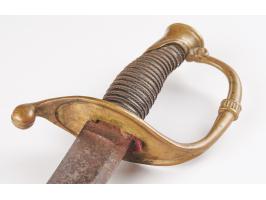
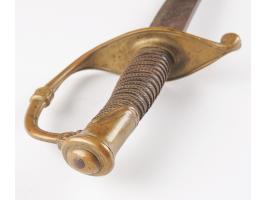
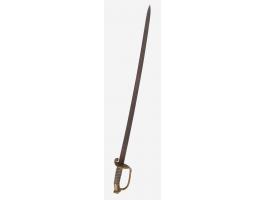
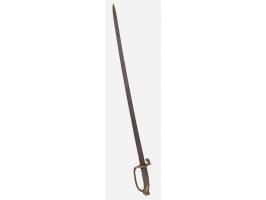
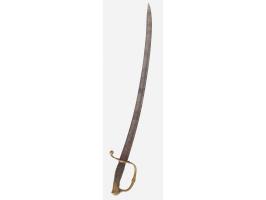
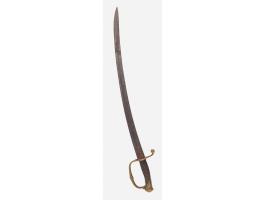
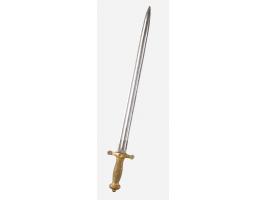
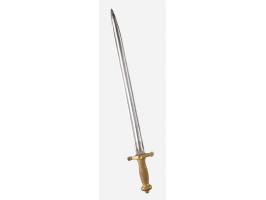
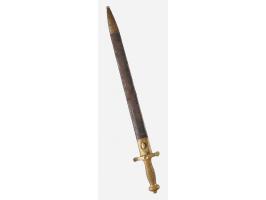
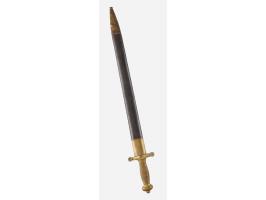
Three 19th-century European and American swords:
- a French Model 1855 Fireman’s Short Sword that measures 25" overall, with a straight, 19 1/2" double-edged blade having wide double fullers. This sword, very similar in design to the French Model 1831 Infantry Hanger, has a narrow straight-sided blade instead of the Model 1831’s wider and double-tapered Roman type blade. The steel retains much of the original factory polish, but does exhibit some dark freckling for about 1 1/2" at the tip. No markings are present on the ricasso, but many of these swords were manufactured at the armory in Klingenthal. The hilt features straight quillons with disk finials, grooved grip, and a rounded pommel with exposed capstan rivet, while the brass has an overall dull yellow-ochre patina throughout. The brass throat and chape of the scabbard have a matching patina, while the leather has moderate surface wear, and a partial break about halfway down on the obverse side. A partially legible marking is visible on the leather on the reverse: "(B or R)U(C)HE(?) & Ce." These swords were worn on ceremonial occasions and this example is in very good condition.
- an unmarked US Model 1850 Foot Officer’s Sword that measures 37 1/4" overall, with a 31 1/2" curved, single-edged blade having wide and narrow fullers. The unbent blade has an overall dark brown patina throughout, with moderate pitting and surface oxidation along the entire length on both sides. The brass hilt features a standard pierced counterguard, single forward-swept quillon, and knucklebow that meets an engraved "Phrygian helmet" pommel. The knucklebow has been bent straight in the middle, and the quillon is bent further forward than originally. The shagreen grip is separating where it meets the counterguard and is missing the braided wire wrap. No scabbard is included.
- a short European Infantry Hanger, or ‘Briquet’ that measures 29 1/2" overall, with a 23 7/8" curved, single-edged blade having single wide fullers. The blade has a mottled patina with some fairly bright gray along the foible, but dark freckling at the tip and mottled brown surface oxidation on the forte. No markings are visible on the ricasso, nor on the back edge. The brass hilt has a narrow counterguard, single forward-swept quillon, and a knucklebow with decorative accents at the midpoint and where it meets the pommel. The brass has an overall dull ochre patina while the leather grip has a loose, but intact braided wire wrap. No scabbard is included.