Jazz, Blues, and American Standards
Opening: $200
Estimate: $1,000 - $1,500
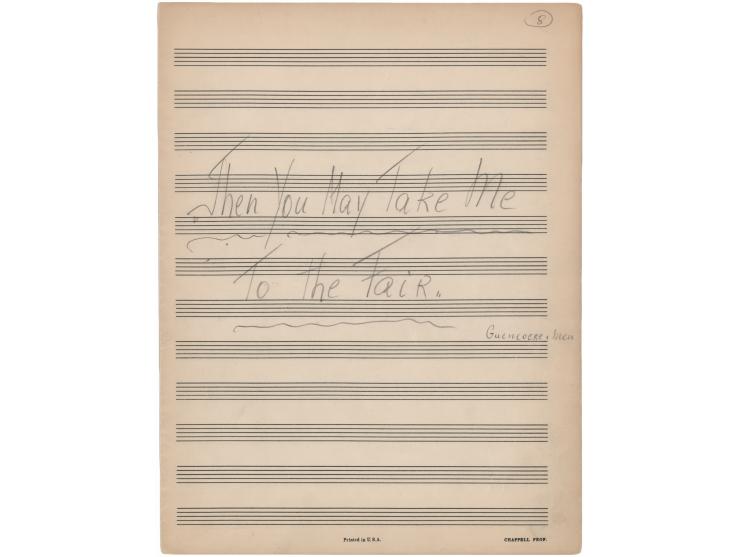
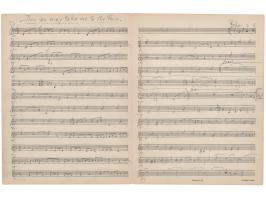
Handwritten musical manuscript in pencil by Frederick Loewe, two pages on two adjoining sheets, 9.5 x 12.5, no date but circa 1959. Loewe writes twenty-four lines of music for one of his most famous and popular songs from Camelot, "Then You May Take Me to the Fair." It is an early draft of the melody from his personal archive, written during the creation of his classic musical. Loewe also writes the title on the front, noting the singers as, "Guenevere, men." In fine condition.
Camelot, based on the Arthurian legend and T. H. White's The Once and Future King, opened on Broadway in New York on December 3, 1960 and had a run of 873 performances over two years. Production was staged by Moss Hart, with Richard Burton, Julie Andrews, and Robert Goulet in the leading roles (Arthur, Guenevere, and Lancelot).
Written in collaboration with Alan Jay Lerner, the musical symbolized to many Americans an ideal society during the presidency of John F. Kennedy. In fact, its admirers included President and Mrs. Kennedy, whose White House circle was often likened to Camelot. It is not an exaggeration to say that Lerner and Loewe perfected the musical-theater art form in America, and produced some of the best-loved musicals of the twentieth century.
Opening: $200
Estimate: $200 - $400
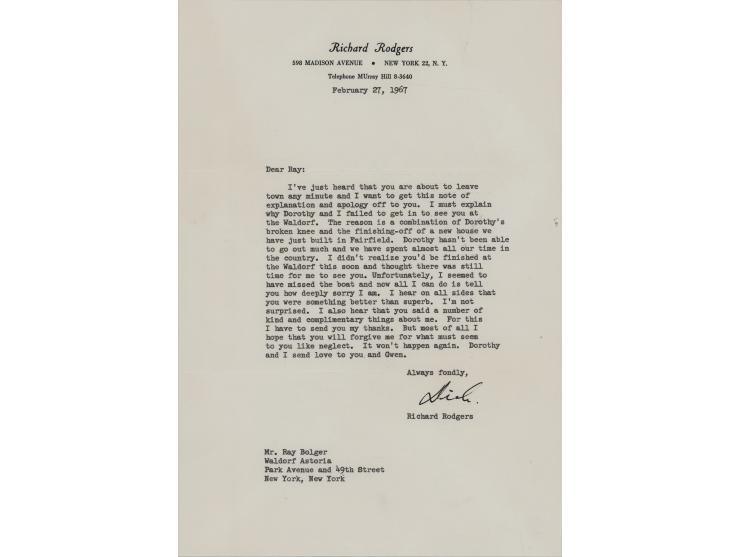
TLS signed “Dick,” one page, 7.25 x 10.5, personal letterhead, February 27, 1967. Letter to actor Ray Bolger, famed for his role as the Scarecrow in The Wizard of Oz. In part: "I've just heard that you are about to leave town any minute and I want to get this note of explanation and apology off to you. I must explain why Dorothy and I failed to get in to see you at the Waldorf. The reason is a combination of Dorothy's broken knee and the finishing-off of a new house we have just built in Fairfield. Dorothy hasn't been able to go out much and we have spent almost all our time in the country. I didn't realize you'd be finished at the Waldorf this soon and thought there was still time for me to see you. Unfortunately, I seemed to have missed the boat and now all I can do is tell you how deeply sorry I am. I hear on all sides that you were something better than superb. I'm not surprised. I also hear that you said a number of kind and complimentary things about me. For this I have to send you my thanks. But most of all I hope that you will forgive me for what must seem to you like neglect. It won't happen again." In very fine condition. Accompanied by the original transmittal envelope, sent "by messenger."
Bolger was a key performer in several of composer Richard Rodgers's Broadway productions, most notably starring in the 1936 hit On Your Toes (playing Junior) and leading the 1942 Rodgers & Hart musical By Jupiter.
Opening: $200
Estimate: $300 - $400
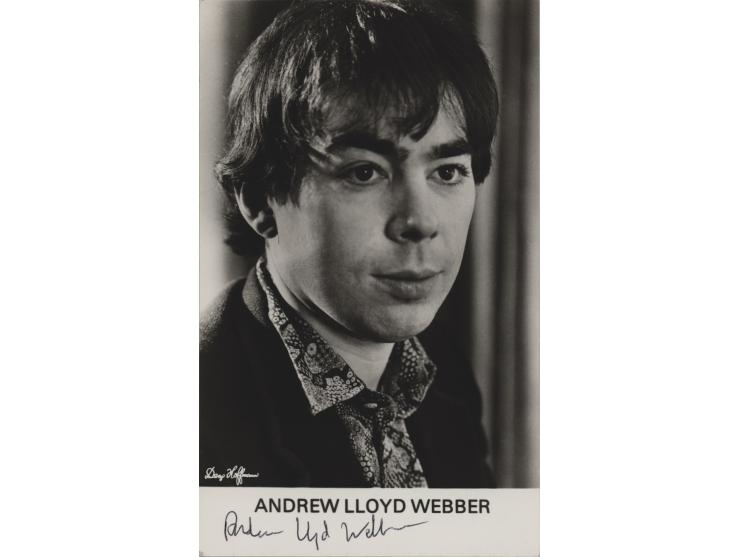
Semi-glossy 3.25 x 5.5 head-and-shoulders photo of the popular Broadway composer, signed in the lower border in black ballpoint, "Andrew Lloyd Webber." In fine condition, with a faint circular postal impression touching his left eye.
Country and Folk
Opening: $200
Estimate: $400 - $600
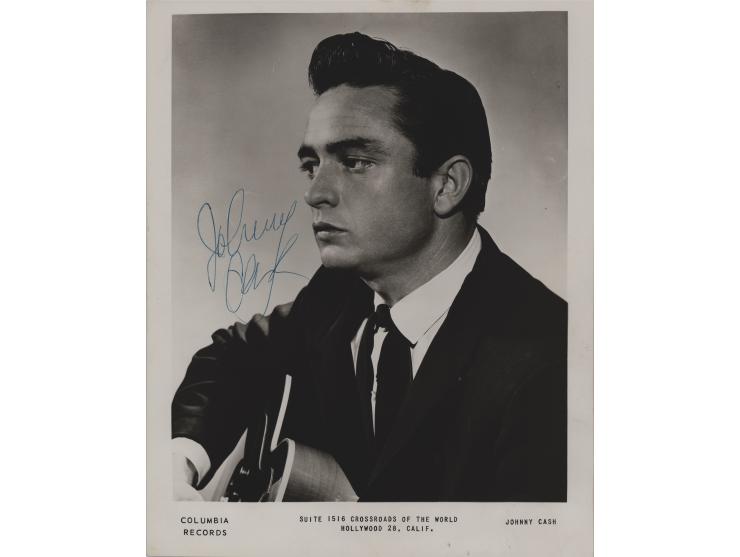
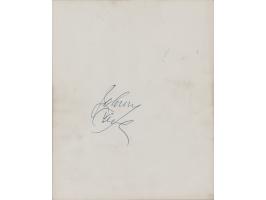
Vintage glossy 8 x 10 Columbia Records publicity photo of Johnny Cash, signed on both front and back in blue ballpoint. In very good to fine condition, with scattered creasing to his jacket, and light surface impressions from the signature on the back.
Opening: $200
Estimate: $600 - $800
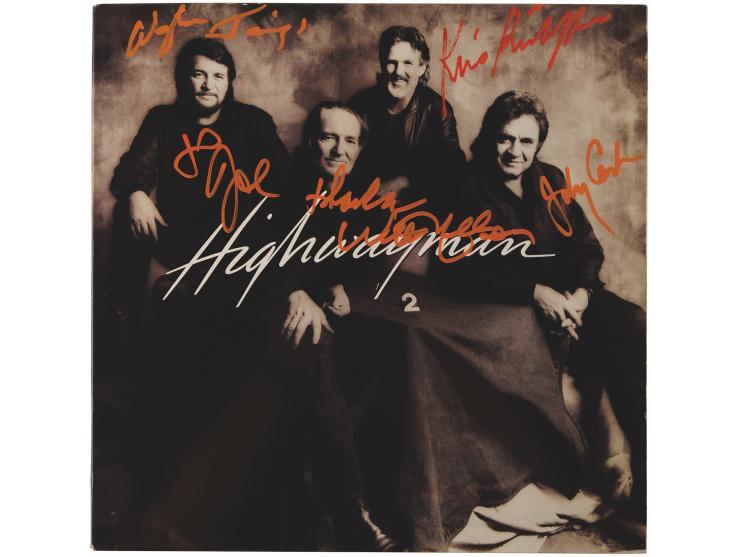
Highwayman 2 album by The Highwaymen, signed on the front cover in orange paint pen by Willie Nelson, Johnny Cash, Waylon Jennings, and Kris Kristofferson. In very fine condition. The record is included.
Rock and Roll
Opening: $200
Estimate: $600 - $800
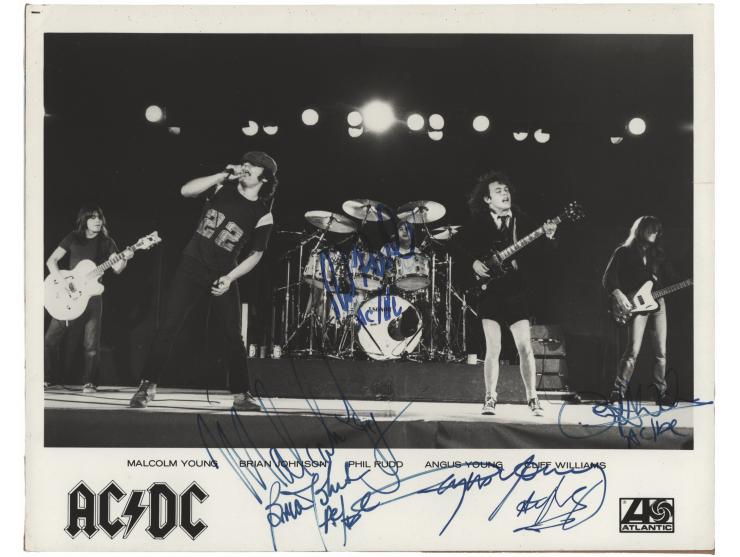
Circa 1980 glossy 10 x 8 Atlantic Records publicity photo of AC/DC rocking on stage, signed in blue felt tip by Angus Young, Malcolm Young, Brian Johnson, Phil Rudd, and Cliff Williams, with most adding the band’s name. The image was taken directly from the filming of the band’s iconic “Back in Black” video shoot. Notably, this is the only official record label publicity photograph showing all five members performing together on stage with their instruments. Affixed to a same-sized cardstock mount and in very good to fine condition, with wear to the lightly trimmed edges, including creases and short edge tears; Rudd’s signature is penned over a very light failed first attempt. A scarce and highly coveted AC/DC publicity image.
Opening: $200
Estimate: $300 - $400
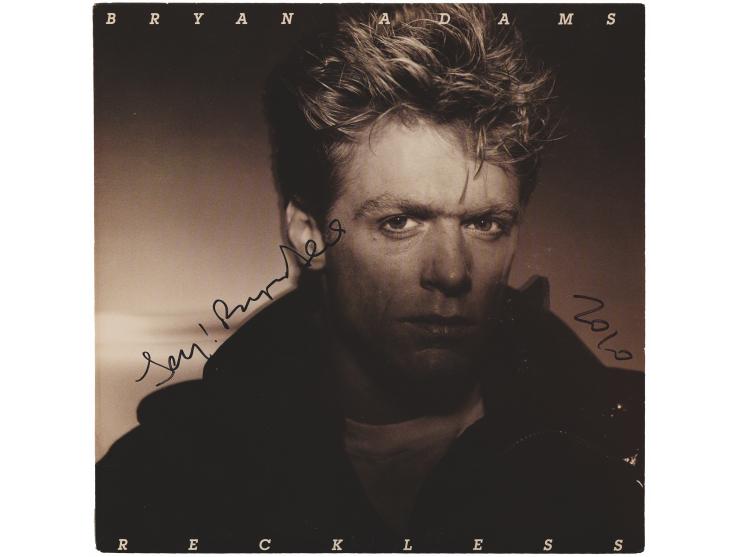
Reckless album by Bryan Adams, signed and inscribed on the front cover in black felt tip, "Jay! Bryan Adams, 2010." In fine condition. The record is included. Accompanied by a full letter of authenticity from JSA.
Opening: $1,000
Estimate: $5,000 - $6,000
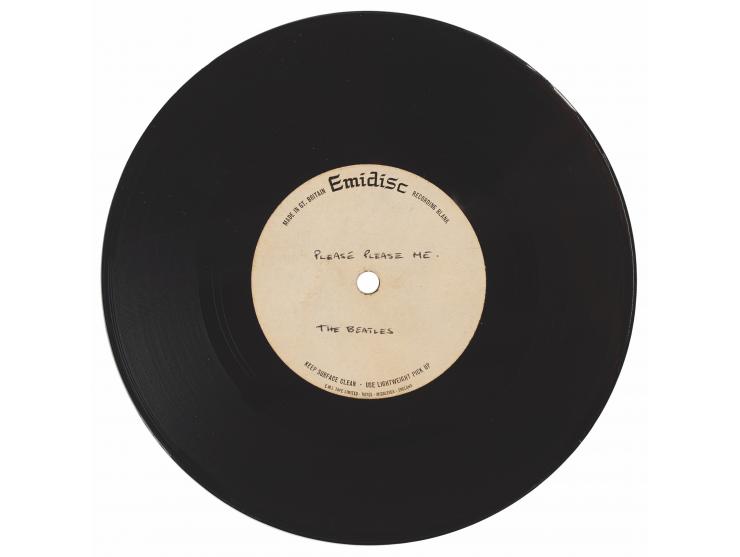
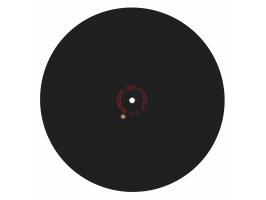
Exceptionally rare 7˝ EMI one-sided acetate pressing of the Beatles' breakthrough hit "Please Please Me," as heard on the mono 45 RPM single released on January 11, 1963. The acetate disc bears a black-and-white Emidisc label with handwritten notations: "Please Please Me, The Beatles."
One of the earliest known Beatles Emidisc acetates, this example was cut from a late November 1962 take. By this point, the song's arrangement had been radically altered from earlier demos, ultimately requiring 18 takes to achieve the version that producer George Martin immediately recognized as a hit. His prediction proved accurate—'Please Please Me' was the Beatles' first single to reach number one on both the NME and Melody Maker charts. It then became the title track of their first studio album, recorded soon after to capitalize on the single's success.
Although this acetate lacks the recording engineer’s initials on the label, research confirms that the handwriting is that of pioneering EMI cutting engineer Peter Vince, who joined the studio in April 1962, just prior to the Beatles’ first sessions there in June.
This very acetate was featured in Record Collector Magazine (September 2017), noted as part of a collection once owned by UK session musician Laurie Payne.
To date, we know of only two genuine Emidisc acetates of 'Please Please Me' to have surfaced. This particular example was last sold by Omega Auctions (UK) in 2022.
Condition (VG+): The disc displays a fair amount of surface marks and scuffs, but no feelable scratches to the playing surface. The label is clean, showing only proper aging. There is no deterioration to the lacquer on the playing side (with some minor wear to the lacquer around the rim), with some 'ring like' effects to the blank 'B' side. It plays great!
Accompanied by a high-fidelity digital transfer (.wav file) of the acetate's contents on a USB stick.
Opening: $200
Estimate: $2,500 - $3,500
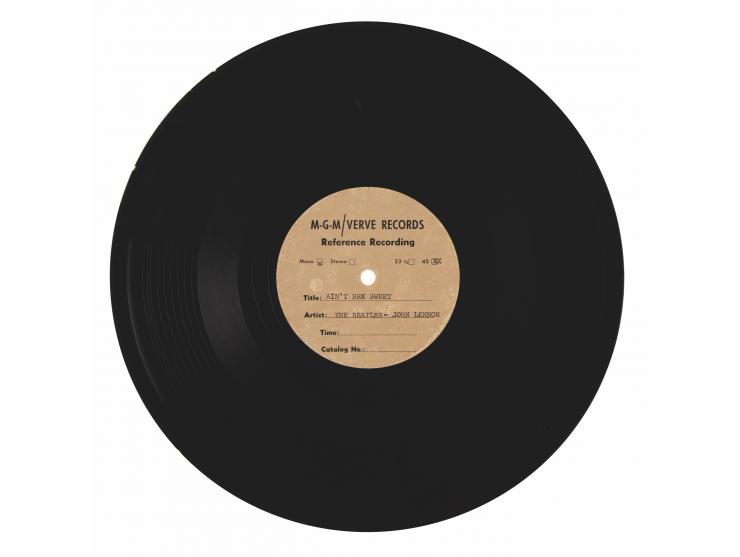
Unique 10˝ MGM/Verve Records one-sided 45 RPM mono acetate pressing of "Ain't She Sweet," originally recorded as one of eight songs for Bert Kaempfert Produktion in Hamburg, Germany, in 1961. The acetate disc bears a black-and-white MGM/Verve Records "Reference Recording" label, filled out in type: "Title: Ain't She Sweet, Artist: The Beatles - John Lennon."
In early 1964, shortly after Beatlemania exploded in the United States, MGM Records leased the rights to four of the eight Beatles 1961 Hamburg recordings, most of which featured Tony Sheridan on vocals. MGM rapidly released these four songs ('My Bonnie,' 'The Saints,' 'Cry for a Shadow,' and 'Why') in the United States in the first half of 1964—with tremendous success—and were preparing to release singles for the remaining songs, including 'Ain't She Sweet,' in the second half of the year.
Before the release could proceed, MGM learned that Atlantic Records had secured the rights to the remaining four Hamburg tracks. This acetate represents the only known surviving artifact of MGM’s planned but unreleased 45 of “Ain’t She Sweet,” making it a unique and historically significant relic from the peak of Beatlemania.
When Atlantic Records released 'Ain't She Sweet' on July 6, 1964 (ATCO 45-6308), the label indicated the artist as 'The Beatles,' but added 'Vocal By John Lennon'—distinguishing it from the other Hamburg sessions led by Tony Sheridan. Similarly, this MGM acetate lists the artist as "The Beatles - John Lennon," singling out John as the lead vocalist.
This acetate is featured on page 84 of The Beatles Swan Song: She Loves You & Other Records by acclaimed Beatles author and historian Bruce Spizer.
Condition (VG-): The lacquer looks well-used, with a couple of tiny edge chips, but plays well with no skips and some moderate background noise.
Opening: $200
Estimate: $1,500 - $2,000
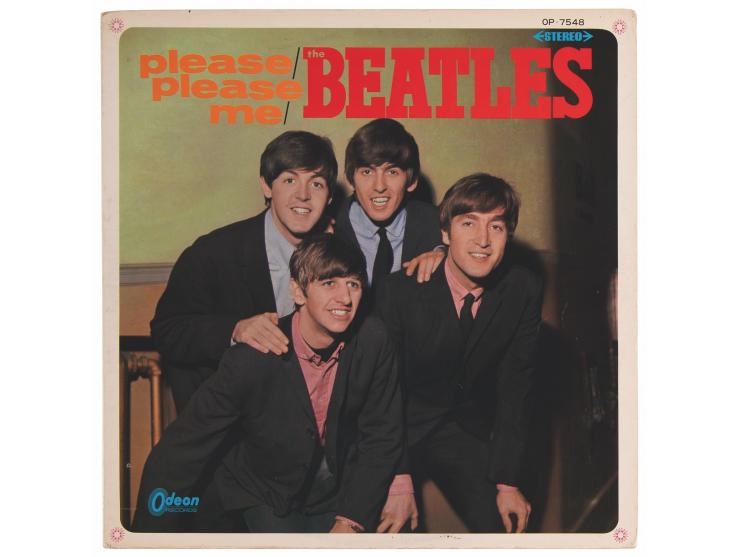
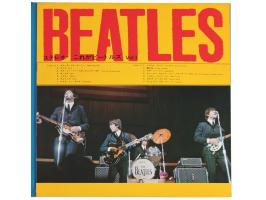
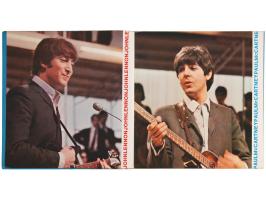
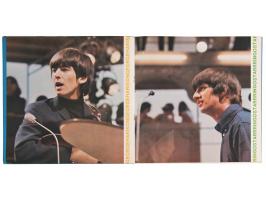
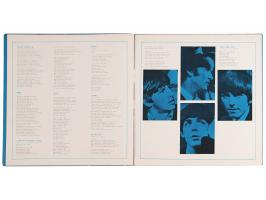
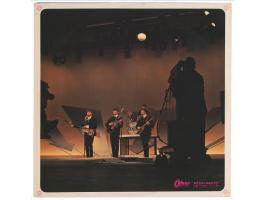
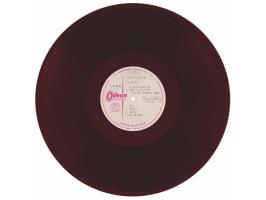
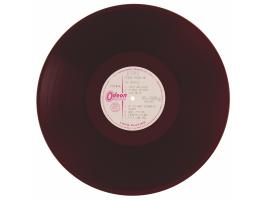
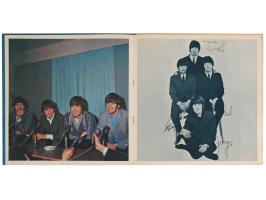
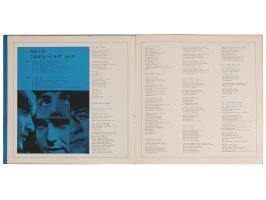
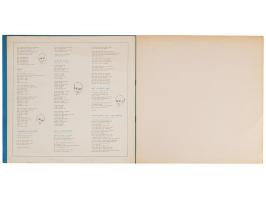
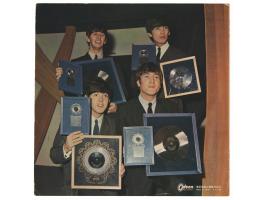
White-label test pressing (on dark red 'Everclean' vinyl) of Odeon's 1966 release of Please Please Me by the Beatles. This Japanese version of the band's debut album has a different and unique cover (with bound-in 8-page color booklet), and the record carries a re-ordered track listing as compared to the standard UK issue. Pressed on gorgeously dark red vinyl with fantastic sound quality, the book is in VG condition (with ring wear and bending), the sleeve is in VG+ condition (with small tape and minor discoloration), and the disc is in a very strong VG+ condition with minor sleeve scuffing.
Throughout the 1960s, it was customary for record companies to release Beatles promotional test pressings prior to the official album release. These pressings were created mainly as manufacturing samples, intended to check the quality of the record before it was mass-produced. Additionally, they were sent out for radio station and music critic review. In the UK, Parlophone released white/black label test pressings, in the U.S., Capitol released standard albums with "Promo" drilled into the cover, and in Japan, Odeon released custom red vinyl test pressings. Of all three, the Japanese test pressings are by far the rarest of all Beatles original LP test pressings.
Produced in minuscule numbers, these Japanese test pressings play wonderfully, often with a different EQ than the US or UK issues (resulting in a brighter sound, especially the drums). Toshiba pressed the records on beautiful red translucent 'Everclean' vinyl which was designed to be less prone to collecting static electricity and dust than the more common black vinyl. The record information, song titles, and catalog number are manually stamped on custom Odeon labels. It should be noted that Japanese test pressings came in standard fabricated covers, but without inserts or obi bands, as is the case here.
Provenance: David Swartz Vintage Vinyl Collection, Heritage Auctions, March 2022.
Opening: $200
Estimate: $1,500 - $2,000
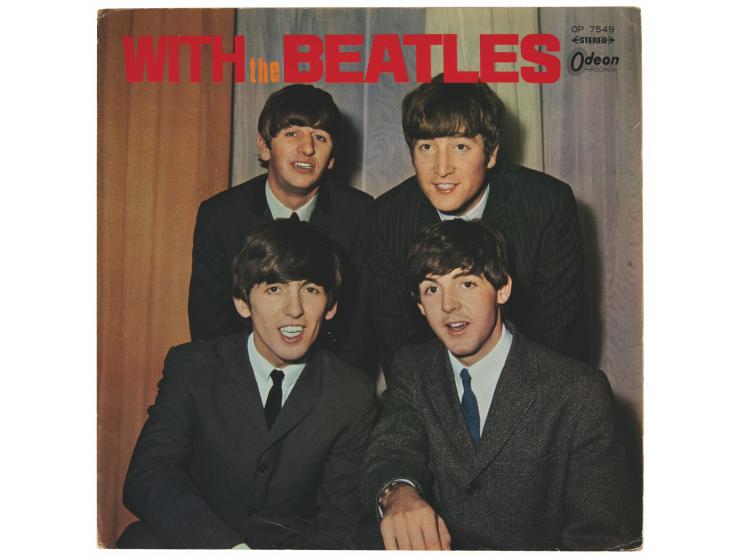
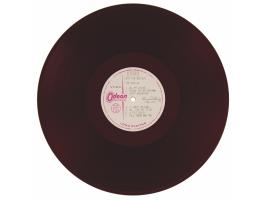
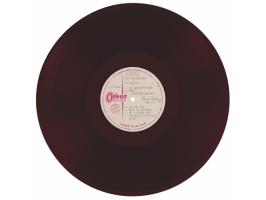
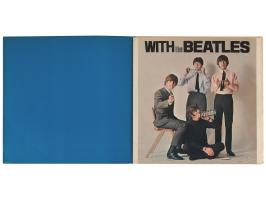
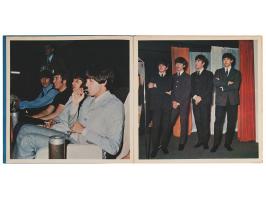
White-label test pressing (on dark red 'Everclean' vinyl) of Odeon's 1966 release of With the Beatles by the Beatles. This Japanese version of the band's second studio album has a vivid full-color portrait on the cover (in stark contrast to the iconic black-and-white faces shot of the UK version), with an accompanying 8-page color booklet, and the record carries a re-ordered track listing as compared to the standard UK issue. Pressed on gorgeously dark red vinyl with fantastic sound quality, the cover is in VG condition with some dings and wear, but with a beautiful VG++ disc.
Throughout the 1960s, it was customary for record companies to release Beatles promotional test pressings prior to the official album release. These pressings were created mainly as manufacturing samples, intended to check the quality of the record before it was mass-produced. Additionally, they were sent out for radio station and music critic review. In the UK, Parlophone released white/black label test pressings, in the U.S., Capitol released standard albums with "Promo" drilled into the cover, and in Japan, Odeon released custom red vinyl test pressings. Of all three, the Japanese test pressings are by far the rarest of all Beatles original LP test pressings.
Produced in minuscule numbers, these Japanese test pressings play wonderfully, often with a different EQ than the US or UK issues (resulting in a brighter sound, especially the drums). Toshiba pressed the records on beautiful red translucent 'Everclean' vinyl which was designed to be less prone to collecting static electricity and dust than the more common black vinyl. The record information, song titles, and catalog number are manually stamped on custom Odeon labels. It should be noted that Japanese test pressings came in standard fabricated covers, but without inserts or obi bands, as is the case here.
Provenance: David Swartz Vintage Vinyl Collection, Heritage Auctions, March 2022.
Opening: $200
Estimate: $600 - $800
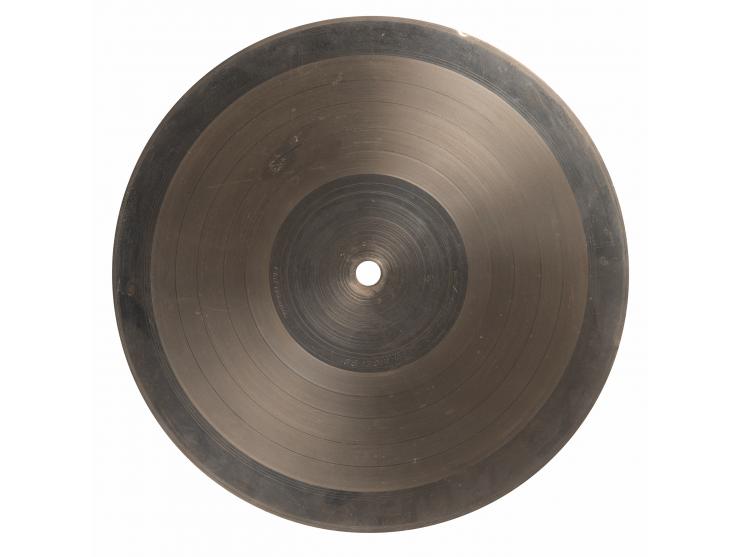
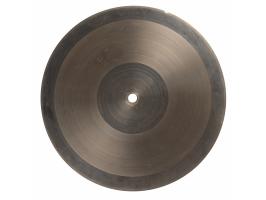
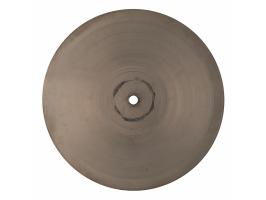
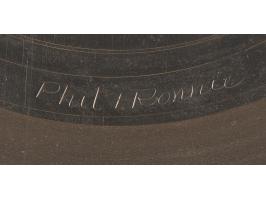
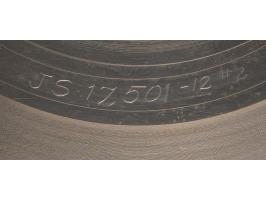
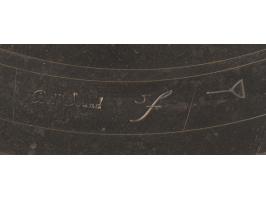
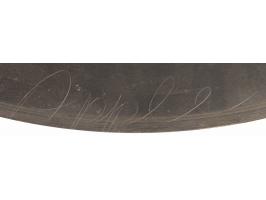
Rare ‘mother disc’ for Side B of the Beatles’s twelfth and final studio album, Let It Be, which was released by Apple Records on May 8, 1970. This metallic disc, 13.5˝, was pressed at the Capitol Records Pressing Plant in Winchester, Virginia (“-◁”), and the lacquer was cut at Bell Sound Studios by engineer Sam Feldman (“sf”). The matrix number in the run-out groove area is stamped “Phil + Ronnie JS-17,501 - 12 #2 Bell Sound sf -◁,” information that points to this disc representing variation #4 of 31 recorded variants of the mother disc from the Winchester plant. The outer ring of the disc is engraved in cursive lettering, “Apple.” In very good to fine condition, with some dings to the edge, and scattered scuffs and marks.
A ‘mother disc’ in vinyl record production is a metal positive copy created during the electroforming process between the metal father (negative) and the stampers (negatives used for pressing records). The process starts with cutting music onto a lacquer master, which is then plated to form the metal father. From the father, the mother is made—its grooves match the original recording and can be played back for quality control. The mother, which serves as a durable intermediate that preserves the master and enables consistent reproduction, is then used to create multiple stampers for pressing vinyl records. An impressive early piece of Beatles vinyl history; surviving ‘mother discs’ are very rare, given that the majority were recycled after use.
Opening: $200
Estimate: $800 - $1,000
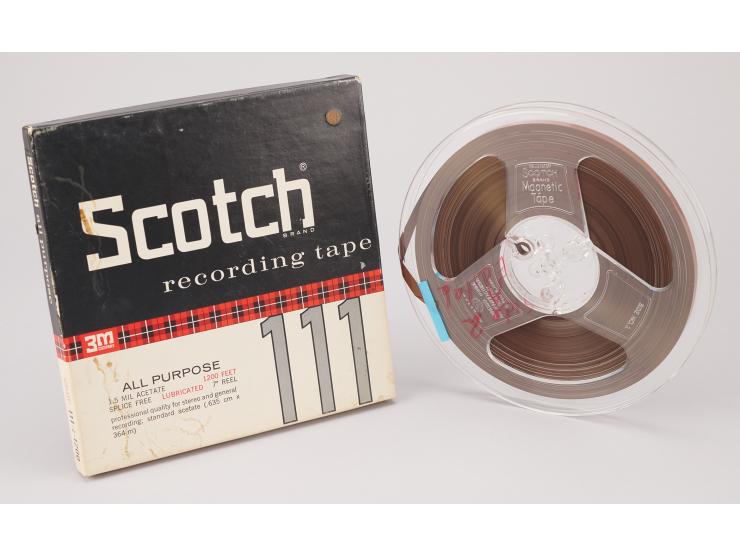
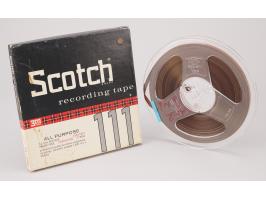
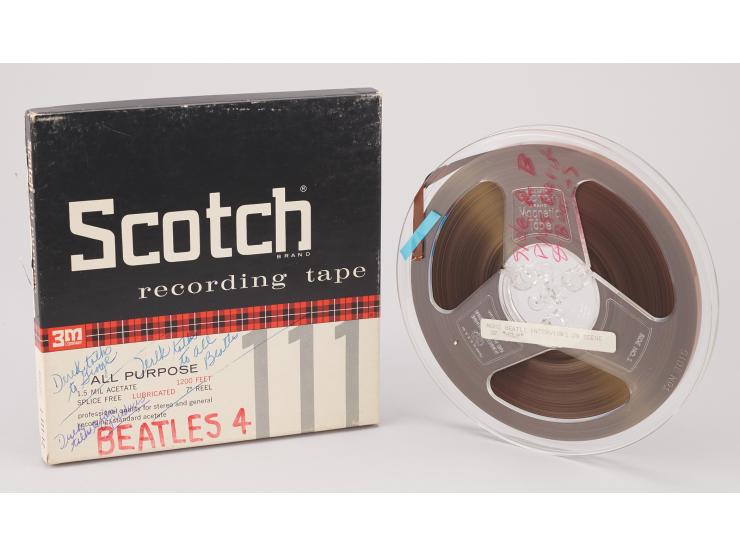
Fascinating interview tape from the personal collection of Los Angeles radio DJ Dave Hull, who was one of the major promoters of the Fab Four in Southern California at the height of Beatlemania in the mid-1960s. He spent a lot of time with the boys, conducting dozens of interviews with them both as a group and individually. He even spent two weeks with them on the set of their second film, 'Help!,' filmed in the Bahamas from February–April, 1965, during which time this interview tape was recorded.
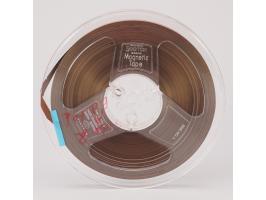
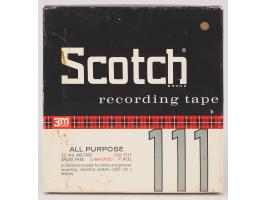
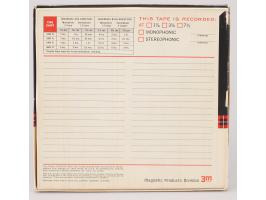
The 7˝ reel of ¼” Scotch-brand audio tape opens with a fascinating conversation between Dave Hull and Paul McCartney, beginning with some discussion about a personal conflict arising from Hull's giving away addresses affiliated with McCartney and his family. Though McCartney expresses some discontent over the violation of privacy, he offers a bit of forgiveness: "It doesn't worry me too much, I don't hate you or anything 'cause of it." There is quite a bit of discussion about Paul's vacation, the places the Beatles have played, and his tourist visits around Hollywood and New York City.
After about eight minutes of discussion with McCartney, Hull talks to George Harrison about his clothes ("a pair of faded blue jeans and an old straw hat") and about the making of the film, speaking about a difficult one-shot take. Comparing it to their previous film, Harrison relates: "The only thing really that's the same as Hard Day's Night is the fact that we're still playing ourselves. But I mean this has got a story line to it whereas Hard Day's Night didn't really, it was more or less like a documentary." He also explains that they had recorded eleven new songs in one week, expecting to use about seven in the film. They also briefly discuss his travels and his family. The Harrison segment also lasts about eight minutes.
The tape closes with some insightful commentary from the Beatles' hairdresser, interviewed by Derek Taylor: she says that Ringo has the softest hair, and that John's has a slight auburn tinge. The tape's content totals 19 minutes and 28 seconds.
To our knowledge, this fascinating tape has never been aired and remains unreleased. Accompanied by a high-fidelity digital transfer (.wav file) of the tape's contents on a USB stick.
Opening: $200
Estimate: $800 - $1,000
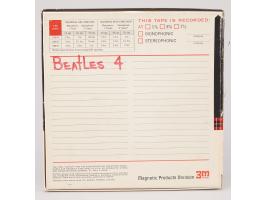
Significant interview tape from the personal collection of Los Angeles radio DJ Dave Hull, who was one of the major promoters of the Fab Four in Southern California at the height of Beatlemania in the mid-1960s. He spent a lot of time with the boys, conducting dozens of interviews with them both as a group and individually. He even spent two weeks with them on the set of their second film, 'Help!,' filmed in the Bahamas from February–April, 1965, during which time this interview tape was recorded.
The 7˝ reel of ¼” Scotch-brand audio tape features interviews between Derek Taylor and the Beatles, beginning with a nearly 14-minute long conversation with George Harrison. George discusses the Beatles' rigorous working schedule in the Bahamas: "We're up at 7 in the morning every day, on the set filming…We all prefer to be up and working." He refers to their upcoming tour of Europe—to bring them to Spain, France, and Italy—as well as other upcoming projects, speculating about future tours and films: "For all we know we might start on our third film, after the American trip…We enjoy it so much more than anything else. When the film is finished you get more sort of satisfaction from it. You feel as though you've done something worthwhile, more so than a tour." Harrison also talks about what he does in his leisure time, talks about buying a new house, chats about his time in London, and contemplates living in the Bahamas.
After George, there is a five-minute interview with Walter Shenson (the producer of Help!) and Beatles road manager Mal Evans, who was given a part in the film. Each talk about the film, roles of the people in the film, and how certain people were chosen for parts.
The tape concludes with an interview between Taylor and all four Beatles—John Lennon, Paul McCartney, George Harrison, and Ringo Starr—talking about their families and the film. John and Ringo explain that the forthcoming film is very different from A Hard Day's Night: "It's in color, and it's got a plot… basically it's a comedy." Paul humorously relates that the script was "written originally by an American gentleman and then translated into English by a fellow called Charles Wood." The interview ends with Paul talking about the upcoming European and U.S. tours.
To our knowledge, this fascinating tape has never been aired and remains unreleased. Accompanied by a high-fidelity digital transfer (.wav file) of the tape's contents on a USB stick.
Opening: $200
Estimate: $400 - $600
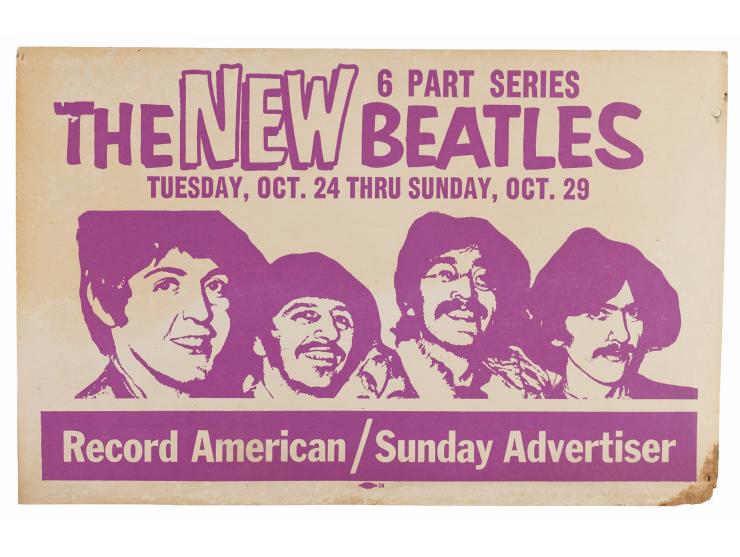
Uncommon 17 x 11 promotional cardstock poster for “The New Beatles,” a six-part series published in the Boston-area newspapers Record American and The Sunday Advertiser between October 24-29, 1967. The poster features a silhouette-style band portrait of the Beatles, dated to the release of their eighth studio album, Sgt. Pepper's Lonely Hearts Club Band. In very good to fine condition, with staining and minor loss to the lower right corner tip.
Opening: $200
Estimate: $200 - $400
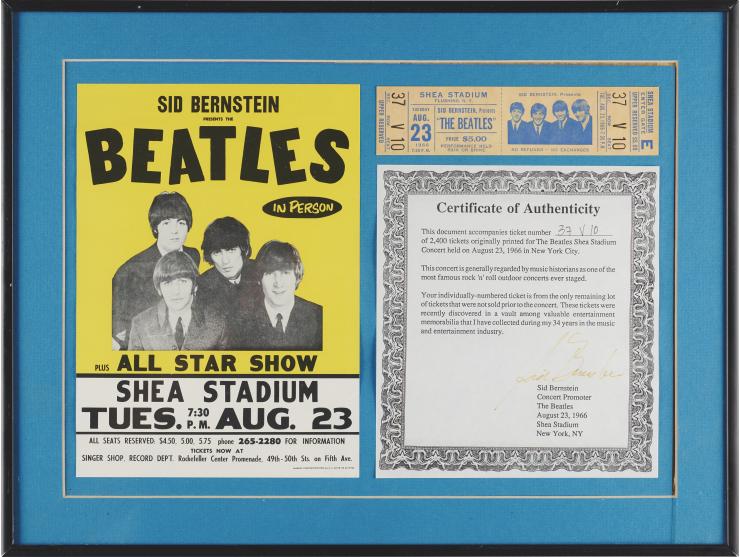
Two items from the Beatles' historic Shea Stadium show: a full ticket for the Beatles' concert at New York's Shea Stadium on August 23, 1966, 6.25 x 1.5, issued for "Upper Reserved," "Sec. 37," "Row V," and "Seat 10," with front featuring an image of the Beatles in matching suits; and an original 6.25 x 8.75 flyer for the Beatles concert at Shea Stadium in 1966, which depicts the band huddled together against a yellow background below bold text: "Sid Bernstein presents the Beatles, In Person." Both items are affixed to a blue cardstock mount with a signed certificate of authenticity from Bernstein, who notes: "Your individually numbered ticket is from the only remaining lot of tickets that were not sold prior to the concert. These tickets were recently discovered in a vault among valuable entertainment memorabilia that I have collected during my 34 years in the music and entertainment industry." Matted and framed to an overall size of 16.25 x 12.25. In overall fine condition, with fading to Bernstein's signature.
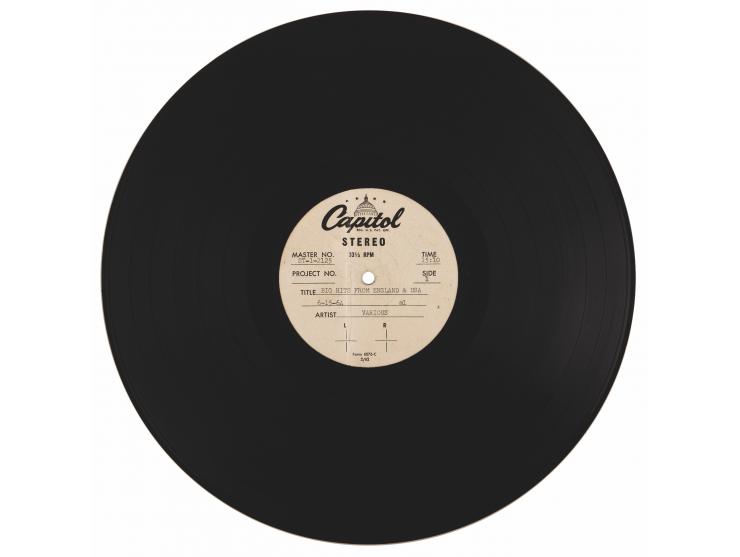
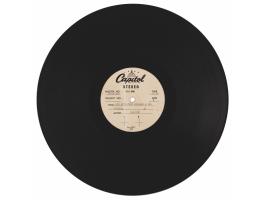
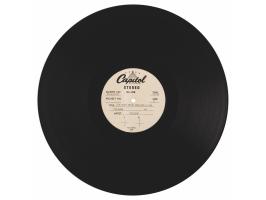
Beatles and Beach Boys US Capitol Records Acetate for The Big Hits From England & U.S.A. (T-2125, 1964)
Opening: $200
Estimate: $1,000 - $1,500
Unique 12˝ US Capitol Records two-sided acetate for the stereo release of the compilation album "The Big Hits From England & U.S.A.," a fun record that showcased their strong roster of rock acts (Beatles, Beach Boys, Peter & Gordon) and pop singers (Nat King Cole, Al Martino, and Cilla Black). The highlights are 'Can't Buy Me Love' and 'You Can't Do That' by the Beatles, and 'I Get Around' and 'Don't Worry Baby' by the Beach Boys. All the rockers are on side one and the pop tunes are on side two. Interestingly, prior to its inclusion on the 'Hey Jude' LP in 1970, 'Can't Buy Me Love' had not been issued on a Beatles Capitol LP in the US.
The acetate disc bears black-and-white Capitol labels, filled out in type: "Master No. ST-1-2125, Time 15:10, Side 1, Title: Big Hits from England & USA, 6-15-64, Artist: Various" and "Master No. ST-2-2125, Time 12:22, Side 2, Title: Big Hits from England & USA, 6-15-64, Artist: Various."
The only known example of this acetate, the disc is in nice VG+ condition overall. Accompanied by a high-fidelity digital transfer (.wav file) of the acetate's contents on a USB stick.
Opening: $200
Estimate: $2,000 - $2,500
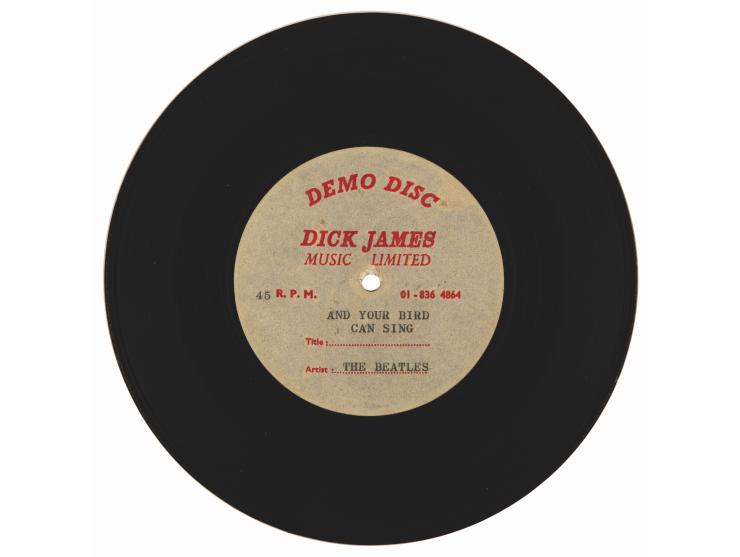
Uncommon 7˝ Dick James Music Limited one-sided acetate for the Beatles' song "And Your Bird Can Sing," first released in 1966 on Yesterday and Today in the United States and on Revolver in the United Kingdom. The acetate disc bears a red-and-white Dick James "Demo Disc" label, filled out in type: "45 R.P.M., Title: And Your Bird Can Sing, Artist: The Beatles."
Showcasing the band’s shift toward more complex and experimental pop, "And Your Bird Can Sing" features intricate dual-guitar harmonies from Paul McCartney and George Harrison that give the track a bright, jangly sound. Lyrically, John Lennon’s cryptic words are often interpreted as playful or mocking, directed at materialism or a rival musician.
Dick James, the band’s music publisher, co-founded Northern Songs in February 1963 to handle Lennon-McCartney compositions. Acetates like this were typically cut to promote new Beatles material and to present Lennon and McCartney’s songs to other artists for potential cover recordings.
The acetate has a very nice clean label and excellent VG+ playing surface. Accompanied by a high-fidelity digital transfer (.wav file) of the acetate's contents on a USB stick.
Opening: $200
Estimate: $600 - $800
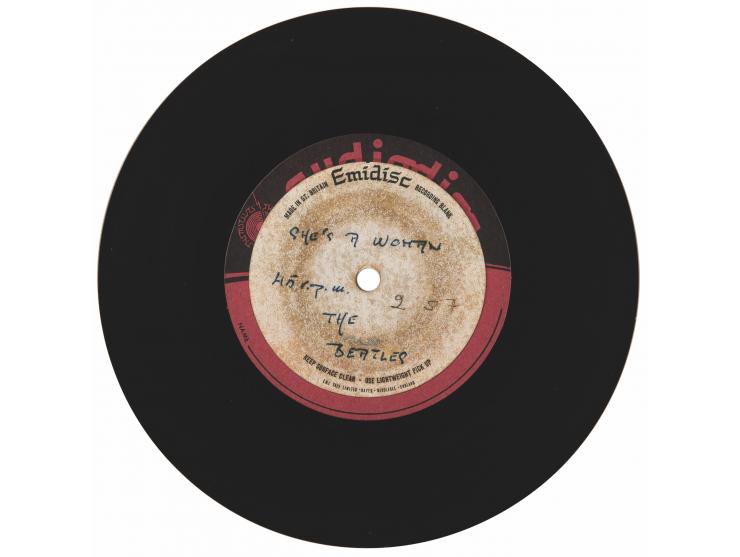
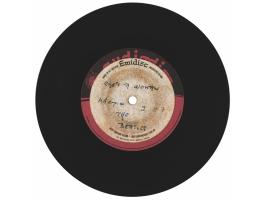
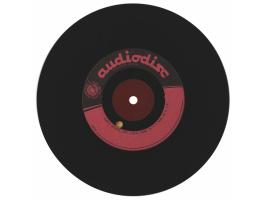
Sought-after 7˝ EMI one-sided acetate pressing of the Beatles' hit "She's a Woman," as heard on the mono 45 RPM single released on November 23, 1964. The acetate disc bears a black-and-white Emidisc label over a black-and-red Audiodiscs label, filled out in bold ballpoint: "She's a Woman, 45 r.p.m., The Beatles." The song's runtime is also annotated in pencil: "2:57."
The Beatles recorded "She's a Woman" in a single, five-hour session on October 8, 1964, at EMI Studios in London, completing it in seven takes plus overdubs. This acetate is the same as the released version (Take 6 with overdubs). It was released as the B-side to 'I Feel Fine' and charted in the United States, reaching number four on the Billboard Hot 100 and number eight on the Cash Box Top 100.
The disc is in VG+ overall condition, with light surface scratches and discoloration to the label. Accompanied by a high-fidelity digital transfer (.wav file) of the acetate's contents on a USB stick.
Opening: $200
Estimate: $1,500 - $2,000
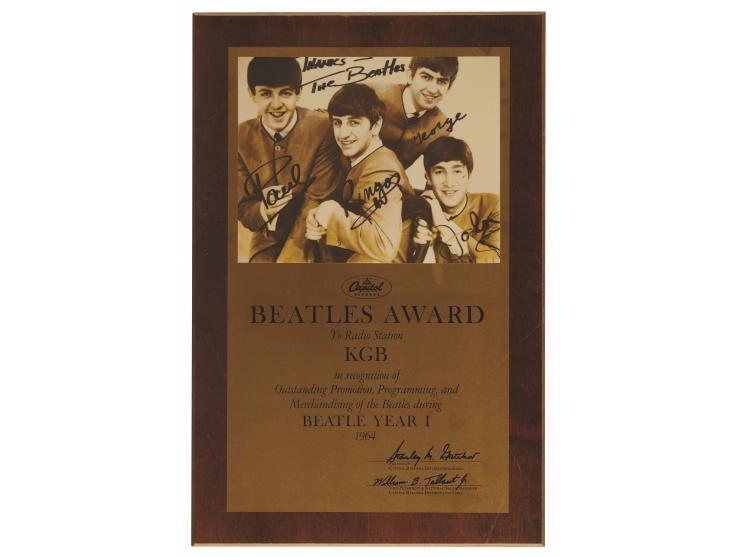
Scarce original vintage 12.5 x 19 Capitol Records in-house award plaque, featuring a portrait of the Beatles with reproduction secretarial signatures, with text reading: "Beatles Award, To Radio Station KGB, in recognition of Outstanding Promotion, Programming, and Merchandising of the Beatles during Beatle Year I, 1965." At the bottom are facsimile signatures of Capitol Records Distributing Corp. executives Stanley M. Gortikov and William B. Tallant, Jr. Reverse bears the label of the Professional Plaque Co., Hollywood. In fine condition, with only a few light marks toward the lower right; color is bright and edges are unmarred.
In 1964, toward the end of the first year of Beatlemania, the Capitol Records promotional department wanted to thank radio stations and individuals who were instrumental in promoting the Beatles during their first year in the U.S.A. The result was a nicely designed and manufactured wood-backed, laminated award that highlighted their specific contribution over that year.
This specific award was presented to radio station KGB in San Diego, California. In 1964, KGB was involved in a promotion with the San Diego Beatles fan club president to bring the Beatles to San Diego, though the concert itself did not take place until August 1965. The station was actively involved in creating excitement for the event, which would eventually become the band's only concert in San Diego.
It is unknown how many total awards Capitol Records manufactured and distributed in 1964, but given their extreme scarcity, these awards were evidently given out very infrequently and are exceptionally rare. There are less than 15 known documented examples in existence.
Opening: $200
Estimate: $2,500 - $3,500
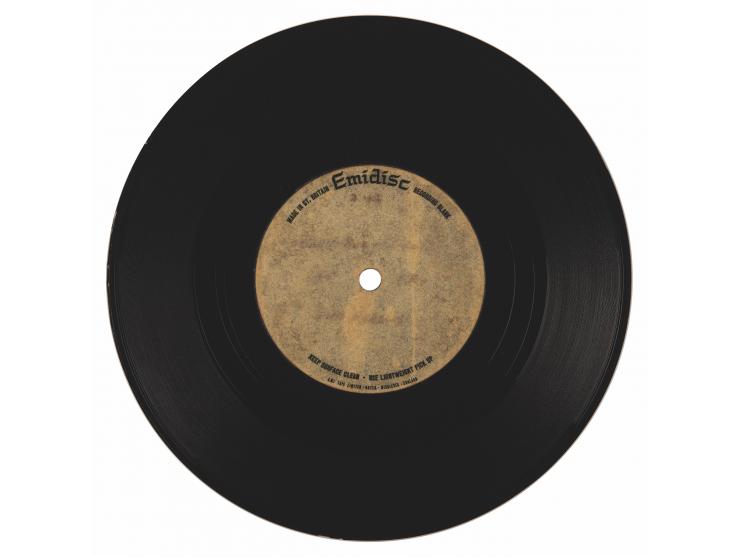
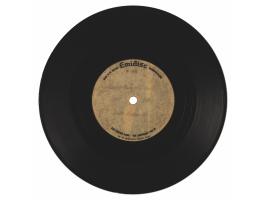
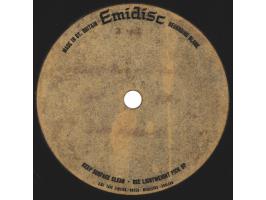
Rare 7˝ EMI one-sided acetate pressing of the Beatles' hit "Can't Buy Me Love," as heard on the mono 45 RPM single released on March 20, 1964. The acetate disc bears a black-and-white Emidisc label with blurred and faded handwritten notations with the band name, song title, and runtime.
Released in March 1964, “Can’t Buy Me Love” was featured on A Hard Day’s Night—both the album and the film of the same name. Only four takes were needed to capture a perfect performance, with this acetate representing the final, released version of Take 4. The single topped charts in the United Kingdom, the United States, Australia, Ireland, New Zealand, South Africa, the Netherlands, France and Sweden. In the UK, it was the fourth highest selling single of the 1960s.
The disc exhibits light surface scratches, but is in VG+ overall condition. Cut by renowned EMI sound engineer and record producer Geoff Emerick, this acetate delivers exceptional audio fidelity, having been dubbed directly from the original master tape. A superb, highly sought-after acetate of a popular Beatles song. Accompanied by a high-fidelity digital transfer (.wav file) of the acetate's contents on a USB stick.
Opening: $200
Estimate: $1,500 - $2,000
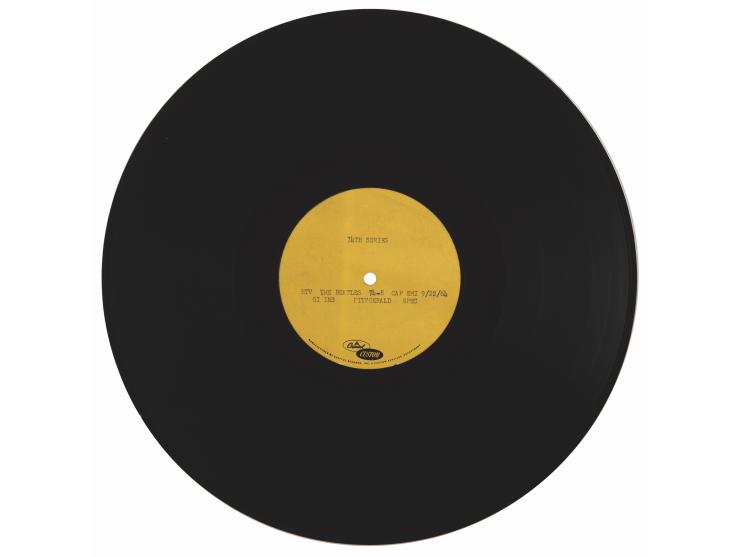
Incredibly rare 12˝ US Capitol one-sided acetate for the mono release of 'Here's to Veterans' program no. 953, featuring the Beatles. The acetate disc bears black-and-yellow "Capitol Custom" label, filled out in type: "74th Series, HTV The Beatles 74-8 Cap EMI 9/22/64, GI Ins Fitzgerald Spec." The program features 'I Want to Hold Your Hand' as its opening theme, followed by four songs off the Beatles' recently released LP Something New: 'I'll Cry Instead,' 'Tell Me Why,' 'If I Fell,' and 'Roll Over Beethoven.' Paul McCartney starts the show by saying, "The Beatles sing for Here’s to Veterans….Yahoooooo," as it jumps into 'I Want to Hold Your Hand.' In between the remaining Beatles songs, Paul introduces each track and offers some specific background commentary. The program length is 14:30.
Produced by the U.S. Veterans Administration, the 'Here’s to Veterans' program was a long-running series of radio broadcasts designed to promote veteran services and programs. Pressed on vinyl records, each disc featured two 15-minute segments with popular music and era-specific content intended for public information and outreach.
Under a special arrangement with the American Federation of Musicians and Capitol Records, the series showcased performances and commentary by some of the era’s most celebrated artists—including The Beatles, Nat King Cole, Jo Stafford, Stan Kenton, and Les Paul—who not only presented their latest hits but also delivered messages highlighting VA benefits.
Spanning 35 years, from 1946 to 1981, the complete series encompassed more than 1,800 individual programs.
This is the only known acetate of the program in absolutely gorgeous NM condition. Accompanied by a photocopy of the 'Here's to Veterans' program notes, and a high-fidelity digital transfer (.wav file) of the acetate's contents on a USB stick.
Opening: $300
Estimate: $4,000 - $6,000
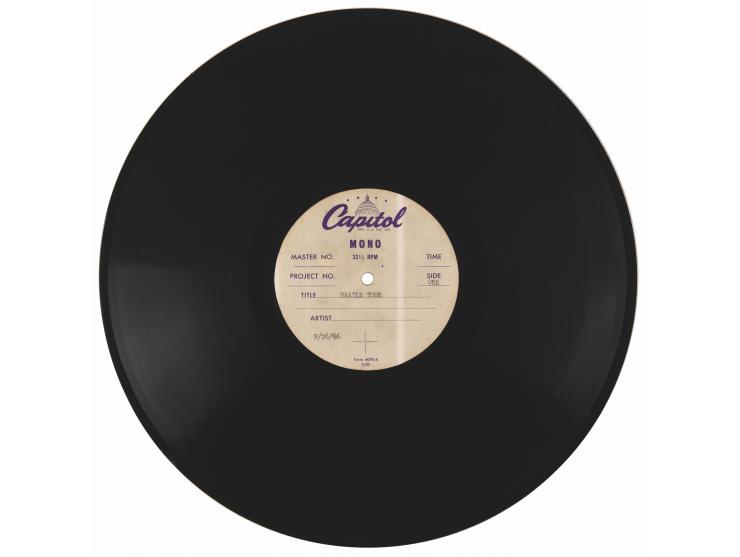
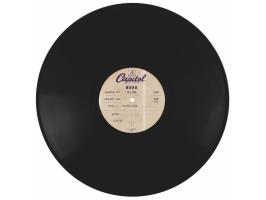
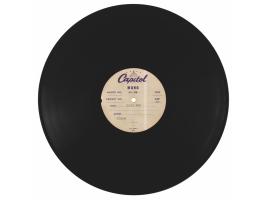
Fantastic 12˝ US Capitol Records two-sided acetate for the unreleased project entitled Beatle Tour, featuring mono clips from Jerry G.'s interviews with the Beatles during their 1965 North American tour. The acetate disc bears purple-and-white Capitol labels, filled out in type: "Title: Beatle Tour, 9/26/1966."
From August 13th to September 1st, the Beatles were accompanied by Chicago and Cleveland broadcast personality, Jerry G. Bishop ('Jerry G.'), who was able to conduct and record a variety of interviews with the band, compiling nearly five total hours of material. With nearly 42 minutes of content, this acetate collects the most fascinating, behind-the-scenes bits from these interviews, interspersed with brief clips of Beatles tunes and some narration and introductory remarks.
Writing in Way Beyond Compare: The Beatles' Recorded Legacy, Volume One, 1957-1965, collector and historian John C. Winn observes: 'In general, these conversations are a cut above the usual Beatle interviews, with each group member candidly discussing their childhood, musical development, and their thoughts on wealth, family, and protest singers.'
In an interview published in "The World Beatles Forum" newsletter for November/December 2001, Jerry G. reflected on the Beatle Tour concept: "Tom Morgan was the Head of A&R at Capitol Records. He was the guy who oversaw The Beatles projects…His job was to package them and promote them etcetera. Somebody sent him a tape of the special [a one hour radio special Jerry G. had done called There’s More There Than Hair]. He called me and sent me a telegram saying, 'I’m going to take this to England and play it for Brian Epstein.' His idea was to release a double-sleeved album—one sleeve The Beatles talked; sleeve two, The Beatles sing all new material. It was going to be their next release. I was hysterical with the idea. First of all, it seemed like a lot of money. Morgan and Capitol were all excited about it too. Everybody loved the idea but Epstein, who said, 'No.' He just didn’t want them talking for some reason or he may have thought that if they ever talk, 'We’ll do it ourselves.'"
Though the project was scrapped by Capitol, Jerry G. eventually released all of the interview material found on this disc through Backstage Records on the LPs 'The Beatles Talk with Jerry G.' (1982) and 'The Beatles Talk with Jerry G., Volume 2' (1983). However, this acetate contains extracts of Beatles songs not included in these early 1980s pressings.
This is one of only three known acetates for Beatle Tour—all mono versions—and remains in strong VG- condition, playing very well with no background noise. Accompanied by a high-fidelity digital transfer (.wav file) of the acetate's contents on a USB stick.
Beatles US Capitol Records Master Tape Reel for Something New, Produced for King Features Syndicate
Opening: $200
Estimate: $300 - $400
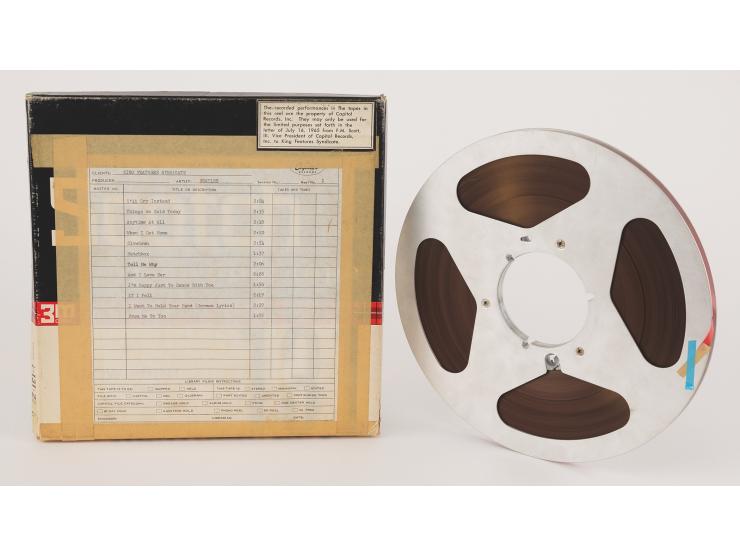
Capitol Records mono master reel-to-reel tape of the Beatles' album Something New, created for and licensed to King Features for use in their 1960s Beatles cartoon series. This rarity was transferred from the Capitol Records master onto Scotch brand ¼” audio tape in mono at 15 i.p.s. Housed in the original box with an affixed Capitol Records track listing filled out in type, applied by masking tape annotated along the bottom in black felt tip: "Beatles (Songs) Reel #1."
The reel contains all of the tracks from Something New, along with the addition of “From Me to You.” Notably, this song was never released by Capitol Records in the U.S. during the 1960s—its first official appearance on a Capitol album did not occur until 1973—making its inclusion here particularly significant. There are unique five-second gaps between tracks featuring 'voice slate' introductions of each song recorded by the Capitol mastering engineer.
The box cover also carries the following notice: “The recorded performances in the tapes in this reel are the property of Capitol Records, Inc. They may only be used for the limited purposes set forth in the letter of July 16, 1965 from F. M. Scott, III, Vice President of Capitol Records, Inc. to King Features Syndicate.”
In fine condition, with toning to the masking tape. Accompanied by a high-fidelity digital transfer (.wav file) of the tape's contents on a USB stick.
Some background on the Capitol Records/King Features masters:
In February 1964, just weeks after the Beatles’ mesmerizing performance on The Ed Sullivan Show, Al Brodax—head of film and television development at King Features—approached Brian Epstein with the idea of producing a Beatles cartoon series. The concept envisioned short, adventurous stories built around popular Beatles songs, complemented by 'sing-along' segments featuring on-screen lyrics.
Each cartoon ran approximately 8 to 10 minutes, with two included per weekly episode. The sing-along portions were a highlight of the show, inviting audiences to learn and sing the songs along with the Beatles. Music selections were drawn from the U.S. Beatles albums—from Meet the Beatles through Revolver—along with non-album singles up to 'Strawberry Fields Forever / Penny Lane.'
The series premiered on September 25, 1965, and concluded on October 21, 1967, spanning 39 episodes and featuring a total of 78 Beatles songs.
As production ramped up in 1965, a meeting was held between King Features and Capitol Records to determine how the music would be integrated into the weekly sing-alongs. Capitol’s initial plan was to provide direct copies of their original U.S. master tapes so King Features could pull songs as needed. However, this proved impractical—technology at the time did not allow for precise tape stops between the one-second song gaps typical on standard master reels.
To overcome this challenge, Capitol Records created a custom set of master tapes specifically for King Features. These reels incorporated a five-second gap between tracks and featured a 'voice slate' introduction recorded by the Capitol mastering engineer. In some cases, the song formats differ slightly from the official releases, making these tapes truly unique.
The lots offered in this auction comprise nearly the entire King Features cartoon music library from the show’s three-year run. Each reel is presented in mono, offering exceptional sound quality sourced directly from the original Capitol master tapes. Notably, several reels predate the official album releases, underscoring their historical significance and rarity.
Beatles US Capitol Records Master Tape Reel for The Early Beatles, Produced for King Features Syndicate
Opening: $200
Estimate: $300 - $400
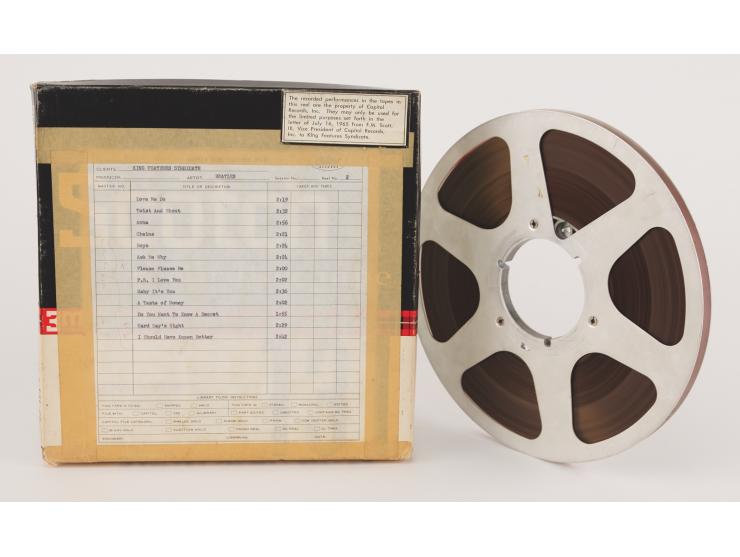
Capitol Records mono master reel-to-reel tape of the Beatles' album The Early Beatles, created for and licensed to King Features for use in their 1960s Beatles cartoon series. This rarity was transferred from the Capitol Records master onto Scotch brand ¼” audio tape in mono at 15 i.p.s. Housed in the original box with an affixed Capitol Records track listing filled out in type, applied by masking tape annotated along the bottom in black felt tip: "Beatles (Songs) Reel #2."
The reel contains all of the tracks from The Early Beatles, along with two from the soundtrack for A Hard Day's Night: “Hard Day's Night” and “I Should Have Known Better.” These two songs were not officially released by Capitol Records until 1980; it is unknown how Capitol Records obtained the masters for both of these songs from United Artists, but their presence on this reel is both unusual and historically noteworthy. There are unique five-second gaps between tracks featuring 'voice slate' introductions of each song recorded by the Capitol mastering engineer.
The box cover also carries the following notice: “The recorded performances in the tapes in this reel are the property of Capitol Records, Inc. They may only be used for the limited purposes set forth in the letter of July 16, 1965 from F. M. Scott, III, Vice President of Capitol Records, Inc. to King Features Syndicate.”
In fine condition, with toning to the masking tape. Accompanied by a high-fidelity digital transfer (.wav file) of the tape's contents on a USB stick.
Some background on the Capitol Records/King Features masters:
In February 1964, just weeks after the Beatles’ mesmerizing performance on The Ed Sullivan Show, Al Brodax—head of film and television development at King Features—approached Brian Epstein with the idea of producing a Beatles cartoon series. The concept envisioned short, adventurous stories built around popular Beatles songs, complemented by 'sing-along' segments featuring on-screen lyrics.
Each cartoon ran approximately 8 to 10 minutes, with two included per weekly episode. The sing-along portions were a highlight of the show, inviting audiences to learn and sing the songs along with the Beatles. Music selections were drawn from the U.S. Beatles albums—from Meet the Beatles through Revolver—along with non-album singles up to 'Strawberry Fields Forever / Penny Lane.'
The series premiered on September 25, 1965, and concluded on October 21, 1967, spanning 39 episodes and featuring a total of 78 Beatles songs.
As production ramped up in 1965, a meeting was held between King Features and Capitol Records to determine how the music would be integrated into the weekly sing-alongs. Capitol’s initial plan was to provide direct copies of their original U.S. master tapes so King Features could pull songs as needed. However, this proved impractical—technology at the time did not allow for precise tape stops between the one-second song gaps typical on standard master reels.
To overcome this challenge, Capitol Records created a custom set of master tapes specifically for King Features. These reels incorporated a five-second gap between tracks and featured a 'voice slate' introduction recorded by the Capitol mastering engineer. In some cases, the song formats differ slightly from the official releases, making these tapes truly unique.
The lots offered in this auction comprise nearly the entire King Features cartoon music library from the show’s three-year run. Each reel is presented in mono, offering exceptional sound quality sourced directly from the original Capitol master tapes. Notably, several reels predate the official album releases, underscoring their historical significance and rarity.