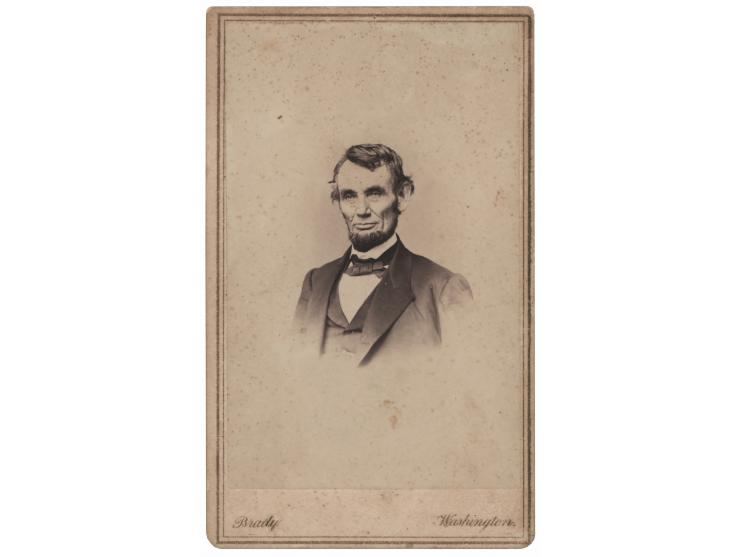
Lot 84
Abraham Lincoln
Opening: $200
Estimate: $300 - $400
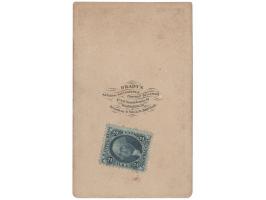
Uncommon 2.5 x 4 carte-de-visite portrait photograph of President Abraham Lincoln made on February 9, 1864, by Anthony Berger at Mathew Brady's Washington, D.C., gallery. The reverse bears a Brady's National Photographic Portrait Galleries mark and an affixed 2-cent postage stamp. In fine condition, with some light soiling.
On February 9, 1864, portrait painter Francis B. Carpenter arranged for President Lincoln to sit for a series of photographs at Matthew Brady’s Washington, D.C., gallery. Carpenter, the President, and Lincoln’s youngest son, Tad, walked to Brady’s studio at 3 p.m. Since Brady’s eyesight was beginning to fail, he asked his superintendent, Anthony Berger, to photograph Lincoln. Berger took at least seven poses of the President, both alone and with ten-year-old Tad. The images taken that day have formed the basis for Lincoln’s image on the penny and both the old and new $5 bills.
Lincoln sat for over fifty official portraits from his lawyering days on the court circuit until his assassination; he understood the importance of creating a dignified public profile. Lincoln joked after his first photo shoot with Brady in 1860 that the photographer’s portrait helped secure his Republican nomination as president. Brady's images of Lincoln are among the most iconic.
Mathew Brady became one of the most recognized photographers of the Civil War era, known both for documenting the realities of war and for creating iconic portraits of figures such as Abraham Lincoln and Robert E. Lee. At the start of the war, his business flourished as soldiers commissioned carte-de-visite portraits before heading to the front. In 1861, Lincoln authorized Brady to travel to battlefields and military camps to photograph the conflict firsthand. Investing roughly $100,000 of his own money, Brady and his team produced around 10,000 war-related negatives. However, when the federal government declined to purchase his collection after the war, Brady faced financial ruin, and the massive personal investment ultimately led to his bankruptcy.